MONDAY, MARCH 27, 2023
Galveston Bay, Bacliff, Bay View, San Leon, Kemah Shorelines, Dumping Dredge Materials Tainted With REFORMATE, 24/7, Since November, WHAT COULD GO WRONG?
Mystery deepens in the Bacliff, Pocket. the barges and tugs that have been dumping ship channel dredge, dredge from the same area where the two barges collided with the 755-foot Tanker Genesis River. Kirby Barge 30015T was pushing the barges.
Two Barges and Tanker 755-foot tanker Genesis River and the tug Voyager, Kirby Inland Marine, collide in Ship Channel Near Bayport, Texas
MONDAY, DECEMBER 19, 2022
Houston Ship Channel (HSC) & Bayport Ship Channel (BSC) Expansion Channel Improvement Project (ECIP) Project 11 REDFISH TO BAYPORT (and what's up on Bacliff, Tx. Shoreline?
Houston Ship Channel (HSC) & Bayport Ship Channel (BSC) Expansion Channel Improvement Project (ECIP) Project 11: REDFISH TO BAYPORT HSC STA 78+844 TO HSC STA 16+000 & BAYPORT SHIP CHANNEL
Howdy Neighbors, if any of you were curious about the tugs and barge that have been working outback just off Bacliff shoreline. a few weeks ago, crews showed up in work boats outback, they worked placing markers orange flag or paint at top, this is a large area just out back behind our house, runs back towards San Leon, and out towards the ship channel. well then after the markers were all set, these tugs, large and small showed up, with work boats, and a big barge that can dump materials from the bottom. that big barge running night and day, for about a week now. well, i got to wondering what the hell was going on, and i called everybody i could, TPWD, Dickinson Lab, TGLO, GBF, Prestige, nobody knew. well this is what i found out, seems they thought it a good idea to dredge the ship channel wider and deeper and dump the dredge materials (?) in our back yards. you can see photos below... Merry Christmas! see permit and photos;
still dumping dredge in the Bacliff Pocket as of last week, they were using two of those barges that dump from bottom, and this is some sort of vessel that follows the tug and barges around while they are dumping now. permit started mid November, and was suppose to end mid February, but they are steady dumping still 24/7. but i don't know what this vessel is doing? this vessel no dumping, they just keep driving and dragging something i think, around the same area, same area they have been dumping sludge in, 24/7. as you can see a small draw works of some kind and a some kind of closed cargo container with an air conditioner.
what's going on?
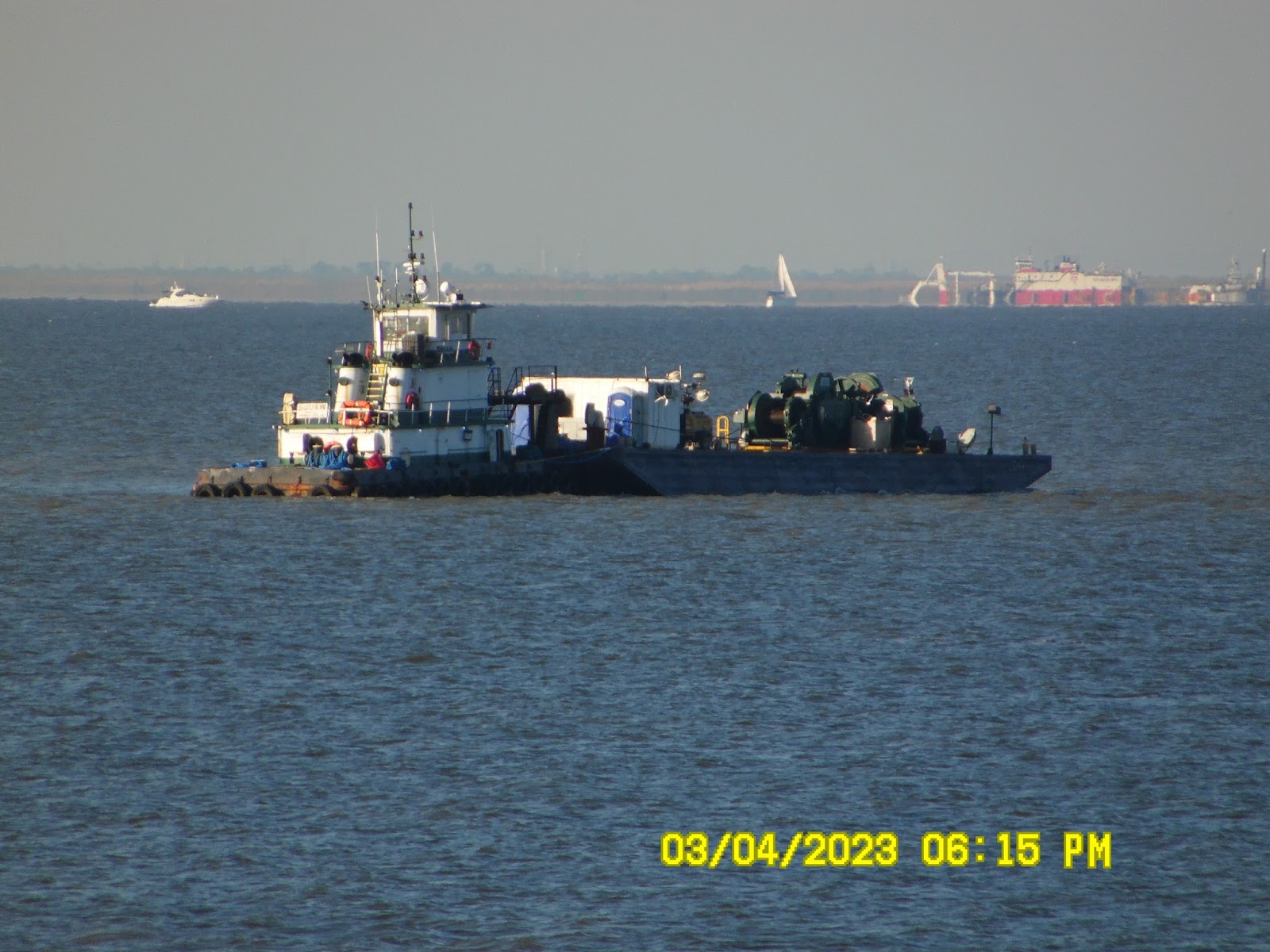
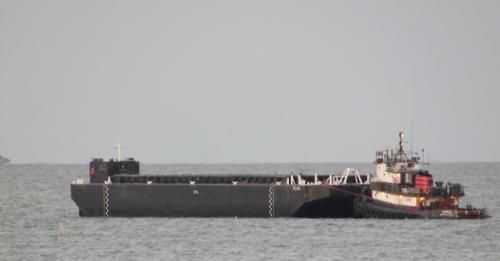
this is what has been dumping ship channel dredge 24/7 in the Bacliff Pocket since November 2022. sometimes running two of them...
this was a small jack-up rig that run all over the same area these other vessels are running over for a period of time taking samples, drilling for samples, must have been 100s of samples taken, and this was around 2/4/2020...
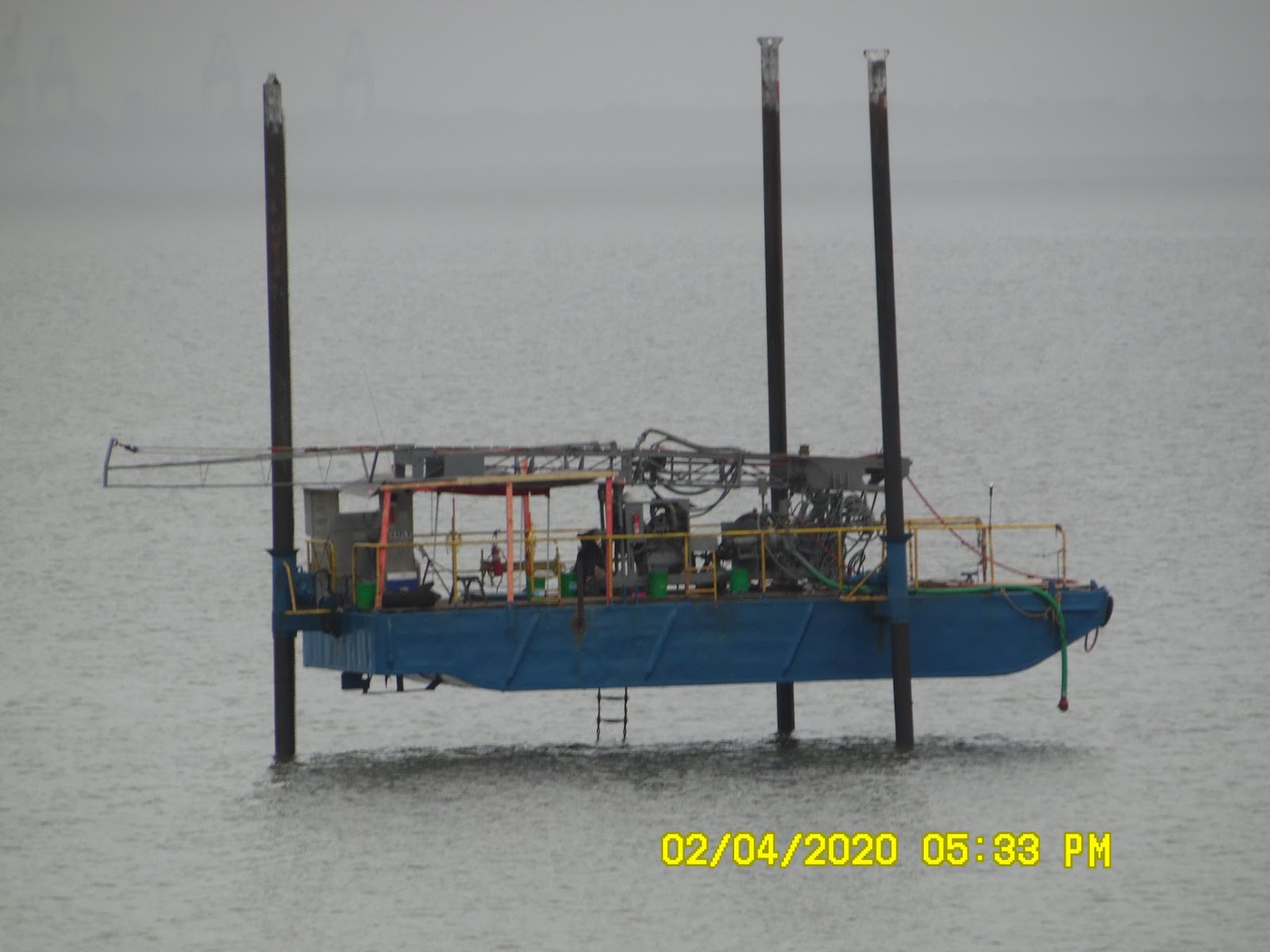
Feb. 20, 2020
Bacliff, Texas 77518 on Galveston Bay, small jack up boat in backyard taking sediment samples of some sorts?
what's up?
this little jack up has been moving around in circles outback, drilling and taking some sort of samples for 3 or 4 days or so.
IMO, they are not looking for oil. Remember, when the collision happened out past 5 mile pass recently, or out in our back yard;
they did not put those booms to retain that product from coming up into drains in Bacliff at the Delmar fishing pier@ Estes and Bayshore, for nothing. First time I ever saw that, been here all my life. maybe someone is taking sediment samples to see if any contaminants are in the mud and sand? which would be a good thing imo, IF we get the results too. i wrote Galveston Bay Foundation to see if they knew what was going on, no reply back. if anyone knows what's going on, please chime in...thanks terry

Responders Replacing Booms behind our house and along Bacliff, Shoreline...

Boomed culverts down at Delmar Pier culvert, where water drains into bay, keeping any of the toxins from coming up into Bacliff, from high tides...

what happened???
OR&R RESPONDS TO BARGE COLLISION IN HOUSTON SHIP CHANNEL LAST UPDATED: MAY 16, 2019
MAY 13, 2019 — ON FRIDAY, MAY 10, THE U.S. COAST GUARD NOTIFIED OR&R OF A VESSEL COLLISION NEAR HOUSTON THAT OCCURRED AROUND 3:20 P.M. A 755-FOOT TANKER, MV GENESIS RIVER, AND THE TUG VOYAGER COLLIDED IN THE HOUSTON SHIP CHANNEL NEAR BAYPORT, TEXAS. THE GENESIS RIVER TOOK ON WATER BUT DID NOT SPILL ANY FUEL OR CARGO. ONE OF THE BARGES CAPSIZED, AND ANOTHER BARGE WAS DAMAGED AND RELEASED A GASOLINE BLENDING STOCK INTO THE CHANNEL AND GALVESTON BAY. THERE WERE NO REPORTS OF ANY INJURIES TO THE CREW MEMBERS. THE CAUSE OF THE COLLISION IS UNDER INVESTIGATION.
An aerial view of three barges with several vessels around them.THE UNIFIED COMMAND CONTINUES SALVAGE OPERATIONS ON TWO BARGES MAY 12, 2019 NEAR BAYPORT, TEXAS AFTER A COLLISION ON THE HOUSTON SHIP CHANNEL AT LIGHTS 71-74 BETWEEN A 755-FOOT TANKER AND A TUG PUSHING TWO BARGES. CREWS CONTINUE TO MAINTAIN BOOM DEPLOYED AND REMAIN FOCUSED ON ENVIRONMENTALLY SENSITIVE AREAS. IMAGE CREDIT: U.S. COAST GUARD.
ACCORDING TO A COAST GUARD PRESS RELEASE(LINK IS EXTERNAL), THE TUG WAS TRANSPORTING TWO BARGES — EACH LOADED WITH ABOUT 25,000 BARRELS OF GASOLINE BLEND STOCK. THE OFFICIAL AMOUNT RELEASED FROM THE KIRBY IS BELIEVED TO BE ABOUT 9,000 BARRELS, OR 378,000 GALLONS. THE GENESIS RIVER WAS LOADED WITH BUTANE AND PROPANE, BUT WAS NOT REPORTED TO BE SPILLING ANY PETROLEUM CARGO.
THE COAST GUARD ESTABLISHED A UNIFIED COMMAND WITH THE TEXAS GENERAL LAND OFFICE AND KIRBY INLAND MARINE ON FRIDAY. OR&R’S EMERGENCY RESPONSE DIVISION HAS PROVIDED WEATHER, TRAJECTORY, RESOURCES AT RISK, AND HAZARD ANALYSIS PRODUCTS AND PRELIMINARY DISCUSSION AND SCOPING EFFORTS HAVE BEGUN TO ASSESS ENVIRONMENTAL IMPACTS. THE UNIFIED COMMAND HAS ALSO BEEN CONDUCTING AIR SAMPLING AND IS RESPONDING TO CITIZEN QUESTIONS ABOUT AIR QUALITY AND POTENTIAL HEALTH RISKS FROM EXPOSURE TO THE SPILLED MATERIAL.
SHORELINE CLEANUP ASSESSMENT TECHNIQUE (SCAT) TEAMS CONTINUE TO CHECK FOR AREAS WHERE OIL MAY HAVE REACHED THE SHORE. OR&R’S ASSESSMENT AND RESTORATION DIVISION HAS ALSO SENT STAFF ON SCENE TO BEGIN ASSESSING THE DAMAGE TO NATURAL RESOURCES IN THE AREA. THERE ARE REPORTS OF WILDLIFE IMPACTS AND A SIZEABLE FISH KILL WAS REPORTED.
AS OF SUNDAY, MAY 13, THE SHEENS IN THE WATERWAY NEAR THE DAMAGED BARGE WERE SIGNIFICANTLY REDUCED FROM THE DAY BEFORE. OPERATIONS TO TRANSFER CARGO TO ANOTHER VESSEL BEGAN YESTERDAY. THE CAPSIZED BARGE IS STILL INTACT WITH NO VISIBLE SHEENING. SOME OF THE DARKER OIL NEAR THE BARGE KIRBY AND ALONG THE SHORELINE IS BEING RECOVERED.
DOUG HELTON, OPERATIONS COORDINATOR FOR OR&R’S EMERGENCY RESPONSE DIVISION, SAID THE OPERATIONS TO EMPTY AND REFLOAT THE CAPSIZED BARGE WILL BE CHALLENGING DUE TO THE BARGE’S DOUBLE HULL AND ITS CURRENT POSITION. THE BARGE IS UPSIDE DOWN, WITH ALL THE HATCHES AND VENTS NOW GROUNDED IN THE MUD AT THE BOTTOM OF THE BAY ADJACENT TO THE SHIPPING CHANNEL. THE OIL IS ALSO HIGHLY FLAMMABLE, AND RESPONDERS WILL HAVE TO APPROACH THE TANKS WITH EXTREME CAUTION TO AVOID AN EXPLOSIVE REACTION.
Three vessels around a barge.
TWO BARGES INVOLVED IN A COLLISION ARE REMOVED FROM THE HOUSTON SHIP CHANNEL, MAY 15, 2019. KIRBY BARGE 30015T WAS TRANSFERRED TO THE SOUTHWEST SHIPYARD AT CHANNELVIEW, WHILE BARGE MMI 3041 WAS TRANSFERRED TO BARBOUR’S CUT TURNING BASIN. IMAGE CREDIT; U.S. COAST GUARD.
A UNIFIED COMMAND PRESS RELEASE(LINK IS EXTERNAL) STATED THAT 334 FEDERAL, STATE, AND LOCAL RESPONSE PERSONNEL ARE ENGAGED IN PLANNING AND IMPLEMENTING RESPONSE AND CLEANUP OPERATIONS. EIGHT SKIMMERS ARE IN OPERATION AND MORE THAN 20,000 FEET OF PRODUCT CONTAINMENT AND ABSORBENT BOOM HAVE BEEN DEPLOYED TO LIMIT FURTHER CONTAMINATION.
UPDATE: AS OF WEDNESDAY, MAY 15, THE TWO BARGES WERE SUCCESSFULLY REMOVED(LINK IS EXTERNAL) FROM THE HOUSTON SHIP CHANNEL. THE ESTIMATED SPILL VOLUME FROM THE DAMAGED BARGE WAS INCREASED TO 11,276 BARRELS (473,600 GALLONS).
THE PORT OF HOUSTON-GALVESTON HAS REOPENED THE HOUSTON SHIP CHANNEL WITHOUT RESTRICTIONS AND NORMAL VESSEL TRAFFIC HAS RESUMED. AIR MONITORING IS ONGOING AS THE SCENE OF THE INCIDENT, AND SKIMMING OPERATIONS ARE ALSO ONGOING TO COLLECT PRODUCT FROM THE SHEEN AT THE SITE. WATER QUALITY SAMPLING IS BEING CONDUCTED AND ENVIRONMENTAL SAMPLES OF DISCHARGED PRODUCT ARE BEING ANALYZED.
OR&R IS CONTINUING TO PROVIDE TRAJECTORY INFORMATION FOR POTENTIAL DISCHARGES OF PRODUCT REMAINING IN THE DAMAGED BARGE. NOAA IS ALSO ASSISTING WITH THE SHORELINE SURVEY EFFORTS AND CHARACTERIZATION OF THE SPILLED MATERIALS.
MORE IMAGES
A crew of people in blue response gear with hard hats and life jackets.People in response gear on a barge.A damaged barge with pollution boom around it. An aerial view of several barges surrounded by other vessels.
LAST UPDATED TUESDAY, NOVEMBER 8, 2022 1:50PM PST
WHAT IS REFORMATE, IS IT HARMFUL, AND WILL IT NEVER EVER GO AWAY???
KEY THOUGHTS HERE FISH CONSUMPTION YEARS DOWN THE ROAD ALONG THE BACLIFF POCKET???
TAKE NOTE!
***> H411 - Toxic to aquatic life with long lasting effects.
REFORMATE SAFETY DATA
SECTION 2: Hazards identification
2.1. Classification of the substance or mixture
The substance has been assessed and/or tested for its physical, health and environmental hazards and the following classification applies.
Classification according to Directive 67/548/EEC or 1999/45/EC as amended
Classification F+;R12, Carc. Cat. 2;R45, Muta. Cat. 2;R46, Repr. Cat. 3;R62-63, Xn;R65, Xi;R38, R67, N;R51/53
The full text for all R-phrases is displayed in section 16.
Classification according to Regulation (EC) No 1272/2008 as amended
H224 - Extremely flammable liquid and vapour.
Flammable liquids Category 1
Physical hazards
Acute toxicity, inhalation Category 3 H331 - Toxic if inhaled.
Health hazards
Skin corrosion/irritation Category 2 H315 - Causes skin irritation.
Germ cell mutagenicity Category 1B H340 - May cause genetic defects.
Carcinogenicity Category 1B H350 - May cause cancer.
H361fd - Suspected of damaging fertility. Suspected of damaging the unborn child.
Reproductive toxicity Category 2
H336 - May cause drowsiness or dizziness.
Specific target organ toxicity - single Category 3 narcotic effects exposure
H304 - May be fatal if swallowed and enters airways.
Aspiration hazard Category 1
Environmental hazards
Hazardous to the aquatic environment, Category 2 long-term aquatic hazard
H411 - Toxic to aquatic life with long lasting effects.
DANGER
H224 Extremely flammable liquid and vapor.
H315 Causes skin irritation.
H340 May cause genetic defects.
H350 May cause cancer.
H336 May cause drowsiness and dizziness.
H304 May be fatal if swallowed and enters airways.
H411 Toxic to aquatic life with long lasting effects.
***> H411 - Toxic to aquatic life with long lasting effects.
THIS IS EXTREMELY WORRISOME!...TERRY
WHY!
''I RECEIVED AND UPDATE FROM THIS STUDY, AND ALL SAMPLES WERE CONTAMINATED.''
THURSDAY, DECEMBER 2, 2021
GALVESTON BAY FISH CONSUMPATION ADVISORY UPDATE November 2021
''Samples came from the areas outside Moses Lake floodgate and north of the Fred Hartman Bridge.''
''Forty fish were retained for this study.''
''I received an update from this study, and all samples were contaminated.''
Update on study reveals fish consumption advisories
By CAPT. DAVID DILLMAN
I'm going to jump right into my personal thoughts on the advisories.
My reason for writing about this subject was twofold. First, a column follower asked, and second, I thought it was important to those who keep fish and enjoy eating the resource.
A few years ago, I was approached by a graduate student at Baylor and her professor about taking them fishing. She was preparing a study on fish contamination in Galveston Bay and wanted recent samples of speckled trout, redfish and black drum. Speckled trout being top priority, because it's the most sought after species.
We agreed upon two dates in October, so they could obtain samples from two different areas of the bay. They fished with me on the first day and followed in their boat on the second. Samples came from the areas outside Moses Lake floodgate and north of the Fred Hartman Bridge. Forty fish were retained for this study.
I received an update from this study, and all samples were contaminated. The advice wasn't to consume more than one 8-ounce serving per month.
So what does all this mean, you might be asking. Fish in the Galveston Bay system don't live in one area year-round. They continually move around, some even into different bays. They move according to the time of year, especially those fish that are now in the northern reaches of our bay. Salinity levels play an important role in fish movement throughout the year.
In essence, any fish you catch, keep and eat might contain contaminates. I've been eating fish from the bay for more than 50 years, and I'll continue to do so.
Don't you think it's time that instead of addressing fish limits, priority should shift to the contaminates in Galveston Bay? This is something that should be addressed by the Galveston Bay Foundation, Texas Park & Wildlife Department, Coastal Conservation Association and any group associated with environmental protection.
Now, let's get to a fishing report I received.
Brian Castille fished the lower end of West Galveston Bay over the weekend. He along with his son Owen, and dad Gerry, found some speckled trout. The majority of those fish were undersized, but they did end up with some keepers. They also had a keeper red both days. All the fish were caught on soft plastics.
The weather looks great for fishing for the next few days. Send in those reports if you get out on the water.
Capt. David Dillman is a columnist for The Daily News. Report your catch to reel.report@galvnews.com or call 409-683-5273.
''Samples came from the areas outside Moses Lake floodgate and north of the Fred Hartman Bridge.''
''Forty fish were retained for this study.''
''I received an update from this study, and all samples were contaminated.''
GALVESTON BAY ADVISORY MAP
see archived url link;
''Samples came from the areas outside Moses Lake floodgate and north of the Fred Hartman Bridge.''
''Forty fish were retained for this study.''
''I received an update from this study, and all samples were contaminated.''
it's a damn shame we must live with this pollution in Galveston Bay, that it has become acceptable, like shitting in your own plate of food, or in your house, is o.k. now due to industry demands. so sad...
Terry S. Singeltary Sr.
Bayport Channel Collision, Houston Ship Canal near Bayport, TX; Houston Ship Channel, TX, USA
Houston Ship Channel, TX, USA | 2019-May-10
Initial Notification: On May 10, 2019, the NOAA Emergency Response Division was notified by the USCG of a vessel collision at approximately 3:20pm near Houston, TX. Information is preliminary at this time, but the M/V Genesis River collided with two tank barges in the Houston Ship Channel near Bayport Texas. Each barge has a capacity of 25000 bbls (approx 1 million gallons) of a gasoline blending stock. Amount released is unknown at this time. The M/V Genesis River, loaded with butane and propane, is reportedly taking on water but not spilling any petroleum or cargo at this time. ERD is providing weather and trajectory products.
Bayport Channel Collision – May 11, 2019
Bayport Channel Collision – May 11, 2019
Due to Friday’s shipping collision and chemical release in northwestern Galveston Bay, DSHS is advising people not to fish or eat any seafood from the portions of Galveston and Trinity bays north of a line from the end of the Texas City Dike to Smith Point.
While the spill is not affecting the entire area at this time, changing tidal and weather conditions mean different parts of that area could be affected in the future. DSHS reminds everyone to avoid any fish or shellfish that has an oily or chemical look or smell.
The agency is taking the additional step of temporarily closing private oyster harvesting areas in Galveston Bay. Because oyster season is closed, harvesting is not open to the public at this time.
The chemical involved, a gasoline additive called reformate, evaporates quickly and is not expected to accumulate in fish tissue once it’s gone from the water, so any impact on seafood should be resolved in the coming days or weeks.
Exposure to the chemical vapor does not pose a long-term health concern, but it can cause short-term effects like headache, nausea, and eye irritation in people who come into contact with it. Anyone experiencing health effects should contact their health care provider. People with questions may contact the Texas Poison Center Network at 1-800-222-1222.
DSHS will continue to monitor the situation and update guidance as the situation changes.
WHAT IS REFORMATE, IS IT HARMFUL, AND WILL IT NEVER EVER GO AWAY???
KEY THOUGHTS HERE FISH CONSUMPTION YEARS DOWN THE ROAD ALONG THE BACLIFF POCKET???
TAKE NOTE!
***> H411 - Toxic to aquatic life with long lasting effects.
Environmental hazards
Hazardous to the aquatic environment, Category 2 long-term aquatic hazard
H411 - Toxic to aquatic life with long lasting effects.
SEE HISTORY OF THIS ACCIDENT FROM THE LAST UPDATE FIRST (NEXT), AND THEN BACKWARDS TO THE BEGINNING OF THE ACCIDENT.
WEDNESDAY, MAY 15, 2019
UPDATE 7: Unified Command continues response to collision on Houston Ship Channel near Bayport, Texas
UPDATE 7: Unified Command removes barges involved in collision from Houston Ship Channel
HOUSTON – The Unified Command, consisting of U.S. Coast Guard, Texas General Land Office, Port of Houston Fire Department and Kirby Inland Marine, have successfully removed two barges involved in a collision from the Houston Ship Channel, Wednesday. The Captain of the Port of Houston-Galveston has opened the Houston Ship Channel without restrictions and vessel traffic has returned to normal operations. As of 12 p.m., 41 vessels are awaiting inbound passage through the channel and 24 are awaiting outbound passage.
“The successful removal process is a credit to precise planning and risk assessment by the various agencies, barge owner and contract personnel who responded to this incident,” said Lt. Cmdr. Muhammad Ali Cochran, federal on-scene coordinator. “I am pleased that we have been able to safely remove these barges from the incident site and facilitate the return of normal commerce and activity in the ship channel.”
Kirby barge 30015T, the barge damaged from the collision, was transferred to the Southwest Shipyard at Channelview, while barge MMI 3041, the overturned barge, was taken to Barbours Cut Turning Basin where lightering operations will take place. The movement of the barges was completed without incident in less than four hours and there have been no reports of release of product into the water. Air monitoring will be ongoing at both locations.
Skimming vessels continue to collect a small amount of product from sheen at the initial incident site. Crews will assess shorelines for any remaining presence of product. Boom placed in some sensitive areas over the last several days will begin to be removed once those locations are determined to have sustained no impact from the spill.
Water quality testing teams are conducting sampling and are assessing the need for shoreline remediation. Initial water quality test results are expected to be available to response officials on Thursday.
Involved with the response include the U.S. Coast Guard, Texas General Land Office, Port of Houston, Kirby Inland Marine, National Oceanic and Atmospheric Administration, U.S. Environmental Protection Agency, Texas Parks and Wildlife Department, Texas Commission on Environmental Quality, Galveston County Health District, Texas Health and Human Services, Center for Disease Control and Prevention, as well as city and county officials who have been representing the interests of their communities, citizens and businesses.
The incident occurred late Friday afternoon after the 755-foot tanker Genesis River and the tug Voyager collided at Lights 71-74 in the Houston Ship Channel. There were no crew injuries associated with the incident and the cause remains under investigation.
Key phone numbers:
Claims Hotline: 1-800-241-9010
Regional Poison Control Center: 1-800-222-1222
Impact to fish and wildlife: 979-215-8835
Air monitoring information: 281-757-3017 (available through May 15th)
Joint Information Center: 281-755-4670
Updates and resources are available at http://www.bayport-response.com
###
2:00 p.m.May 15, 2019
This entry was posted in Incident Updates, News Releases on May 15, 2019.
Update: Unified Command Begins Removal of Barges from Houston Ship Channel
HOUSTON – As of 8:20 a.m. today, the Unified Command responding to last week’s collision between a tanker and two barges near Bayport, Texas, has begun removal of both barges from the Houston Ship Channel.
The decision follows successful removal of the remaining gasoline blend product onboard the Kirby barge 30015T which was struck by the tanker Genesis River last Friday afternoon. Late Tuesday afternoon it was determined that the MNI 3041 barge, aground and submerged in the water as a result of the incident, could also be safely floated and moved to shore without removal of its product. The entire movement is expected to last approximately four hours.
Air and water quality monitoring will take place throughout transit and following the transit process. An adequate supply of containment boom will also be available on scene as a precautionary measure. Existing containment and absorbent boom in place along sensitive shoreline areas will remain in place.
Skimmer boats and the Port of Houston fire boat will be on standby to provide rapid response if needed. All other navigation in the ship channel will be suspended during the complete transit process.
The damaged barge will be taken to the Southwest Shipyard at Channelview while the other barge will be towed to the Barbour’s Cut Turning Basin. Both barges will undergo thorough decontamination to remove all residue from any of the gasoline blend stock from their hulls. The MNI 3041 undamaged barge will be lightered at the Barbour’s Cut.
Editor’s note: Both shipyards are private property and are not accessible without the permission of the property owners.
8:45 a.m.May 15, 2019
This entry was posted in Incident Updates, News Releases on May 15, 2019.
https://bayport-response.com/
=====
Shrimp boats are not barred from fishing in the bay but the state is warning against them operating north of Texas City dike - photo courtesy Pixabay
Shrimp fishing season can go ahead in Galveston Bay tomorrow, Wednesday, despite the release of toxins into the bay when two tank barges were severely damaged in a collision on Friday.
But the state’s health services department, the authority that governs the right to fish in Texas waters, is warning shrimp lovers to keep their boats in the southern reaches of the bay to avoid the risk of catching contaminated crustaceans.
=====
i don't suppose the state is enforcing this part;
But the state’s health services department, the authority that governs the right to fish in Texas waters, is warning shrimp lovers to keep their boats in the southern reaches of the bay to avoid the risk of catching contaminated crustaceans.
this situation is very sad and upsetting...thanks, terry
Shrimp season escapes bay ban in toxin release scare By Ian White - May 14, 2019 Share on Facebook Tweet on Twitter
Shrimp boats are not barred from fishing in the bay but the state is warning against them operating north of Texas City dike - photo courtesy Pixabay Shrimp fishing season can go ahead in Galveston Bay tomorrow, Wednesday, despite the release of toxins into the bay when two tank barges were severely damaged in a collision on Friday.
But the state’s health services department, the authority that governs the right to fish in Texas waters, is warning shrimp lovers to keep their boats in the southern reaches of the bay to avoid the risk of catching contaminated crustaceans.
And it says its decision on Saturday to shut down private oyster harvesting in the bay temporarily from midnight that evening was predicated on other factors that do not necessarily affect shrimp.
The department first issued its shrimp warning on Saturday and has not changed its position since then, to the disappointment of San-Leon-based Prestige Oyster company owner Lisa Halili, who believes fishing in the bay should be shut down in total pending the results of the department’s toxicology investigations.
The department said that, while the spill was not then affecting the entire area, “changing tidal and weather conditions mean different parts of that area could be affected in the future”.
It recommended that fishermen and diners avoid any fish or shellfish that has an oily or chemical look or smell or has been caught in the northern reaches of the bay.
Wholesaler It also said the chemical involved, a gasoline additive called reformate, evaporates quickly and is not expected to accumulate in fish tissue once it’s gone from the water, “so any impact on seafood should be resolved in the coming days or weeks”.
The department added “Exposure to the chemical vapor does not pose a long-term health concern but it can cause short-term effects like headache, nausea and eye irritation in people who come into contact with it”.
Halili, whose company is one of the nation’s biggest wholesalers of crustacean seafood, told Clear Leader News today, Tuesday, that she would prefer a ban, or at least a delay to the the start of this year’s shrimp season in the bay until the state of its shellfish has been assessed.
The health department’s media relations director, Chris Van Deusen, said “We’re recommending right now that people not fish in or eat seafood from the area of Galveston and Trinity bays north of a line from the end of the Texas City dike to Smith Point.
“That advice would apply to shrimp.”
Referring to Friday’s collision and the department’s consequential decision to close down the harvesting of oysters on Saturday, he added “Oysters are a little different because we routinely open and close oyster harvesting areas for a variety of reasons and decided to temporarily close oyster harvesting in Galveston Bay as we gather more data on conditions there.”
source ClearLeaderNews
WEDNESDAY, MAY 15, 2019
UPDATE 6: Unified Command continues response to collision on Houston Ship Channel near Bayport, Texas
TUESDAY, MAY 14, 2019
UPDATE 5: Unified Command continues response to collision on Houston Ship Channel near Bayport, Texas
SUNDAY, MAY 12, 2019
Unified Command responding to collision on Houston Ship Channel near Bayport, Texas Report Updates
WEDNESDAY, MAY 15, 2019
UPDATE 6: Unified Command continues response to collision on Houston Ship Channel near Bayport, Texas Skimmer boats and skimming equipment remove the last of the product around the collision site on the Houston Ship Channel on May 14, 2019 near Bayport, Texas
Aerial view of skimmer boats and skimming equipment removing the last of the product around the collision site on the Houston Ship Channel on May 14, 2019 near Bayport, Texas. (Courtesy Photo)
This entry was posted in Images on May 14, 2019.
Update: Unified Command Begins Removal of Barges from Houston Ship Channel
HOUSTON – As of 8:20 a.m. today, the Unified Command responding to last week’s collision between a tanker and two barges near Bayport, Texas, has begun removal of both barges from the Houston Ship Channel.
The decision follows successful removal of the remaining gasoline blend product onboard the Kirby barge 30015T which was struck by the tanker Genesis River last Friday afternoon. Late Tuesday afternoon it was determined that the MNI 3041 barge, aground and submerged in the water as a result of the incident, could also be safely floated and moved to shore without removal of its product. The entire movement is expected to last approximately four hours.
Air and water quality monitoring will take place throughout transit and following the transit process. An adequate supply of containment boom will also be available on scene as a precautionary measure. Existing containment and absorbent boom in place along sensitive shoreline areas will remain in place.
Skimmer boats and the Port of Houston fire boat will be on standby to provide rapid response if needed. All other navigation in the ship channel will be suspended during the complete transit process.
The damaged barge will be taken to the Southwest Shipyard at Channelview while the other barge will be towed to the Barbour’s Cut Turning Basin. Both barges will undergo thorough decontamination to remove all residue from any of the gasoline blend stock from their hulls. The MNI 3041 undamaged barge will be lightered at the Barbour’s Cut.
Editor’s note: Both shipyards are private property and are not accessible without the permission of the property owners.
8:45 a.m. May 15, 2019
This entry was posted in Incident Updates, News Releases on May 15, 2019.
News Release # 6
A Unified Command, consisting of U.S. Coast Guard, Texas General Land Office, Port of Houston Fire Department and Kirby Inland Marine, continues to respond Tuesday to a collision between the 755-foot tanker Genesis River and the tug Voyager at Lights 71-74 in the Houston Ship Channel near Bayport, Texas.
Salvage teams have successfully flushed, decontaminated and transferred all removable product from the damaged barge to prepare for transit from the Houston Ship Channel to a local shipyard. Crews are continuing salvage operations on the capsized barge.
Upon the completion of product removal operations, the estimated amount of gas blend product released from the damaged barge is approximately 11,276 barrels. Due to the maximum potential of 25,000 barrels, the Unified Command worked quickly to secure the barges in their location and deploy containment boom and skimmers with an established priority of the protection of the bay from additional release of product. Seven skimmers are on scene and have recovered more than 3,825 barrels of product-water mixture. Approximately 20,000-feet of absorbent and containment boom has been deployed around the barges as well as surrounding sensitive shoreline areas.
There is active cleaning underway along the Galveston Bay shoreline. Shoreline cleanup assessment teams have been deployed to areas where product may have reached the shore. As of 1 p.m., 0.125 miles of shoreline have been impacted.
Water quality testing teams continue to conduct sampling and assess the need for shoreline remediation. The Unified Command is working closely with public health officials to ensure air and water sampling results are at safe levels to the public.
Response teams continue to conduct air monitoring throughout the area with results posted at www.bayport-response.com. As of 1 p.m. Tuesday, 5,079 air quality assessments have been taken in the community and analyzed with no results showing above actionable levels. The Centers for Disease Control & Prevention and Galveston County Health District report that environmental air sampling data from the community continue to be below levels of health concerns. Both agencies will continue to monitor air quality to ensure public safety. The Houston Ship Channel continues to remain open with the following restrictions in place: no meeting or overtaking at Light 73, wake and surge considerations from Lights 66-76, vessels are to favor the red side of the channel as a safety precaution. As of 12 p.m., there were 12 outbound vessels and 44 inbound vessels waiting to make safe passage through the channel. For recent updates to the vessel traffic queue visit www.bayport-response.com. In the last 24 hours, 335 towing vessels and 61 ships have transited across Vessel Traffic Services area of operation while 144 towing vessels and 30 ships have transited through the impacted area.
The Captain of the Port of Houston-Galveston has now opened traffic to recreational boaters. A one nautical mile safety zone is in effect around the damaged barge. Marine Safety Information Bulletins can be viewed at
https://homeport.uscg.mil/port-directory/houston-galveston
Wildlife impacts include numerous fish and invertebrates, three birds found deceased on the barge and one mammal. If the public encounters impacted wildlife, they should not attempt a rescue or recovery. Untrained personnel can inflict serious injury to the animal or may be injured themselves. Instead, call and report impacted wildlife to 979-215-8835.
The Texas Department of State Health Services has issued a seafood warning concerning the consumption of fish and seafood from portions of Galveston and Trinity Bays which can be found at:
“As a member of the Unified Command, the Texas General Land Office working with other federal, state and local agencies has made significant progress towards the recovery and restoration of the waterways,” said Jeffrey Davis, state on-scene coordinator. “Our main priority continues to be the health and safety of the local community and first responders.”
The Unified Command has been holding daily phone conferences with local stakeholders to address concerns and pass information important to the local communities.
The incident occurred late Friday afternoon after the 755-foot tanker Genesis River and the tug Voyager collided at Lights 71-74 in the Houston Ship Channel. There were no crew injuries associated with the incident and the cause remains under investigation.
Key phone numbers
Claims Hotline: 1-800-241-9010
Claims Website: https://bayportincident.crawco.com
Regional Poison Control Center: 1-800-222-1222
Impact to fish and wildlife: 979-215-8835
Air monitoring information: 281-757-3017
Joint Information Center: 281-755-4670
Updates and resources are available at http://www.bayport-response.com
###
This entry was posted in News Releases on May 14, 2019.
https://bayport-response.com/
TUESDAY, MAY 14, 2019
UPDATE 5: Unified Command continues response to collision on Houston Ship Channel near Bayport, Texas
SUNDAY, MAY 12, 2019
Unified Command responding to collision on Houston Ship Channel near Bayport, Texas Report Updates
TUESDAY, MAY 14, 2019
UPDATE 5: Unified Command continues response to collision on Houston Ship Channel near Bayport, Texas
News Release # 5
UPDATE 5: Unified Command continues response to collision on Houston Ship Channel near Bayport, Texas
HOUSTON – A unified command, consisting of U.S. Coast Guard, Texas General Land Office, Port of Houston Fire Department and Kirby Inland Marine, continues to respond Monday to a collision between the 755-foot tanker Genesis River and the tug Voyager at Lights 71-74 in the Houston Ship Channel near Bayport, Texas.
Salvage teams have secured the barges in their current locations and continue to remove product from the damaged barge while crews prepare to conduct salvage operations on the capsized barge. Work is expected to continue throughout the day with an established priority of ensuring the protection of the bay from additional release of product.
Salvage assets include a crane barge, a lightering barge and multiple spud barges that are on scene to secure the damaged barges in place. Shoreline cleanup assessment teams have been deployed to areas where product may have reached the shore.
Six skimmers are on scene and have recovered more than 376 barrels of product-water mixture. More than 20,000-feet of boom has been deployed around the barges as well as surrounding sensitive shoreline areas.
Containment boom surrounds the damaged barge and skimming operations are in place to address possible release while product is transferred from the barge. There is active cleaning underway along Bay Shoreline due to reports of sheen.
Response teams continue to conduct air monitoring throughout the area with results posted at www.bayport-response.com. As of 3 p.m. Monday, 4,735 air quality assessments have been taken in the community and analyzed with no results showing above actionable levels. Water quality testing teams continue to conduct sampling and assess the need for shoreline remediation. The unified command is working closely with public health officials to ensure air and water sampling results are at safe levels to the public.
The Houston Ship Channel is opened with the following restrictions in place: no meeting or overtaking at Light 73, wake and surge considerations from Light 66-76, vessels are to favor the red side of the channel as a safety precaution. As of 2 p.m., there were no outbound vessels and 53 inbound vessels waiting to make safe passage through the channel. For recent updates to the vessel traffic queue visit www.bayport-response.com. The Captain of the Port of Houston-Galveston has now opened traffic to recreational boaters.
A one nautical mile safety zone is in effect around the damaged barge. Marine Safety Information Bulletins can be viewed at https://homeport.uscg.mil/port-directory/houston-galveston.
Wildlife impacts include numerous fish in an isolated area, one raccoon, and three birds found deceased on the barge. If the public encounters impacted wildlife, they should not attempt a rescue or recovery. Untrained personnel can inflict serious injury to the animal or may be injured themselves. Instead, call and report impacted wildlife to 979-215-8835.
“We want to assure the public that we’re working diligently to protect health and safety, and return our port commerce to pre-incident status,” said Capt. Richard Howes, federal on-scene coordinator. “Coordination between federal, state and industry partners remains instrumental in the progress we’ve made in securing the barges to minimize impact to the environment.”
The incident occurred late Friday afternoon after the 755-foot tanker Genesis River and the tug Voyager collided at Lights 71-74 in the Houston Ship Channel. While there were no crew injuries associated with the incident, an estimated 9,000 barrels of gasoline blend stock was released into the channel from the barge that was struck by the tanker. The second barge was capsized and remains aground just outside the channel. The cause of the incident remains under investigation.
Key phone numbers:
Claims Hotline: 1-800-241-9010
Regional Poison Control Center: 1-800-222-1222
Impact to fish and wildlife: 979-215-8835
Air monitoring information: 281-757-3017 Joint Information Center: 281-755-4670
Updates and resources are available at www.bayport-response.com
###
Released: May 13, 2019 / 3 p.m.
This entry was posted in News Releases on May 13, 2019.
https://bayport-response.com/
Unified Command Continues Salvage Operations
The Unified Command continues salvage operations on two barges May 12, 2019 near Bayport, Texas after a collision on the Houston Ship Channel at Lights 71-74 between a 755-foot tanker and a tug pushing two barges. Crews continue to maintain boom deployed and remain focused on environmentally sensitive areas.
This entry was posted in Images on May 12, 2019.
News Release # 4
Unified Command Continues Aggressive Response to Bayport Channel Vessel Incident
Members of the Unified Command established in response to Friday’s tanker / tug collision near Bayport, Texas continue to deploy material and personnel resources to limit environmental impacts and fully reopen the Houston Ship Channel to maritime commerce. The incident occurred late Friday afternoon when the tug Voyager was stuck by the 755-foot tanker Genesis River near Lights 71-74 in the Houston Ship Channel. While there were no crew injuries associated with the incident, approximately 9000 barrels of gasoline blend stock was released into the channel from one of two barges being pushed by the tug. The second barge was overturned and remains near the channel. The cause of the incident remains under investigation. Current response priorities established by the Unified Command of federal, state and local officials and representatives of Kirby Inland Marine are the health and safety of persons living or working in the area, including those responding to the incident, protection of water quality and marine life in Galveston Bay, shoreline protection and clean up, and the safe and timely removal of the two damaged barges. Since the incident occurred, response officials have continually conducted air monitoring throughout the area, posting results of that monitoring on the response organization’s website, www.bayport-response.com. As of noon today, 2700 samples have been taken and analyzed. Concerns regarding odors that may have resulted from the incident should be addressed to 281-757-3017. For further health concerns or questions, the regional poison control center can be reached at 1-800-222-1222Water quality testing teams are also contacting home and property owners along the bay to conduct sampling and assess the need for shoreline remediation. Shoreline residents wishing to verify the identity of spill response personnel seeking access to property may call 281-757-3017.As of 12 pm today, the Unified Command reports a significant commitment of assets throughout the impacted area including:
334 federal, state and local response personnel engaged in both planning and implementing the response and clean-up operations 8 skimmers are in operation The deployment of 20,550 feet of product containment and absorbent boom to limit the spread of spilled product Salvage assets on site include multiple spud barges to secure the damaged barges in place, a crane barge, a lightering barge and lightering pumps. Shoreline Cleanup Assessment Teams deployed to areas where product may have reached shore.
Salvage teams have secured the barges in their current locations near the channel and are beginning to remove cargo from those barges. Work is expected to continue throughout the day with an established priority of ensuring the protection of the Bay from the additional release of product from the barge. Once cargo is removed from the barges, they will be relocated from the incident area. Although a partial closure of the ship channel remains in effect, one way ship and two way barge traffic has been restored. The United States Coast Guard reports that there are 47 outbound vessels and 48 inbound vessels waiting to make safe passage through the channel as of 2 p.m. Sunday.
The previously established navigation safety zone was expanded at 11 a.m. Sunday to include the area from the western shores of Lower Galveston Bay, extending south to Eagle Point in San Leon, east up to but not including the Houston Ship Channel, then extending north up to but not including the Bayport Ship Channel. All boaters are prohibited from exiting Clear Creek into the bay or operating in the area covered by the safety zone.
A telephone hotline has been established for persons wishing to report impacted fish or wildlife: 979/215-8835.
Persons wishing to pursue a claim in the response to the incident may call 800/241-9010.
This entry was posted in News Releases on May 12, 2019.
https://bayport-response.com/
GALVESTON BAY FOUNDATION BEACH IN KEMAH, JUST DOWN THE SHORELINE FROM OUR SHORELINE PILES OF DEAD FISH FLOUNDER, REDS, CRABS...

source Galveston Bay Foundation Facebook Page
SOMETIMES YOU CAN'T FIX STUPID, THIS SHRIMPER WAS SHRIMPING THROUGH THE HEART OF THE CONTAINMENT ZONE THIS MORNING DIRECTLY BEHIND OUR HOUSE, AND VERY MUCH WEST OF THE SHIP CHANNEL, RIGHT IN THE KEMAH POCKET (YOU CAN SEE THE COLLISION CLEAN UP SIGHT DIRECTLY BEHIND THE SHRIMP BOAT)...HERE'S YOUR SIGN...
SEE PREVIOUS ENTRIES HERE;
SUNDAY, MAY 12, 2019
Unified Command responding to collision on Houston Ship Channel near Bayport, Texas Report Updates
SUNDAY, MAY 12, 2019 Unified Command responding to collision on Houston Ship Channel near Bayport, Texas Report Updates
Unified Command responding to collision on Houston Ship Channel near Bayport, Texas
U.S. Coast Guard sent this bulletin at 05/10/2019 08:18 PM EDT
News Release U.S. Coast Guard 8th District Public Affairs Detachment Texas
Contact: 8th District Public Affairs Detachment Texas
Office: (281) 464-4810
After Hours: (832) 293-1293
PA Detachment Texas online newsroom
Unified Command responding to collision on Houston Ship Channel near Bayport, Texas
HOUSTON — A unified command has been established to respond to a collision on the Houston Ship Channel at Light 71-74 between a 755-foot tanker and a tug pushing two barges near Bayport, Texas, Friday.
The unified command consists of the Coast Guard, Texas General Land Office and Kirby Inland Marine.
Sector Houston-Galveston watchstanders received a report that the tanker Genesis River and the tug Voyager collided. The tug was transporting two barges loaded with the gasoline blend stock Reformate.
An Air Station Houston MH-65 Dolphin Helicopter aircrew and a Station Houston 29-foot Response Boat-Small boat crew were launched to assess the situation.
A Port Houston Fire Department fireboat plus oil spill response, air monitoring and salvage personnel are responding.
One barge has capsized and one is reported damaged.
An estimated 25,000 barrels of gasoline blend stock were loaded on each barge. An unknown amount of product has been released from the damaged barge.
Air monitoring is being conducted along the shoreline from Sylvan Beach to Kemah. The first priority of the unified command is public safety. If any readings above actionable levels are detected, advisories will be provided to local emergency operations centers.
The Houston Ship Channel is closed from Light 61-75.
There are no reported injuries at the time.
-USCG-
Incident Update: Water Sampling and Assessment Crews along waterfront areas
The Bayport Channel Collision Response Unified Command has contracted crews working in the local area conducting water sampling, shoreline assessments and, if needed, cleanup of any affected shoreline.
Waterfront property owners may see or be contacted by crews working along the Galveston Bay shoreline. These crews may request access to your property to do their work.
To verify their identity or if you have other questions, you may call the Unified Command at 281-757-3017. For additional information visit: www.bayport-response.com
This entry was posted in Incident Updates on May 12, 2019.
Media Advisory
Bayport Channel Collision Response Unified Command to hold press briefing at San Jacinto College Maritime Campus
The Unified Command of the Bayport Channel Collision Response is scheduled to hold a press briefing to provide an update on the status of response operations, Saturday.
Who: The Unified Command of the Bayport Channel Collision Response will provide a briefing on the status of response operations.
What: The Unified Command is inviting media to attend the press briefing.
Where: San Jacinto College Maritime Campus, 3700 Old Hwy 146, La Porte, TX 77571
When: Sunday, May 12, 2019 at 3 p.m.
Media interested in attending are requested to arrive no later than 2:30 p.m.
Information concerning response operations can be found at www.bayport-response.com
The joint information center can be contacted at 281-755-4670.
This entry was posted in Media Advisory on May 11, 2019.
Incident Update-Unified Command Issues Health Guidance
Officials with the Unified Command responding to Friday’s spill of a gasoline blend stock product into the Houston Ship Channel have urged area residents and others near the water to avoid direct contact with the product due to potential skin and eye irritations or other more serious risks if subject to long term exposure.
The product was released following Friday afternoon’s collision between a tanker and a tug and barges transporting the product in the Houston Ship Channel near mile Lights 71-74. The incident resulted in the release of approximately 9,000 barrels of Reformate into the water.
Since then, response teams under the direction of unified federal, state and local agencies in coordination with the vessel operator, have been working to contain the spill and implement a plan to safely remove the impacted barges from the ship channel.
The Unified Command urges that the public:
Avoid all visible sheens on the water
Thoroughly wash any impacted skin with soap and water
Stay clear of containment boom on the water
Consult a healthcare professional should specific and serious health concerns arise
Concerns regarding odors that may have resulted from the incident should be addressed to 281-757-3017. For information regarding on-going air monitoring efforts, residents and others in the area may visit www.bayport-response.com
Additionally, people should refrain from interfering with professional teams tasked with conducting air and water quality monitoring in the area, and those teams working to address any shoreline impact that may have occurred.
This entry was posted in Incident Updates on May 11, 2019.
Incident Update-Captain of the Port partially opens Houston Ship Channel The Captain of the Port in conjunction with the Unified Command partially opened the Houston Ship Channel near Bayport, Texas, Saturday after a collision between a 755-foot tanker and a tug pushing two barges at Lights 71-74.
The Houston Ship Channel has been opened to one-way tow traffic between Light 66-76. The ship channel remains closed for all other traffic from Light 61-75. The safety zone closing Clear Creek Channel from the entrance to Clear Lake and extending east to Light 66 on the Houston Ship Channel and north up to but not including the Bayport Ship Channel is still in effect.
As of 3 p.m., there is a queue of 33 vessels inbound and 27 vessels outbound with 91 vessels at anchorage. The Unified Command is working closely with the Port Coordination Team to prioritize vessel traffic movements on the Houston Ship Channel.
This entry was posted in Incident Updates on May 11, 2019.
Incident Update-Impacted Wildlife Concerns
The Unified Command continues to respond to a collision that occurred Friday on the Houston Ship Channel at Lights 71-74 between a 755-foot tanker and a tug pushing two barges near Bayport, Texas. The Unified Command’s wildlife rehabilitation team has this message for members of the public who encounter impacted wildlife:
If you encounter wildlife that has been impacted by the recent gasoline blend stock spill, there are things that you can do to protect both yourself and the animals that you observe.
Do not attempt to chase and/or catch the animals; impacted animals are already stressed, and this would only add to the stress they are already under. These animals can harm you and/or themselves while struggling to escape. For this reason, only trained, authorized wildlife professionals should attempt capture.
We are asking that you call the wildlife hotline number that has been established for this incident. The number is 979-215-8835.
Please be prepared to provide the following information:
(1) Number and species (if known) of animals impacted
(2) Date and time that the animals were seen
A 24/7 claims hotline is available at: 1-800-241-9010.
For all media inquiries, the joint information center can be reached at: 281-755-4670.
Incident Website: www.bayport-response.com
This entry was posted in Incident Updates on May 11, 2019.
Initial Statement
A unified command has been established to respond to a collision on the Houston Ship Channel at Light 71-74 between a 755-foot tanker and a tug pushing two barges near Bayport, Texas, Friday.
The unified command consists of the Coast Guard, Texas General Land Office and Kirby Inland Marine.
Sector Houston-Galveston watchstanders received a report that the tanker Genesis River and the tug Voyager collided. The tug was transporting two barges loaded with the gasoline blend stock Reformate.
An Air Station Houston MH-65 Dolphin Helicopter aircrew and a Station Houston 29-foot Response Boat-Small boat crew were launched to assess the situation.
A Port Houston Fire Department fireboat plus oil spill response, air monitoring and salvage personnel are responding.
One barge has capsized and one is reported damaged.
An estimated 25,000 barrels of gasoline blend stock were loaded on each barge. An unknown amount of product has been released from the damaged barge.
Air monitoring is being conducted along the shoreline from Sylvan Beach to Kemah. The first priority of the unified command is public safety. If any readings above actionable levels are detected, advisories will be provided to local emergency operations centers.
The Houston Ship Channel is closed from Light 61-75.
There are no reported injuries at the time.
This entry was posted in New Releases on May 10, 2019.
News Release # 2
The Unified Command continues to respond to a collision on the Houston Ship Channel at Lights 71-74 between a 755-foot tanker and a tug pushing two barges near Bayport, Texas, Friday.
One barge has capsized and one is significantly damaged. An estimated 25,000 barrels of gasoline blend stock were loaded on each barge. An unknown amount of product has been released from the damaged barge.
The Center for Toxicology and Environmental Health is conducting around the clock air monitoring in the communities west of the bay. Air monitoring results will be published on the response website at www.bayport-response.com. At this time, no readings have been recorded above actionable levels, however, any readings above actionable levels will be immediately reported to the appropriate emergency operations center.
A 24/7 air monitoring hotline has been established for the public to report strong gasoline odors at: 281-757-3017. Members of the community who feel they may require medical attention should still call 911.
1600-feet of boom has been deployed around the barges. Additional boom is being deployed and staged to protect sensitive areas along the bay.
The Houston Ship Channel is closed from Light 61-75. A safety zone has closed Clear Creek Channel from the entrance to Clear Lake and extending east to Light 66 on the Houston Ship Channel and north up to but not including the Bayport Ship Channel.
Salvage teams are on scene assessing the damaged barges and additional salvage assets are in route.
A 24/7 claims hotline is available at: 1-800-241-9010.
There are no reported injuries at this time.
For all media inquiries, the joint information center can be reached at: 281-755-4670.
This entry was posted in New Releases on May 10, 2019
https://bayport-response.com/page/2/
News Release # 3
The Unified Command, consisting of the Coast Guard, Texas General Land Office, Kirby Inland Marine and Port of Houston Fire Department, continues to respond to a collision on the Houston Ship Channel at Lights 71-74 between a 755-foot tanker and a tug pushing two barges near Bayport, Texas, Saturday.
One barge has capsized and one is significantly damaged. An estimated 25,000 barrels of gasoline blend stock were loaded on each barge. Current estimates predict a release of 9,000 barrels of the blend stock Reformate into the Houston Ship Channel.
There are no injuries reported at this time.
The Center for Toxicology and Environmental Health, Environmental Protection Agency and a Port of Houston Fire Boat are conducting around the clock air monitoring in the communities west of the bay and in locations reported through the Air Monitoring hotline.
Air monitoring performed under the Unified Command-approved plans indicate that petroleum-related compounds are not present at levels that would cause a health concern. Air monitoring results and details on the actionable levels being used by the Unified Command to evaluate real-time air monitoring data are provided in the Community Air Sampling and Analysis Plan, available at www.bayport-response.com.
A 24/7 hotline has been established for the public to report strong gasoline odors and waterway contamination: 281-757-3017. Members of the community who feel they may require medical attention should still call 911.
More than 3,800-feet of absorbent and containment boom has been deployed as of 8:30 a.m. with an additional 12,150-feet of containment boom scheduled to be deployed throughout the day with a focus on environmentally sensitive areas. Boom deployment is subject to delay due to weather, especially lightning in the area.
The Unified Command is monitoring the weather to ensure the safety of response personnel and revise the response action plan as necessary.
There have been no reported impacts on wildlife at this time. Animal wildlife rehabilitation crews are standing by to respond if a report should occur.
The Houston Ship Channel is closed from Light 61-75. Additionally, a safety zone has closed Clear Creek Channel from the entrance to Clear Lake and extending east to Light 66 on the Houston Ship Channel and north up to but not including the Bayport Ship Channel.
As of 9 a.m., there is a queue of 30 vessels inbound and 17 vessels outbound with 85 vessels at anchorage. The Unified Command is working closely with the Port Coordination Team to minimize the impact on the Houston Ship Channel.
Salvage teams are on scene assessing the damaged barges and additional salvage assets are in route.
A 24/7 claims hotline is available at: 1-800-241-9010.
For all media inquiries, the joint information center can be reached at: 281-755-4670.
This entry was posted in New Releases on May 11, 2019.
https://bayport-response.com/
The expanded safety zone includes the area from the western shores of Lower Galveston Bay, starting at the south side of the Bayport Channel, then extending south to Eagle Point in San Leon, then east up to but not including the Houston Ship Channel, then extending north up to but not including the Bayport Ship Channel, then west to the shoreline.
Additionally, mariners are prohibited from exiting Clear Creek into the bay.
News Release # 4
Unified Command Continues Aggressive Response to Bayport Channel Vessel Incident
Members of the Unified Command established in response to Friday’s tanker / tug collision near Bayport, Texas continue to deploy material and personnel resources to limit environmental impacts and fully reopen the Houston Ship Channel to maritime commerce.
The incident occurred late Friday afternoon when the tug Voyager was stuck by the 755-foot tanker Genesis River near Lights 71-74 in the Houston Ship Channel. While there were no crew injuries associated with the incident, approximately 9000 barrels of gasoline blend stock was released into the channel from one of two barges being pushed by the tug. The second barge was overturned and remains near the channel. The cause of the incident remains under investigation.
Current response priorities established by the Unified Command of federal, state and local officials and representatives of Kirby Inland Marine are the health and safety of persons living or working in the area, including those responding to the incident, protection of water quality and marine life in Galveston Bay, shoreline protection and clean up, and the safe and timely removal of the two damaged barges.
Since the incident occurred, response officials have continually conducted air monitoring throughout the area, posting results of that monitoring on the response organization’s website, www.bayport-response.com. As of noon today, 2700 samples have been taken and analyzed. Concerns regarding odors that may have resulted from the incident should be addressed to 281-757-3017. For further health concerns or questions, the regional poison control center can be reached at 1-800-222-1222
Water quality testing teams are also contacting home and property owners along the bay to conduct sampling and assess the need for shoreline remediation. Shoreline residents wishing to verify the identity of spill response personnel seeking access to property may call 281-757-3017.
As of 12 pm today, the Unified Command reports a significant commitment of assets throughout the impacted area including:
334 federal, state and local response personnel engaged in both planning and implementing the response and clean-up operations
8 skimmers are in operation
The deployment of 20,550 feet of product containment and absorbent boom to limit the spread of spilled product
Salvage assets on site include multiple spud barges to secure the damaged barges in place, a crane barge, a lightering barge and lightering pumps.
Shoreline Cleanup Assessment Teams deployed to areas where product may have reached shore.
Salvage teams have secured the barges in their current locations near the channel and are beginning to remove cargo from those barges. Work is expected to continue throughout the day with an established priority of ensuring the protection of the Bay from the additional release of product from the barge. Once cargo is removed from the barges, they will be relocated from the incident area.
Although a partial closure of the ship channel remains in effect, one way ship and two way barge traffic has been restored. The United States Coast Guard reports that there are 47 outbound vessels and 48 inbound vessels waiting to make safe passage through the channel as of 2 p.m. Sunday.
The previously established navigation safety zone was expanded at 11 a.m. Sunday to include the area from the western shores of Lower Galveston Bay, extending south to Eagle Point in San Leon, east up to but not including the Houston Ship Channel, then extending north up to but not including the Bayport Ship Channel. All boaters are prohibited from exiting Clear Creek into the bay or operating in the area covered by the safety zone.
A telephone hotline has been established for persons wishing to report impacted fish or wildlife: 979/215-8835.
Persons wishing to pursue a claim in the response to the incident may call 800/241-9010.
This entry was posted in New Releases on May 12, 2019.
Incident Update: Unified Command Provides New Resources, Updated Guidance for Questions Regarding Health Concerns
Federal, state and local agencies responding to Friday’s vessel incident in Bayport, Texas have updated resources available to the public for persons who may be concerned regarding potential health impacts from the incident.
Information from the U.S. Center for Disease Control regarding the potential health impacts of the product spilled in Friday’s collision between the tug Voyager and the 755-foot tanker Genesis River may be accessed at:
https://www.atsdr.cdc.gov/substances/toxsubstance.asp?toxid=83
The Texas Poison Control Center may be reached at 800-222-1222 and can also respond to citizen questions about exposure to chemicals.
Teams continue to aggressively assess air quality throughout communities near the incident site. As of 12 p.m. Sunday, assessment teams have taken over 2700 readings with no findings above actionable levels. Air monitoring reports remain available at www.bayport-response.com. Reports of gasoline-like odors may be made to 281-757-3017.
Residents and others near the water are urged to avoid contact with water that may have been impacted by the gasoline blend stock product released from one of two barges struck by the tanker. That guidance includes:
Avoiding all visible sheens on the water
Thoroughly washing any impacted skin with soap and water
Staying clear of containment boom on the water and against the shoreline This entry was posted in Incident Updates on May 12, 2019.
Incident Update-Unified Command Expands Marine Safety Zone
Unified Command has expanded the previously established navigation safety zone around Friday’s vessel incident and product spill near Bayport, Texas Sunday morning,
The expanded safety zone includes the area from the western shores of Lower Galveston Bay, starting at the south side of the Bayport Channel, then extending south to Eagle Point in San Leon, then east up to but not including the Houston Ship Channel, then extending north up to but not including the Bayport Ship Channel, then west to the shoreline.
Additionally, mariners are prohibited from exiting Clear Creek into the bay.
These temporary restrictions are in place to protect mariners and response crews operating in the area, and to prevent the inadvertent spread of product into other parts of the bay.
This entry was posted in Incident Updates on May 12, 2019.
Incident Update: Water Sampling and Assessment Crews along waterfront areas
The Bayport Channel Collision Response Unified Command has contracted crews working in the local area conducting water sampling, shoreline assessments and, if needed, cleanup of any affected shoreline.
Waterfront property owners may see or be contacted by crews working along the Galveston Bay shoreline. These crews may request access to your property to do their work.
To verify their identity or if you have other questions, you may call the Unified Command at 281-757-3017. For additional information visit: www.bayport-response.com
This entry was posted in Incident Updates on May 12, 2019.
Media Advisory
Bayport Channel Collision Response Unified Command to hold press briefing at San Jacinto College Maritime Campus
The Unified Command of the Bayport Channel Collision Response is scheduled to hold a press briefing to provide an update on the status of response operations, Saturday.
Who: The Unified Command of the Bayport Channel Collision Response will provide a briefing on the status of response operations.
What: The Unified Command is inviting media to attend the press briefing.
Where: San Jacinto College Maritime Campus, 3700 Old Hwy 146, La Porte, TX 77571
When: Sunday, May 12, 2019 at 3 p.m.
Media interested in attending are requested to arrive no later than 2:30 p.m.
Information concerning response operations can be found at www.bayport-response.com
The joint information center can be contacted at 281-755-4670.
This entry was posted in Media Advisory on May 11, 2019.
Incident Update-Unified Command Issues Health Guidance
Officials with the Unified Command responding to Friday’s spill of a gasoline blend stock product into the Houston Ship Channel have urged area residents and others near the water to avoid direct contact with the product due to potential skin and eye irritations or other more serious risks if subject to long term exposure.
The product was released following Friday afternoon’s collision between a tanker and a tug and barges transporting the product in the Houston Ship Channel near mile Lights 71-74. The incident resulted in the release of approximately 9,000 barrels of Reformate into the water.
Since then, response teams under the direction of unified federal, state and local agencies in coordination with the vessel operator, have been working to contain the spill and implement a plan to safely remove the impacted barges from the ship channel.
The Unified Command urges that the public:
Avoid all visible sheens on the water
Thoroughly wash any impacted skin with soap and water
Stay clear of containment boom on the water
Consult a healthcare professional should specific and serious health concerns arise
Concerns regarding odors that may have resulted from the incident should be addressed to 281-757-3017. For information regarding on-going air monitoring efforts, residents and others in the area may visit www.bayport-response.com
Additionally, people should refrain from interfering with professional teams tasked with conducting air and water quality monitoring in the area, and those teams working to address any shoreline impact that may have occurred.
This entry was posted in Incident Updates on May 11, 2019.
https://bayport-response.com/
MSIB 39-19 Closure of Clear Creek Channel 5/10/19
Summary: As of May 10, 2019 at 6:00 P.M., the U.S. Coast Guard Sector Houston-Galveston Captain of the Port has established an emergency temporary safety zone and closure of the Clear Creek Channel from the entrance to Clear Lake extending east to Light 66 on the Houston Ship Channel and north up to but not including the Bayport Ship Channel. This emergency safety zone is required to protect persons, property, and infrastructure from potential damage and safety hazards associated with pollution and salvage operations of a collision between a deep draft vessel and a towing vessel with two barges. Please be advised that this closure coincides with an additional closure of the Houston Ship Channel between Light 61 and 75, as established by VTS Houston/Galveston.
Coast Guard Sector Houston-Galveston
Marine Safety Information Bulletin 39-19
Closure of Clear Creek Channel 5/10/19
As of May 10, 2019 at 6:00 P.M., the U.S. Coast Guard Sector Houston-Galveston Captain of the Port has established an emergency temporary safety zone and closure of the Clear Creek Channel from the entrance to Clear Lake extending east to Light 66 on the Houston Ship Channel and north up to but not including the Bayport Ship Channel. This emergency safety zone is required to protect persons, property, and infrastructure from potential damage and safety hazards associated with pollution and salvage operations of a collision between a deep draft vessel and a towing vessel with two barges. Please be advised that this closure coincides with an additional closure of the Houston Ship Channel between Light 61 and 75, as established by VTS Houston/Galveston.
The U.S. Coast Guard Captain of the Port is working in close coordination with local and state authorities to continuously evaluate the Houston Ship Channel and affected waterways to reassess the status of the closures and will continue to update mariners. Local residents should continue to follow any direction provided by the County officials.
This bulletin shall remain active until rescinded or superseded by future direction.
K. D. Oditt
Captain, United States Coast Guard
Captain of the Port
Bayport Channel Collision – May 11, 2019 Due to Friday’s shipping collision and chemical release in northwestern Galveston Bay, DSHS is advising people not to fish or eat any seafood from the portions of Galveston and Trinity bays north of a line from the end of the Texas City Dike to Smith Point.
While the spill is not affecting the entire area at this time, changing tidal and weather conditions mean different parts of that area could be affected in the future. DSHS reminds everyone to avoid any fish or shellfish that has an oily or chemical look or smell.
The agency is taking the additional step of temporarily closing private oyster harvesting areas in Galveston Bay. Because oyster season is closed, harvesting is not open to the public at this time.
The chemical involved, a gasoline additive called reformate, evaporates quickly and is not expected to accumulate in fish tissue once it’s gone from the water, so any impact on seafood should be resolved in the coming days or weeks.
Exposure to the chemical vapor does not pose a long-term health concern, but it can cause short-term effects like headache, nausea, and eye irritation in people who come into contact with it. Anyone experiencing health effects should contact their health care provider. People with questions may contact the Texas Poison Center Network at 1-800-222-1222.
DSHS will continue to monitor the situation and update guidance as the situation changes.
People can be exposed to petroleum naphtha in the workplace by breathing it, swallowing it, skin contact, and eye contact. The Occupational Safety and Health Administration (OSHA) set the legal limit (permissible exposure limit) for petroleum naphtha exposure in the workplace as 500 ppm (2000 mg/m3) over an 8-hour workday. The National Institute for Occupational Safety and Health(NIOSH) has set a recommended exposure limit (REL) of 350 mg/m3 over an 8-hour workday and 1800 mg/m3 over 15 minutes. At levels of 1100 ppm, 10% of the lower explosive limit, petroleum naphtha is immediately dangerous to life and health.[15]
The following acute (short-term) health effects may occur immediately or shortly after exposure to Naphtha: * Contact can irritate and burn the skin and eyes. * Breathing Naphtha can irritate the nose and throat. * Exposure to Naphtha can cause headache, dizziness, nausea and vomiting.
the smell has been bad, it has gotten in our house at times. there is a boom wrapped around the drainage out of the Del Mar Pier ass, i presume to keep the flammable hazardous product from coming up into Bacliff, Texas 77518 Galveston Bay via the drainage at Del Mar, because the Bay water, when tide is high, get's up into that pipe and under Bayshore Dr. seems the smell diminished a bit after this morning, but now i went back out, and it's terrible again. with the flow of flood water out of Clear Creek, this stuff has to come down the shore line, no stopping that. who is taking water samples along Bacliff, Texas 77518 Galveston Bay ?
this is just horrible, how does this keep happening in the ship channel?
Terry S. Singeltary Sr.
FRIDAY, MAY 31, 2019
DSHS lifts seafood warning for Galveston and Trinity bays
DSHS lifts seafood warning for Galveston and Trinity bays Updated 5.28.19
Post Date:05/12/2019 5:59 PM
Updated 5.28.19 - The Department of State Health Services lifted the temporary warning to not eat seafood from portions of Galveston and Trinity bays. Private oyster harvesting is reopened.
Due to Friday’s shipping collision and chemical release in northwestern Galveston Bay, the Department of State Health Services (DSHS) is advising people not to fish or eat any seafood from the portions of Galveston and Trinity bays north of a line from the end of the Texas City Dike to Smith Point. While the spill is not affecting the entire area at this time, changing tidal and weather conditions mean different parts of that area could be affected in the future. DSHS reminds everyone to avoid any fish or shellfish that has an oily or chemical look or smell.
The agency is taking the additional step of temporarily closing private oyster harvesting areas in Galveston Bay. Because oyster season is closed, harvesting is not open to the public at this time.
Do not attempt to handle or remove dead wildlife or marine life. Instead, attempt to identify the species, estimate the number of dead and call the wildlife line at 979-215-8835.
The chemical involved, a gasoline additive called reformate, evaporates quickly and is not expected to accumulate in fish tissue once it’s gone from the water, so any impact on seafood should be resolved in the coming days or weeks.
Exposure to the chemical vapor does not pose a long-term health concern, but it can cause short-term effects like headache, nausea, and eye irritation in people who come into contact with it. Anyone experiencing health effects should contact their health care provider. People with questions may contact the Texas Poison Center Network at 1-800-222-1222.
DSHS will continue to monitor the situation and update guidance as the situation changes.
Bayport Channel Collision – May 24, 2019
see archived url pdf link, you will have to click on bottom left hand corner;
WEDNESDAY, MAY 15, 2019
UPDATE 7: Unified Command continues response to collision on Houston Ship Channel near Bayport, Texas
WEDNESDAY, MAY 15, 2019
UPDATE 6: Unified Command continues response to collision on Houston Ship Channel near Bayport, Texas
TUESDAY, MAY 14, 2019
UPDATE 5: Unified Command continues response to collision on Houston Ship Channel near Bayport, Texas
SUNDAY, MAY 12, 2019
Unified Command responding to collision on Houston Ship Channel near Bayport, Texas Report Updates
Terry S. Singeltary Sr., Bacliff, Texas USA 77518 Galveston Bay, flounder9@verizon.net
