TCEQ Permit Number: WQ0005502000 BAYSHORE DESALINATION FACILITY, RN112298781 Singeltary Submission
I would kindly like to comment on ;
TCEQ Permit Number: WQ0005502000 BAYSHORE DESALINATION FACILITY, RN11229878
I adamantly oppose any and all desalination plants to be permitted to be built inside of Galveston bay and all immediate coastal areas.
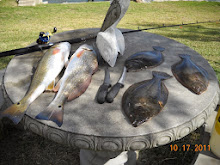
Desalination plants pose significant environmental dangers by discharging hyper-saline, toxic brine (containing copper or chlorine) back into the ocean, creating oxygen-depleted "dead zones" and destroying marine life. Additionally, these plants consume high amounts of energy—often from fossil fuels—and their intake systems kill fish larvae and plankton. For every liter of potable water, about 1.5 liters of brine, which is twice as salty as ocean water and contains pollutants, are released. To top all these factors off, The state of Texas Closed Rollover Pass, filled it in. So, that just adds more salinity to Galveston Bay already, add in the Desalination Plant at the old HL&P Plant in Bacliff Tx., and all the already existing oil/chemical plant’s discharge, and it’s a Disaster waiting to happen to Galveston Bay. Plus, we already had problems with flounder fish kills from that very same place when it was in operation before as a power plant. WHAT about the changing climate, future droughts in Texas and the NATURAL Desalination, what if no fresh water from future drought and ramifications there from on Galveston bay? In the state of Texas Rush for more fresh water, please don’t kill Galveston bay in the process. If this desalination plant process of sucking in salt water from the inlet side Dickinson Bayou, and then Discharges even saltier water and other toxic materials are then discharged on the Bacliff, Spillway park, more fish kills will happen (see video from past massive flounder kills from same place) ;
August 11, 2012 Massive Flounder Fish Kill Bacliff Texas Shoreline 77518
Then add in all the barriers and restrictions from tidal movements from the Ike Dike up in middle Galveston Bay, It just does not make common sense to me, taking any chance on further harm to Galveston Bay.
October 10, 2012
IKE DIKE PROPOSED BY RICE UNIVERSITY hangs our Bayshore communities out to dry, IN 25 FEET OF WATER, to make way for WATERFRONT RECREATION $$$
PLUS there’s already discharge from
CLEAN HARBORS, TCEQ, DICKINSON BAYOU, PUBLIC MEETING JANUARY 25, 2016
SO, i believe there is great potential for great damage to Galveston Bay ecosystem from any Desalination Plant from _INSIDE_ Galveston Bay.
The only logical place for a Desalination plant would be on the Gulf Coast, OUTSIDE of Galveston Bay, and AWAY from any Pass, so any man made change of discharge flow, or ingredients there from, would be restricted to the Gulf, for a good flushing.
Keeping Galveston Bay Ecosystem equally balanced takes careful precision from only Mother Nature, Don’t mess with Mother Nature.
Please don’t let the rush to judgment for fresh water, kill Galveston Bay, trying to play God.
I adamantly oppose any and all desalination plants to be permitted to be built inside of Galveston bay and all immediate coastal areas…
Terry S. Singeltary Sr.
TCEQ Confirmation: Your public comment on Permit Number WQ0005502000 was received.
References
The desalination process gives us freshwater – at a huge environmental cost Dec 16, 2022
https://www.weforum.org/stories/2022/12/desalination-process-freshwater-negative-environmental-cost/
Five things to know about desalination
11 JAN 2021 STORY FRESH WATER
“Increased salinity and temperature can cause a decrease in the dissolved oxygen content, resulting in conditions called hypoxia,” says Manzoor Qadir, Assistant Director of the United Nations University Institute for Water, Environment and Health (UNU-INWEH).
This can harm organisms living on or in the bottom of a water body and translate into observable effects throughout the food chain. In addition, certain compounds (e.g. copper, chloride) used in the desalination pre-treatment process can be toxic to organisms in the receiving water, according to Qadir.
Saudi Arabia (population 34 million) gets about 50 per cent of its drinking water from desalination.
A 2018 United Nations study says there are now almost 16,000 desalination plants operating in 177 countries, producing a volume of freshwater equivalent to almost half the average flow over the Niagara Falls. However, the toxic brine which is usually dumped in the sea, risks contaminating food chains if left untreated.
Rising water demands associated with population growth, increased water consumption per capita and economic growth, coupled with diminishing water supplies due to climate change and contamination, are exacerbating water scarcity in most world regions.
Unless renewable energy sources are integrated into desalination systems, the process risks trading one environmental challenge for another.
Another major factor in the desalination environmental impact is the discharge of brine, a highly concentrated saltwater byproduct. Brine disposal typically involves releasing this dense, saline solution back into the ocean. When poorly managed, it can alter local salinity levels, deplete oxygen, and threaten marine organisms. The brine can also contain trace chemicals such as chlorine or antiscalants used during treatment, further affecting marine biodiversity. Sensitive ecosystems, particularly those near coastal discharge points, are at risk if outflow systems are not designed with care and precision.
In addition to outflow concerns, the intake systems used to draw seawater into desalination plants can disrupt marine habitats. Traditional open-ocean intakes may inadvertently pull in fish larvae, plankton, and other small organisms, causing harm to marine life and affecting local food webs. As global reliance on desalination grows, minimizing these intake and discharge impacts is critical to achieving sustainable outcomes.
Currently, desalinated water only provides about 1% of the world’s drinking water, but the International Water Association expects production capacity to double by 2030. It may need to grow even faster to keep up with climate change. A paper published by the American Meteorological Society predicted that the total percentage of Earth’s land in extreme drought at any given time will have grown from 1% in 2006 to 30% by the end of the 21st century. As climate change redistributes water around the planet, causing wet places to become wetter and dry places to become drier, more and more people are going to be dependent on alternate water sources. Even the United States, where droughts have again increased during the past two decades, has begun reinvesting in desalination. A number of membrane plants have come online in Texas and California since 2005, and others are planned for Los Angeles and Corpus Christi.
Beyond the energy consumption and expense, desalination has another major downside: it produces extra-salty brine that sinks to the sea floor where it kills marine life. Additionally, such plants would have enormous carbon footprints. Critics of desalination argue that it’s wasteful to spend money and energy on desalinating seawater (even if the plants are powered by solar panels) when humans dump billions of gallons of wastewater into lakes and rivers every day. Why not recycle the leftover water from showers and toilets and send it back into the system instead of wasting energy desalting ocean water? Part of the reason some governments have been resistant to recycling water is because the concept sounds a little gross; detractors call it “toilet to tap.” On the other hand, around the world there are at least 1.2 billion people living in areas that don’t have water to recycle to begin with. For those people the only options appear to be desalination. With climate change causing more frequent droughts, desalination offers a potential solution to sustain growing populations in the most arid regions of the planet. Given that the raw water source in desalination is virtually inexhaustible, it offers a drought-free solution for municipalities and industries, ensuring water security. One more factor that works out in favour of the proposal is that the cost of desalinated water has been decreasing over the years, thanks to technological advancements. My endeavour is to study whether desalination is sustainable and affordable alternative water source or not.
Terry S. Singeltary Sr.
