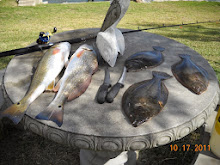
TEXAS AND IT'S INDUSTRY FRIENDLY ENVIRONMENTAL HAZARDOUS POLLUTING LAWS
January 2, 2011
Howdy Bay Area Neighbors,
Wasn't it refreshing to read the headlines in the City and State section of the Chronicle Friday December 31, 2010. Three headlines caught my eye. First was 'Texas tries again to foil EPA, second was 'Downpour Sends raw sewage into bayou', and the third was 'Decision to expand dump put on hold'. Puts a light on where we're headed in 2011. More nuke waste material in Texas, More shit in Galveston Bay, and even more shit from the EPA and Austin. Maybe we can redirect Buffalo Bayou and the Nuke waste dump to the Governors office. well, it's just a thought. ...
Buffalo Bayou sewage repairs may take 3 weeks Pipes break from downpour's load
By ALLAN TURNER HOUSTON CHRONICLE Dec. 31, 2010, 9:13AM
City workers on Thursday began assessing damage to a maze of sewer pipes that, gorged with water from heavy rains, spewed more than 100,000 gallons of raw sewage into Buffalo Bayou.
Public works spokesman Alvin Wright said it may take as long as three weeks to repair the damage, but sewer customers should not be inconvenienced in the process.
"They can still flush," Wright said. ...
http://www.chron.com/disp/story.mpl/metropolitan/7360522.html
Texas tries again to foil EPA It asks federal appeals court to stop takeover of rules for permits
By MATTHEW TRESAUGUE HOUSTON CHRONICLE Dec. 30, 2010, 9:09PM
Texas took another swing Thursday at the EPA, asking a federal appeals court to block the agency from seizing the state's authority to regulate the largest industrial sources of greenhouse gas emissions.
The latest legal move comes three days before new nationwide regulations for emissions of carbon dioxide and other heat-trapping gases take effect. Texas is the only state to refuse to implement the rules.
The Texas petition to the U.S. Circuit Court of Appeals for the District of Columbia accuses the Environmental Protection Agency of abusing its powers by taking control of the permitting program without proper public notice. The EPA made the unilateral move Dec. 23.
"Once again, the federal government is overreaching and improperly intruding upon the state of Texas and its legal rights," Texas Attorney General Greg Abbott said in a statement. Typically, the federal government delegates implementation of Clean Air Act rules to the states....
http://www.chron.com/disp/story.mpl/metropolitan/7360473.html
Judge orders halt to radioactive waste dump By JAY ROOT © 2010 The Associated Press
Dec. 30, 2010, 5:11PM
AUSTIN, Texas — A Texas judge ordered a temporary halt Thursday to a proposal that could allow three dozen states to dump their radioactive waste in far West Texas, a ruling that sided with environmentalists and caught the state attorney general's office off guard.
State District Judge Jon Wisser issued a temporary restraining order against the Texas Low-Level Radioactive Waste Disposal Compact Commission, which is scheduled to vote Jan. 4 on rules that could expand how much waste could be processed at a dump in remote Andrews County.
The injunction was issued in the judge's courtroom late Thursday morning, shortly after environmentalists filed the request, with nobody there representing the commission. A few minutes later, shocked lawyers from the Texas Attorney General's Office — which hadn't been officially notified of the pending court action — showed up and convinced the judge to order a new hearing on the injunction.
The hearing is set for Monday in Austin, one day before the commission's scheduled vote. ....
http://www.chron.com/disp/story.mpl/ap/tx/7360256.html
Friday, December 24, 2010
TEXAS NUCLEAR DUMP VOTE SET AMID HOLIDAY RUSH THANKS TO GOVERNOR RICK PERRY
NUCLEAR DUMP VOTE SET AMID HOLIDAY RUSH
CRITICS PROTEST TIMING OF MEETING ON 38-STATE WASTE FACILITY IN TEXAS
http://sciencebushwhacked.blogspot.com/2010/12/texas-nuclear-dump-vote-set-amid.html
WEDNESDAY, JULY 30, 2008
TEXAS WINS TO BE NEXT BIG DUMPING GROUND FOR NUCLEAR WEAPONS RADIOACTIVE WASTE
(see photo's)
http://sciencebushwhacked.blogspot.com/2008/07/texas-wins-to-be-next-big-dumping.html
Monday, July 5, 2010
B.P. Gulf Oil Spill Tar Balls Hit Texas Beaches Galveston and Bolivar
http://galvestonbay.blogspot.com/2010/07/gulf-oil-spill-tar-balls-hit-texas.html
Thursday, August 5, 2010
DEAD ZONES IN THE GULF AND GALVESTON BAY, NORTH AND SOUTH BACLIFF, SAN LEON, SHORELINE
flounders and stingrays floating belly up north and south of spillway part outlet.
http://galvestonbay.blogspot.com/2010/08/dead-zones-in-gulf-and-galveston-bay.html
Wednesday, August 6, 2008
TROUBLED WATERS
(DEAD DOLPHIN washed up on rocks in backyard, on Galveston Bay, in Bacliff, Texas 77518)
http://galvestonbay.blogspot.com/2008/08/troubled-waters.html
Saturday, July 19, 2008
GALVESTON BAY, swimming with the dolphins, PCBs, and FECAL MATTER
Greetings again kind friends and neighbors. ...
http://galvestonbay.blogspot.com/2008/07/galveston-bay-swimming-with-dolphins.html
http://galvestonbay.blogspot.com/
December 20, 2010
Don’t Trash Texas— Unless You Pay Perry $1.1 Million A billionaire gives the governor $500,000 more to make Texas the nation’s nuclear waste dump.
http://info.tpj.org/Lobby_Watch/pdf/SimmonsNukeImport.pdf
http://trailblazersblog.dallasnews.com/archives/2010/12/rick-perrys-nuclear-money-mach.html
Terry S Singeltary Sr.
P.O. Box 42
Bacliff, Texas USA 77518
Showing posts with label galveston bay. Show all posts
Showing posts with label galveston bay. Show all posts
Sunday, January 2, 2011

Thursday, August 5, 2010
DEAD ZONES IN THE GULF AND GALVESTON BAY, NORTH AND SOUTH BACLIFF, SAN LEON, SHORELINE

DEAD ZONES IN THE GULF AND GALVESTON BAY, NORTH AND SOUTH BACLIFF, SAN LEON, SHORELINE 77518
Low-oxygen area now deeper into Texas waters Largest-ever Gulf dead zone spans from Galveston to Mississippi River
By ERIC BERGER HOUSTON CHRONICLE Aug. 3, 2010, 10:37PM
The dead zone off the Texas coast is larger this year than scientists have ever measured, stretching offshore from the Mississippi River to Galveston Island.
An area of low-oxygen water that threatens marine life, the dead zone is at its largest during the summer months.
Scientists have surveyed the Gulf dead zone for a quarter-century, and this year's 7,722-square-mile area of hypoxic water is among the five largest.
"It's been getting larger and larger over the last five to seven years," said Nancy Rabelais, a Louisiana scientist who leads efforts to annually map the dead zone. "As it's been getting larger, it's expanded farther into Texas waters.
"This is the largest such area off the upper Texas coast that we have found since we began this work in 1985."
Discharge from the Mississippi River, which carries nitrogen and phosphorous nutrients from Midwestern states, largely creates the dead zone.
These nutrients, partly from commercial fertilizers, spur the growth of algaeblooms which, after dying, sink to the bottom. There the bacteria which feast upon the algae also bloom, depleting oxygen in the water.
Fish and shellfish often can swim away from these areas but immobile organisms, such as clams, simply die without access to oxygen.
Scientists are beginning to try and quantify the economic effect of dead zones, primarily due to potential disruption of fisheries.
"There are a whole host of biological consequences for fish in hypoxic areas, and when you add up all those different things you might expect there will be less fish to catch," said Martin Smith, an environmental economist at Duke University.
In recent years Smith has studied the effects of hypoxia on North Carolina fisheries at the mouth of the Neuse River, and he said low-oxygen water may have reduced catches by 10 to 15 percent.
Long-term worries Smith is part of a team that recently received a four-year, $700,000 grant to perform the first extensive study of the economic consequences of the Gulf dead zone.
In the short term it may benefit some fisheries, he said, because some species such as shrimp may be more tightly clustered at the edge of hypoxic areas, making them easier to catch.
Nevertheless there are long-term concerns about areas of low-oxygen water because they may reduce the reproduction of fish, or slow their growth rates.
"One would expect that if there's less dissolved oxygen, as the severity of the problem worsens, the consequences are going to get worse, too," he said. "But we're not going to answer that question scientifically until we do the study."
Common in summer Texas has seen dead zones before. Excessive rainfall in 2007 caused the Brazos River to discharge more than twice as much water into the Gulf of Mexico than previously measured since at least 1967.
This large amount of fresh water carrying nitrates led to the creation of a temporary 1,750-square-mile area of oxygen-depleted water, stretching from Freeport to Matagorda Bay.
And the Gulf's summer dead zone — such areas occur most commonly in the summer when winds are lightest - has stretched along the upper Texas coast before.
Now it appears that, absent tropical weather in the summer to break up dead zones by mixing the water, dead zones will become permanent summertime fixtures.
"There's still room for it to grow," Rabelais said. "It just has to do with the pressure of more people and nutrients. It means lower water quality, and larger algae blooms. It's certainly not a good thing."
eric.berger@chron.com
Subject: deadzone reply tss
WE have a dead zone right here in Bacliff Texas, on Galveston Bay, caused by ZERO oxygen level towards the bottom, flowing out of the Reliant spillway park, due to treated sewer being dumped into the discharge canal. you can see the pipe from google search. i was told by TPWD, from that pipe down to the mouth of the bay, via the discharge pipe, there is a blue green algae that has created the ZERO oxygen levels towards the bottom. the ZERO oxygen levels once the water discharges into the bay, runs both North and South up and down Bacliff, and San Leon shore line. Both FLOUNDER AND STINGRAYS have been seen floating belly up in large numbers. this has been going on for about 4 or 5 years, every year about this same time we saw it this year, and is generally seen around no tide movement days. BUT, we have had a significant reduction in the numbers of flounders in our area over this same time frame. i guess that's why we smell fece's in Galveston bay from time to time also. isn't progress wonderful. ...not///
check out the next addition of the SEABREEZE newspaper.
stupid is, as stupid does, and sometimes, you just can't fix stupid...
please see article ;
August 6, 2010
GOT FLOUNDER? Not in San Leon...
GOT FLOUNDER? Not in San Leon...
Got Flounder? Not in San Leon.
During the month of July, flounder and stingray have been floating up dead all along the San Leon/Bacliff shoreline on the north side. Our freelance reporter, Terry Singeltary, ob- served dead flounder floating by in groups of twos and three's with an occasional five or six. These are big, mature flounder, from two to seven pounds. Along with these flounder, dead stingrays have been seen floating by. Mr. Bobby Redfield, who lives on Bayshore Drive, also observed the same thing and gave me a call. This went on for several days. We received eight more calls where someone people left messages regarding dead flounder floating around the spillway, but did not leave their names and numbers. Our reporter contacted Lance Robinson, the Texas Parks and Wildlife Biologist located at the Dickinson office and expressed his concern about the destruction of these fish. Mr. Robinson said that they were aware of this problem and knew the cause. It turns out that a water treatment plant in the Bacliff area has a discharge pipeline that dumps into the HL&P outlet canal and goes out by way of the spillway and follows the tide. Since there is no longer any pressured flow discharging from HL&P, the chemicals from this treated water build up, removing all of the oxygen from the bottom of the water along the shoreline. The fish that live on the bottom of the bay, like flounder and stingray, cannot survive. This has been going on for years and has not been addressed. With the three sewer plants dumping into Dickinson Bayou and the de- pletion of flounder it makes you wonder why anyone in their right mind would want to put another sewer plant dumping into our precious, fragile resources. Mr. Robinson said they were having a meeting on this very subject. The meeting was to take place one week ago from this newspaper printing. Our reporter has put a call in to Mr. Robinson three days prior to this publication and at this time has not been called back. Maybe the Texas Parks and Wildlife has to contact the CCA and ask them how they should handle it. As we know more, you will know more. Do you fisherman ever wonder why there may be a shortage of flounder? With all of the sewer plants up and down the Texas coast dumping water treatment chemicals into our bays, creeks, rivers, bayous, estuaries, it's no wonder that the flounder are disappearing. What are you going to do about it Texas Parks & Wildlife? Are you going to keep cutting back the limits with the fisherman until you stop fishing for flounder forever, or are you actually going to address the problem? It's time for you Texas fishermen to wake up and let your voices be heard.
http://seabreezenews.com/issue/Page_16.pdf
TSS
Monday, July 5, 2010
B.P. Gulf Oil Spill Tar Balls Hit Texas Beaches Galveston and Bolivar

GALVESTON, Texas, July 5, 2010
Gulf Oil Spill Tar Balls Hit Texas Beaches
State Says Responders Have Recovered About 35 Gallons of Waste Material Tainted by Oil on Beaches
(AP) A top Texas official said Monday that tar balls from the Gulf oil spill have been found on state beaches, marking the first known evidence that gushing crude from the Deepwater Horizon well has now reached all the Gulf states.
Special Section: Disaster in the Gulf
http://www.cbsnews.com/2718-201_162-558.html
Gulf Oil Spill Tar Balls Hit Texas Beaches
State Says Responders Have Recovered About 35 Gallons of Waste Material Tainted by Oil on Beaches
(AP) A top Texas official said Monday that tar balls from the Gulf oil spill have been found on state beaches, marking the first known evidence that gushing crude from the Deepwater Horizon well has now reached all the Gulf states.
Special Section: Disaster in the Gulf
http://www.cbsnews.com/2718-201_162-558.html
Land Commissioner Jerry Patterson said two crews were removing tar balls found on the Bolivar Peninsula and Galveston Island on Sunday.
"We've said since day one that if and when we have an impact from Deepwater Horizon, it would be in the form of tarballs," Patterson said in a news release. "This shows that our modeling is accurate. Any Texas shores impacted by the Deepwater spill will be cleaned up quickly and BP will be picking up the tab."
The state said responders have recovered about 35 gallons of waste material tainted by the oil from the two sites.
Signs of landfall by oil from the Deepwater Horizon spill had previously only been reported in Louisiana, Mississippi, Alabama and the Florida Panhandle.
The distance between the western-most reach of the spill in Texas and the eastern-most reports of oil in Florida is about 550 miles.
http://www.cbsnews.com/stories/2010/07/05/national/main6649045.shtml
oh hell,
I see right out of the starting gates they are wanting to blame the tankers on bringing this B.P. oil globs to our Texas beaches. so, back to my question (part of this was omitted in the Galveston Daily News comment submission that was published due to comment length limit), BUT WHAT ABOUT Galveston Bay and all it's estuaries ?
tarball...(flounder)
===================================
From: Terry S. Singeltary Sr.
T o:
Cc: letters@galvnews.com
Sent: Saturday, May 22, 2010 11:24 AM
Subject: do we need an Ike dike, or a BP dike ?
WHAT (if any), is the contingency plan we have to keep that BP oil from getting into Galveston Bay, and all it's estuary's, if it heads our way, and threatens our coast ?
PLEASE NOTE ; the booms do not seem to be working. I have seen them broke up and beached, with oil soaked birds trying to stay afloat on them. we know the entrance between the jetties can be a rough one, sometimes on a calm day, as with San Luis Pass.
SO what is the contingency plan to protect the cuts coming into Galveston bay, and keep the BP oil, or any oil, from entering ?
OUR BEACHES would be very vulnerable too, so another question would be, what is the contingency plan to keep the BP oil off our beaches from High Islands, to Corpus, and beyond, IF the oil was to come our way? the surf would break up any booms, so what plan is it you have for the beaches as well ?
===================================
Subject: do we need an Ike dike, or a BP dike ?
WHAT (if any), is the contingency plan we have to keep that BP oil from getting into Galveston Bay, and all it's estuary's, if it heads our way, and threatens our coast ?
PLEASE NOTE ; the booms do not seem to be working. I have seen them broke up and beached, with oil soaked birds trying to stay afloat on them. we know the entrance between the jetties can be a rough one, sometimes on a calm day, as with San Luis Pass.
SO what is the contingency plan to protect the cuts coming into Galveston bay, and keep the BP oil, or any oil, from entering ?
OUR BEACHES would be very vulnerable too, so another question would be, what is the contingency plan to keep the BP oil off our beaches from High Islands, to Corpus, and beyond, IF the oil was to come our way? the surf would break up any booms, so what plan is it you have for the beaches as well ?
===================================
Thursday, June 3, 2010
Galveston Daily News
Letters to the Editor
May 28, 2010
How Would We Deal With An Oil Spill Here?
Do we need an Ike dike, or a BP dike?
I watch in misery as I see what is happening to our kind neighbors to the east of us, and think to myself, there, but for the grace of God, go we.
All that would have to happen is a change in wind pattern or weather pattern and BP’s God-awful mess could be at our doorsteps in a minute.
What, if any, is the contingency plan to keep that BP oil from getting into Galveston Bay and all its estuaries, if it heads our way? Will the ship channel and cuts be closed to seal off the bay?
Our beaches would be vulnerable, too. What is the contingency plan to keep the BP oil off our beaches from High Island to Corpus Christi and beyond, if the oil were to come our way?
If an oil dispersant is used, how would we keep that from coming into Galveston Bay, and what harm is it to humans and wildlife, including fish?
These are just a few of many questions I would like answered before the BP oil slick, or any oil slick, is seen off our coast, not after it comes ashore.
Terry Singeltary Sr. Bacliff
http://galvestondailynews.com/story.lasso?ewcd=b8f097d3ec4f9965
ORIGINAL SUBMISSION ;
----- Original Message -----
From: Terry S. Singeltary Sr.
To:
Cc: letters@galvnews.com
Sent: Saturday, May 22, 2010 11:24 AM
Subject: do we need an Ike dike, or a BP dike ?
Greetings Mr. Taylor and The Galveston Daily News et al !
I have a few questions please, that I think someone needs to answer for the public.
I watch in misery and pain as I see what is happening to our Kind Neighbors to the East of us, and on around the Gulf Coast to Florida, and think to myself, there for the Grace of God, are us. all that would have to happen is a change in wind pattern, and or weather pattern, or maybe even an early tropical storm coming in from the Florida keys from east to west across the gulf. any of these scenario's would put that God awful mess at our door steps in a minute.
WHAT (if any), is the contingency plan we have to keep that BP oil from getting into Galveston Bay, and all it's estuary's, if it heads our way, and threatens our coast ?
PLEASE NOTE ; the booms do not seem to be working. I have seen them broke up and beached, with oil soaked birds trying to stay afloat on them. we know the entrance between the jetties can be a rough one, sometimes on a calm day, as with San Luis Pass.
SO what is the contingency plan to protect the cuts coming into Galveston bay, and keep the BP oil, or any oil, from entering ?
OUR BEACHES would be very vulnerable too, so another question would be, what is the contingency plan to keep the BP oil off our beaches from High Islands, to Corpus, and beyond, IF the oil was to come our way? the surf would break up any booms, so what plan is it you have for the beaches as well ?
IF OIL DISPERSANTS are used, how would we keep that from coming into Galveston Bay, and what harm would it be to our wildlife and fishing in general ?
THESE are just a few of many questions myself, and I am sure others would like to have answered, BEFORE the BP oil slick, or any oil slick, is seen off our coast. NOT after it is seen.
I am sure, somewhere there is a contingency plan. I am sure it is published somewhere, I would hope so anyway, and we should all have a copy of it for scrutiny, in case it is not sufficient to protect our Galveston Bay, and our Beaches. ...
sincerely concerned,
Terry S. Singeltary Sr. P.O. Box 42 Bacliff, Texas USA 77518
Sunday, May 30, 2010
DO WE NEED AN IKE DIKE, OR A B.P. DIKE, OR BOTH
Documents Show Early Worries About Safety of Rig
http://galvestonbay.blogspot.com/2010/05/do-we-need-ike-dike-or-bp-dike-or-both.html
Wednesday, June 2, 2010
OFFICIALS CLAIM PLAN IS IN PLACE IF OIL HITS TEXAS BEACHES Officials:
Plan in place if oil hits Texas beaches
http://galvestonbay.blogspot.com/2010/06/officials-claim-plan-is-in-place-if-oil.html
http://galvestonbay.blogspot.com/2010/06/officials-claim-plan-is-in-place-if-oil.html
Tuesday, June 22, 2010
Will Bacterial Plague Follow Crude Oil Spill Along Gulf Coast?
http://galvestonbay.blogspot.com/2010/06/will-bacterial-plague-follow-crude-oil.html
Governor Perry comments ;
"I want to assure Texans we are taking aggressive actions." ...end
let's hope so. i have my doubts though. ...tarball (flounder)
Terry S. Singeltary Sr.
P.O. 42
Bacliff, Texas USA 77518
Friday, November 20, 2009
Hidden poison: San Jacinto River's submerged toxic dumps must be secured, and soon
----- Original Message -----
From: Terry S. Singeltary Sr.
To: TERRY SINGELTARY
Sent: Friday, November 20, 2009 10:46 AM
Subject: San Jacinto River's submerged toxic dumps must be secured, and soon
Hidden voice San Jacinto River’s submerged toxic dumps must be secured, and soon HOUSTON CHRONICLE Nov. 19, 2009, 8:18PM
Since 2005, state and federal environmental officials have known the source of dangerous levels of the carcinogen dioxin originating in the San Jacinto River and contaminating seafood harvested from northern Galveston Bay.
Industrial waste pits that operated nearly a half century ago and are now submerged due to subsidence under the river just north of the I-10 bridge continue to leak toxic sediments, particularly during coastal storms. Because that portion of the river is subject to tidal flow, the chemicals can also be driven upstream.
As a result of the pollution, state officials have issued guidelines advising residents not to eat more than one eight-ounce serving per month of seafood originating in the most heavily contaminated areas of the river, the Ship Channel and the bay.
Thanks to the committed efforts of area elected officials, including Rep. Gene Green, a Democrat, and Rep. Ted Poe, a Republican, the toxic dump, called the McGinnes pits for a now-defunct former owner, was fast-tracked onto the federal Superfund list of sites eligible for cleanup money.
Environmental Protection Agency officials have also pinpointed the companies which absorbed the entities responsible for the chemicals in the dumps and will bear the cleanup costs: International Paper and Waste Management.
So far, so good. However, negotiations between the companies and the EPA over a course of action continue, even as the dump continues to inject its poisons into surrounding waters.
Waste Management officials have proposed immediate measures to confine the chemicals behind flood-proof dikes and levees, but EPA officials want more studies of the potential scope of the polluted area before green lighting the plan. As reported by Chronicle environmental writer Matthew Tre-saugue, EPA spokesman Donn Walters says the agency wants to make sure the companies carry out a complete cleanup- even if it takes more time.
Congressman Green expressed frustration that the company’s offer to begin securing the dumps from the river is not being seized upon. “The immediate thing is to get those containers that are now under water contained right now,” says the congressman. “Tomorrow is too late for me.”
Green says he plans to meet as soon as possible with EPA Administrator Lisa Jackson to stress the urgency of the situation. Harris County Attorney Vince Ryan, whose office is also involved in the negotiations to clean up the dump site, agrees with Green.
“Public health concerns require that the leaking pits be plugged immediately to stop even more new dioxin from poisoning the river and the bay,” commented Ryan. The companies “are offering a way to do that with what we see as a significant short-term fix,” said Ryan, who promises to require them to carry out further remedial action “that is more than a first-aid bandage.”
Even with posted warning signs, right now area anglers are hooking or netting unsafe seafood from the polluted zones and taking the catch home for dinner. Unlike many Superfund sites on dry land, this one continues to spread its carcinogenic legacy into a prime sport and commercial fishery and recreational area.
This isn’t an environmental time bomb; it’s a slow-motion explosion. The EPA must recognize that while complete removal of the toxics is the ultimate goal, cutting off the flow of dioxins into the bay and separating the dump from the river is a priority that can’t wait on more studies.
http://www.chron.com/disp/story.mpl/editorial/6730197.html
I hope and pray that Congressman Green, Rep. Ted Poe and Harris County Attorney Vince (Chico) Ryan will do everything they can to get this ball rolling. it's been a long time coming. it's a damn shame when you cannot even eat fresh seafood from Galveston Bay no longer, for fear of these dangerous Toxins being in the seafood we eat, and our children eat. debating this issue for half a century is long enough, clean the crap up, NOW. GO after these companies that have polluted our bay with everything you have. TAKE NO PRISONERS. ...TSS
Wednesday, July 8, 2009
DSHS Issues Fish Advisory for Clear Creek DO NOT EAT ANY FISH !
http://galvestonbay.blogspot.com/2009/07/dshs-issues-fish-advisory-for-clear.html
Galveston Bay blogspot
http://galvestonbay.blogspot.com/
IKE 77518
turn it up !
http://www.youtube.com/watch?v=-4xSThx5ksA
TSS
From: Terry S. Singeltary Sr.
To: TERRY SINGELTARY
Sent: Friday, November 20, 2009 10:46 AM
Subject: San Jacinto River's submerged toxic dumps must be secured, and soon
Hidden voice San Jacinto River’s submerged toxic dumps must be secured, and soon HOUSTON CHRONICLE Nov. 19, 2009, 8:18PM
Since 2005, state and federal environmental officials have known the source of dangerous levels of the carcinogen dioxin originating in the San Jacinto River and contaminating seafood harvested from northern Galveston Bay.
Industrial waste pits that operated nearly a half century ago and are now submerged due to subsidence under the river just north of the I-10 bridge continue to leak toxic sediments, particularly during coastal storms. Because that portion of the river is subject to tidal flow, the chemicals can also be driven upstream.
As a result of the pollution, state officials have issued guidelines advising residents not to eat more than one eight-ounce serving per month of seafood originating in the most heavily contaminated areas of the river, the Ship Channel and the bay.
Thanks to the committed efforts of area elected officials, including Rep. Gene Green, a Democrat, and Rep. Ted Poe, a Republican, the toxic dump, called the McGinnes pits for a now-defunct former owner, was fast-tracked onto the federal Superfund list of sites eligible for cleanup money.
Environmental Protection Agency officials have also pinpointed the companies which absorbed the entities responsible for the chemicals in the dumps and will bear the cleanup costs: International Paper and Waste Management.
So far, so good. However, negotiations between the companies and the EPA over a course of action continue, even as the dump continues to inject its poisons into surrounding waters.
Waste Management officials have proposed immediate measures to confine the chemicals behind flood-proof dikes and levees, but EPA officials want more studies of the potential scope of the polluted area before green lighting the plan. As reported by Chronicle environmental writer Matthew Tre-saugue, EPA spokesman Donn Walters says the agency wants to make sure the companies carry out a complete cleanup- even if it takes more time.
Congressman Green expressed frustration that the company’s offer to begin securing the dumps from the river is not being seized upon. “The immediate thing is to get those containers that are now under water contained right now,” says the congressman. “Tomorrow is too late for me.”
Green says he plans to meet as soon as possible with EPA Administrator Lisa Jackson to stress the urgency of the situation. Harris County Attorney Vince Ryan, whose office is also involved in the negotiations to clean up the dump site, agrees with Green.
“Public health concerns require that the leaking pits be plugged immediately to stop even more new dioxin from poisoning the river and the bay,” commented Ryan. The companies “are offering a way to do that with what we see as a significant short-term fix,” said Ryan, who promises to require them to carry out further remedial action “that is more than a first-aid bandage.”
Even with posted warning signs, right now area anglers are hooking or netting unsafe seafood from the polluted zones and taking the catch home for dinner. Unlike many Superfund sites on dry land, this one continues to spread its carcinogenic legacy into a prime sport and commercial fishery and recreational area.
This isn’t an environmental time bomb; it’s a slow-motion explosion. The EPA must recognize that while complete removal of the toxics is the ultimate goal, cutting off the flow of dioxins into the bay and separating the dump from the river is a priority that can’t wait on more studies.
http://www.chron.com/disp/story.mpl/editorial/6730197.html
I hope and pray that Congressman Green, Rep. Ted Poe and Harris County Attorney Vince (Chico) Ryan will do everything they can to get this ball rolling. it's been a long time coming. it's a damn shame when you cannot even eat fresh seafood from Galveston Bay no longer, for fear of these dangerous Toxins being in the seafood we eat, and our children eat. debating this issue for half a century is long enough, clean the crap up, NOW. GO after these companies that have polluted our bay with everything you have. TAKE NO PRISONERS. ...TSS
Wednesday, July 8, 2009
DSHS Issues Fish Advisory for Clear Creek DO NOT EAT ANY FISH !
http://galvestonbay.blogspot.com/2009/07/dshs-issues-fish-advisory-for-clear.html
Galveston Bay blogspot
http://galvestonbay.blogspot.com/
IKE 77518
turn it up !
http://www.youtube.com/watch?v=-4xSThx5ksA
TSS
Wednesday, July 8, 2009
DSHS Issues Fish Advisory for Clear Creek DO NOT EAT ANY FISH !
Texas Department of State Health Services NEWS RELEASE July 8, 2009
DSHS Issues Fish Advisory for Clear Creek
The Texas Department of State Health Services has issued an advisory warning people not to consume any species of fish from Clear Creek. The creek runs through parts of Brazoria, Fort Bend, Galveston and Harris counties.
The advisory was issued after laboratory testing showed elevated levels of polychlorinated biphenyls, or PCBs, in fish samples collected from the creek.
DSHS tested tissue samples from seven species of fish as part of a reevaluation of the creek. The creek previously was under a 1993 advisory for elevated levels of volatile organic compounds. That advisory was lifted in 2001.
Long-term consumption of PCBs may cause cancer and reproductive, immune system, developmental and liver problems. According to DSHS standards, PCB levels in fish above 0.047 parts per million (ppm) may pose a health risk to humans. PCB levels in the most recent Clear Creek samples averaged 0.100 ppm and were as high as 0.676 ppm.
PCBs are industrial chemicals once used as coolants and lubricants in electrical transformers and capacitors. The U.S. Environmental Protection Agency banned PCBs in 1979, but items containing PCBs did not have to be replaced. PCBs degrade slowly in the environment.
Elevated levels of PCBs in fish do not pose a health risk for people swimming, fishing or participating in other water recreation activities in Clear Creek.
A July 2008 advisory remains in place for Galveston Bay and its contiguous waters, including Clear Creek, due to elevated levels of dioxins and PCBs in spotted sea trout and catfish.
-30-
(News Media Contact: Carrie Williams, DSHS Assistant Press Officer, 512-458-7400.)
Content Questions: DSHS Press Officer
Subscription Information: User Profile Page
DSHS News Items: Online
Technical Assistance: mhtml:%7B33B38F65-8D2E-434D-8F9B-8BDCD77D3066%7Dmid://00000208/!x-usc:mailto:support@govdelivery.com
GovDelivery, Inc. sending on behalf of the Texas Health and Human Services Commission · 4900 North Lamar Blvd · Austin TX 78751 · 1-800-439-1420
http://www.dshs.state.tx.us/news/releases/20090708.shtm
http://www.dshs.state.tx.us/news/releases/20090708-sp.shtm
doi:10.1016/j.marpolbul.2009.01.012
Copyright © 2009 Published by Elsevier Ltd.
Water quality in the Dickinson Bayou watershed (Texas, Gulf of Mexico) and health issues
References and further reading may be available for this article. To view references and further reading you must purchase this article.
Antonietta Quigga, b, , , Linda Broachc, 1, , Winston Dentond, 2, and Roger Mirandae, 3,
aDepartment of Marine Biology, Texas A&M University at Galveston, 5007 Avenue U, Galveston, TX 77551, United States
bDepartment of Oceanography, Texas A&M University, 3146 TAMU, College Station, TX 77843, United States
cTexas Commission on Environmental Quality, 5425 Polk Avenue, Suite H, Houston, TX 77023, United States
dCoastal Fisheries Division, Texas Parks and Wildlife Dickinson Department, 1502 FM 517 East, Dickinson, TX 77539, United States
eTexas Commission on Environmental Quality, 1200 Park 35 Circle, Austin, TX 78711, United States
Available online 24 February 2009.
Abstract The Dickinson Bayou watershed (near Houston, Texas, Gulf of Mexico) provides habitat for numerous coastally influenced communities of wildlife, including scores of birds and fish. Encroaching development and impervious surfaces are altering the habitat and degrading water quality. Herein we have defined the current health of the bayou using water quality data collected between 2000 and 2006. Elevated bacteria (fecal coliform, Escherichia coli and Enterococcus) and depressed dissolved oxygen concentrations (often <3 mg l-1) are the two major impairments to this ecosystem. While nutrient ratios indicate primary productivity may be nitrogen limited, concerns of eutrophication persist because the bayou has a low intrinsic flushing rate. Consistent with this is the magnitude of algal blooms (ca. 100 µg chl l-1) which often occur in spring/summer. The findings of this study will assist with the understanding of the influence of urban development on small watersheds. Keywords: Bacteria; Ecosystem management; Environmental monitoring; Eutrophication; Low dissolved oxygen; Nitrogen; Nutrients Article Outline 1. Introduction 1.1. Study area 2. Methods 3. Results 3.1. Air temperature and rainfall 3.2. Salinity and dissolved oxygen concentrations 3.3. Chlorophyll and nutrients 3.4. Bacteria 4. Discussion Acknowledgements References Fig. 1. The Dickinson Bayou watershed is located within the San Jacinto–Brazos Coastal Basin at 29°29' N, 95°14' W, 45 km southeast of Houston, Texas.
View Within Article
--------------------------------------------------------------------------------
Fig. 2. Average monthly (A) air temperature (°C) and (B) rainfall (cm) in the DBW between 2000 and 2006. Error bars represent standard deviations. (C) Annual rainfall (cm) is subject to cyclic patterns and perturbations due to tropical storms.
View Within Article
--------------------------------------------------------------------------------
Fig. 3. Average water column salinities (‰) measured between 2000 and 2006 from Dickinson Bay (0 km; SH I46) to the upper reach of the tidal portion of Dickinson Bayou. The averages are presented with minimums (lower bars) and maximums (higher bars). A log scale was used to show the range across the bayou.
View Within Article
--------------------------------------------------------------------------------
Fig. 4. Average (24 h) DO concentrations (mg l-1) measured between 2000 and 2006 from Dickinson Bay (0 km; SH I46) to the upper reach of the tidal portion of Dickinson Bayou. (A) Surface DO was typically 6.1 mg l-1 along the length of the bayou with minimum DO’s (bottom bar) ranging from 0.6-2.8 mg l-1 and maximums (top bar) from 7.9–19 mg l-1. (B) DO at >1 m depth was typically 3.5 mg l-1 in the bayou with minimums (bottom bar) ranging from 0.1–1.0 mg l-1 and maximums (top bar) from 8.2–9.8 mg l-1. (C) Exceedances refer to the measurement of instantaneous DO concentrations of 3 mg l-1. The fraction of exceedances in surface (1 m) waters (white bars) was less than those in deep (>1 m) waters (black bars). The greatest fraction of exceedances occurred in the tidal segment of the bayou between Gum Bayou (6.4 km) and Cemetery Road (19.7 km).
View Within Article
--------------------------------------------------------------------------------
Fig. 5. Seasonal patterns in DO concentrations varied as a function of water depth. Surface waters were those at 1 m (A) while deep waters were those at >1 m (B). October to April represent the cool months (white bars) while May to September are the warm months (black bars), respectively.
View Within Article
--------------------------------------------------------------------------------
Fig. 6. Percentage exceedances of fecal coliform measured between 2000 and 2006 from Dickinson Bay (0 km; SH I46) to the above tidal portion of Dickinson Bayou. The main stem of the bayou (white bars) in general, had fewer exceedances than the tributaries (black bars).
View Within Article
--------------------------------------------------------------------------------
Table 1. Summary of sampling sites visited on a regular basis between 2000 and 2006. The distances inland were calculated relative to Dickinson Bay at SHI46 (see Fig. 1). Segment, latitude, longitude, and a brief description are included for reference. Tributaries are in italics.
View Within Article
--------------------------------------------------------------------------------
Table 2. Average chlorophyll concentrations (µg l-1) measured between 2000 and 2006 from Dickinson Bay to the upper reach of the tidal region. No data is available for above the tidal reach. Values presented here are the median chlorophyll concentrations (i.e., chl a plus phaeophytin). The range and number of samples (N) examined is also included. Tributaries are in italics.
View Within Article
--------------------------------------------------------------------------------
Table 3. Total nutrient concentrations (mg l-1) in the water column of Dickinson Bayou, based on a sample size (N), collected between 2000 and 2006. The range (min–max) was included to show the variability. Tributaries are in italics.
View Within Article
--------------------------------------------------------------------------------
Table 4. Bacterial counts in the surface waters of Dickinson Bayou. Minimum and maximum values generally (but not always) reflect the lower and upper detection limits for these tests and so were not included. Rather the % of samples that exceeded the criteria (%E) were included as well as the number of samples (N) measured. Fecal coliform was measured at all stations while Enterococcus was only measured in the tidal segment and E. coli only in the above tidal segment. Tributaries are in italics.
View Within Article
Corresponding author. Tel.: +1 409 740 4990; fax: +1 409 740 5001. 1 Tel.: +1 713 767 3579. 2 Tel.: +1 281 534 0138. 3 Tel.: +1 512 239 6278. Sponsored Links 24-7 Emergency On Call Water Damage Restoration - Direct Insurance Bill. Call 281-537-8379 AroundDClockRestorationHouston.com
mosquito misting systems Better Product, Better prices, Better Warranty, Guaranteed
www.houstonmosquitosystems.com
LifePoint Church Pointing people toward real meaningful life. League City, TX
www.cometolifepoint.com
http://www.sciencedirect.com/science?_ob=ArticleURL&_udi=B6V6N-4VP5XM3-1&_user=10&_rdoc=1&_fmt=&_orig=search&_sort=d&_docanchor=&view=c&_searchStrId=951717896&_rerunOrigin=google&_acct=C000050221&_version=1&_urlVersion=0&_userid=10&md5=0b5256cab4ed99911bde5a9b51148a9f
DID not really surprise me. if you can't eat fish and crabs from Galveston bay due to these PCBs, did anyone really expect them not to be in our bayous ???
now the gum bayou waste dumping proposal all for a buck $$$ i.e. developers, to create tons of treated crap in a bayou already contaminated ???
now that's what i call science, but i assure you, they will buy the best junk science they can buy, to say that Dickinson Bayou will be o.k. $$$
they need the tax base.
add it all up, and it's nothing more than money. for ANY of our elected officials to go along with this blatant act of neglect to the environment and it's existing people around Gum bayou, they should be voted out of office. THERE IS NO VALID EXCUSE FOR THIS OTHER THAN MONEY $$$
our bay and bayous will be dead soon, as the approaching dead zone to galveston bay gets even closer.
TSS
State approves contested sewage plant permit
By Chris Paschenko The Daily News Published April 20, 2009
DICKINSON — A four-year, grass-roots effort opposing a wastewater treatment plant failed when state environmental regulators deemed the release of 500,000 gallons of treated effluent into Gum Bayou posed no environmental risk.
The city of Dickinson and residents of the Tropical Garden’s subdivision contested the permit sought by Marlin Atlantis White, the developer of record, to build a sewage treatment plant that, in its final phase, could release up to 500,000 gallons a day of treated sewage into Gum Bayou. Gum Bayou drains into Dickinson Bayou, which is listed by the state as an impaired tidewater, having low oxygen and high bacteria levels.
The plant would service a proposed 1,300-home subdivision near Gum Bayou and FM 517 in Texas City.
In Austin on April 8, Craig R. Bennett, an administrative law judge with the State Office of Administrative Hearings, told a panel of three commissioners with the Texas Commission on Environmental Quality that there was no evidence the plant would endanger human health, aquatic life or the environment.
Bacteria Study Ignored
The state’s evidence, presented in a three-day hearing in Galveston in September, was generated through modeling of Gum Bayou.
Those opposed to the plant argued the state didn’t adequately measure the depth of Gum Bayou, nor did the commission consider its own preliminary study that found high elevations of bacteria present in Dickinson Bayou.
In deeming Gum Bayou eligible for the plant, Mark A. Rudolph, an engineer for the commission testifying in Galveston, said he relied on aerial photographs and professional judgment to determine the bayou’s depth and width, which are factors in determining whether the state would permit the plant.
The commission also refused to consider its own preliminary bacteria study, which it released in March. The draft shows elevated E. coli and enterococci bacteria levels in the majority of Dickinson Bayou monitoring stations nearly 90 percent of the time.
High levels of E. coli and enterococci are indicators of the presence of fecal matter in the water. Rudolph testified that the state couldn’t use the data because neither the state nor the U.S. Environmental Protection Agency have finalized the draft, which could take another three years. Rudolph testified the bacteria modeling would have forced the commission to use an outside consultant and would have been a budgeting issue.
The commission, however, upheld Bennett’s recommendation and issued the permit with some exceptions. The permit, which expires Sept. 1, 2013, requires the plant to be closed if and when a regional plant comes online.
Residents Ask Governor For Delay
Peggy Wright, a resident of Tropical Gardens, dedicated three years of her life fighting the permit for the plant that would drain near her subdivision. She attended last week’s hearing in Austin and said the governor’s office didn’t respond to signed petitions or requests for intervention.
“We’re below the outfall and all the potential problems it could bring,” Wright said. “We still feel, myself personally, it could serve as a quasi plant for other developers.”
Val Perkins, attorney for the developer of record, argued in September that the state can’t ask developers to put projects on hold until draft studies are confirmed.
The state is expected to issue the permit in 30 to 45 days, Perkins said.
“When we get it, we will be enabled to commence with the development, but I don’t know what the development plans are for the property right now.” Perkins said.
Whether the slowing of the housing market nationally will affect the development is unknown. Perkins is unaware of a timetable for the development.
“It’s certainly true nationally, but I don’t presume to know what the markets might be,” Perkins said. “I will say, generally, housing projects that have financing are moving forward.”
http://galvestondailynews.com/story.lasso?ewcd=a450ca706c60aed0
Sewer plant opponents set up legal fight fund
By T.J. Aulds The Daily News Published July 7, 2009
DICKINSON — Residents battling a planned wastewater treatment plant near a bayou along the city limits of Dickinson and Texas City have set up a legal fund to fight the plan in court.
Now they just need an attorney who will take the case.
The plant would serve a proposed 1,300-home subdivision near Gum Bayou and FM 517 in Texas City.
The residents of the Tropical Gardens subdivision contested the permit sought by developer Marlin Atlantis to build the sewage treatment plant that could release up to 500,000 gallons a day of treated sewage into Gum Bayou. The bayou drains into Dickinson Bayou, which is listed by the state as an impaired tidewater, with low levels of oxygen and high levels of bacteria.
The Texas Commission on Environmental Quality in April approved the developer’s application to build the plant. The city of Dickinson, which had opposed the plant’s construction, narrowly voted against appealing that decision.
However, Bridget Long and other area residents plan to keep up the fight. She claims the application was flawed and that a study on bacteria levels in Gum Bayou was ignored.
Last week, Long set up a legal fund account at the Regents Bank in Dickinson with hopes of appealing the state’s decision in court. The problem is finding a lawyer who will take on the case, Long said. She said the group planned to contact the Galveston Bay Foundation to see what help that environmental group could offer.
http://galvestondailynews.com/story.lasso?ewcd=98de9ce7519f75db
TSS
DSHS Issues Fish Advisory for Clear Creek
The Texas Department of State Health Services has issued an advisory warning people not to consume any species of fish from Clear Creek. The creek runs through parts of Brazoria, Fort Bend, Galveston and Harris counties.
The advisory was issued after laboratory testing showed elevated levels of polychlorinated biphenyls, or PCBs, in fish samples collected from the creek.
DSHS tested tissue samples from seven species of fish as part of a reevaluation of the creek. The creek previously was under a 1993 advisory for elevated levels of volatile organic compounds. That advisory was lifted in 2001.
Long-term consumption of PCBs may cause cancer and reproductive, immune system, developmental and liver problems. According to DSHS standards, PCB levels in fish above 0.047 parts per million (ppm) may pose a health risk to humans. PCB levels in the most recent Clear Creek samples averaged 0.100 ppm and were as high as 0.676 ppm.
PCBs are industrial chemicals once used as coolants and lubricants in electrical transformers and capacitors. The U.S. Environmental Protection Agency banned PCBs in 1979, but items containing PCBs did not have to be replaced. PCBs degrade slowly in the environment.
Elevated levels of PCBs in fish do not pose a health risk for people swimming, fishing or participating in other water recreation activities in Clear Creek.
A July 2008 advisory remains in place for Galveston Bay and its contiguous waters, including Clear Creek, due to elevated levels of dioxins and PCBs in spotted sea trout and catfish.
-30-
(News Media Contact: Carrie Williams, DSHS Assistant Press Officer, 512-458-7400.)
Content Questions: DSHS Press Officer
Subscription Information: User Profile Page
DSHS News Items: Online
Technical Assistance: mhtml:%7B33B38F65-8D2E-434D-8F9B-8BDCD77D3066%7Dmid://00000208/!x-usc:mailto:support@govdelivery.com
GovDelivery, Inc. sending on behalf of the Texas Health and Human Services Commission · 4900 North Lamar Blvd · Austin TX 78751 · 1-800-439-1420
http://www.dshs.state.tx.us/news/releases/20090708.shtm
http://www.dshs.state.tx.us/news/releases/20090708-sp.shtm
doi:10.1016/j.marpolbul.2009.01.012
Copyright © 2009 Published by Elsevier Ltd.
Water quality in the Dickinson Bayou watershed (Texas, Gulf of Mexico) and health issues
References and further reading may be available for this article. To view references and further reading you must purchase this article.
Antonietta Quigga, b, , , Linda Broachc, 1, , Winston Dentond, 2, and Roger Mirandae, 3,
aDepartment of Marine Biology, Texas A&M University at Galveston, 5007 Avenue U, Galveston, TX 77551, United States
bDepartment of Oceanography, Texas A&M University, 3146 TAMU, College Station, TX 77843, United States
cTexas Commission on Environmental Quality, 5425 Polk Avenue, Suite H, Houston, TX 77023, United States
dCoastal Fisheries Division, Texas Parks and Wildlife Dickinson Department, 1502 FM 517 East, Dickinson, TX 77539, United States
eTexas Commission on Environmental Quality, 1200 Park 35 Circle, Austin, TX 78711, United States
Available online 24 February 2009.
Abstract The Dickinson Bayou watershed (near Houston, Texas, Gulf of Mexico) provides habitat for numerous coastally influenced communities of wildlife, including scores of birds and fish. Encroaching development and impervious surfaces are altering the habitat and degrading water quality. Herein we have defined the current health of the bayou using water quality data collected between 2000 and 2006. Elevated bacteria (fecal coliform, Escherichia coli and Enterococcus) and depressed dissolved oxygen concentrations (often <3 mg l-1) are the two major impairments to this ecosystem. While nutrient ratios indicate primary productivity may be nitrogen limited, concerns of eutrophication persist because the bayou has a low intrinsic flushing rate. Consistent with this is the magnitude of algal blooms (ca. 100 µg chl l-1) which often occur in spring/summer. The findings of this study will assist with the understanding of the influence of urban development on small watersheds. Keywords: Bacteria; Ecosystem management; Environmental monitoring; Eutrophication; Low dissolved oxygen; Nitrogen; Nutrients Article Outline 1. Introduction 1.1. Study area 2. Methods 3. Results 3.1. Air temperature and rainfall 3.2. Salinity and dissolved oxygen concentrations 3.3. Chlorophyll and nutrients 3.4. Bacteria 4. Discussion Acknowledgements References Fig. 1. The Dickinson Bayou watershed is located within the San Jacinto–Brazos Coastal Basin at 29°29' N, 95°14' W, 45 km southeast of Houston, Texas.
View Within Article
--------------------------------------------------------------------------------
Fig. 2. Average monthly (A) air temperature (°C) and (B) rainfall (cm) in the DBW between 2000 and 2006. Error bars represent standard deviations. (C) Annual rainfall (cm) is subject to cyclic patterns and perturbations due to tropical storms.
View Within Article
--------------------------------------------------------------------------------
Fig. 3. Average water column salinities (‰) measured between 2000 and 2006 from Dickinson Bay (0 km; SH I46) to the upper reach of the tidal portion of Dickinson Bayou. The averages are presented with minimums (lower bars) and maximums (higher bars). A log scale was used to show the range across the bayou.
View Within Article
--------------------------------------------------------------------------------
Fig. 4. Average (24 h) DO concentrations (mg l-1) measured between 2000 and 2006 from Dickinson Bay (0 km; SH I46) to the upper reach of the tidal portion of Dickinson Bayou. (A) Surface DO was typically 6.1 mg l-1 along the length of the bayou with minimum DO’s (bottom bar) ranging from 0.6-2.8 mg l-1 and maximums (top bar) from 7.9–19 mg l-1. (B) DO at >1 m depth was typically 3.5 mg l-1 in the bayou with minimums (bottom bar) ranging from 0.1–1.0 mg l-1 and maximums (top bar) from 8.2–9.8 mg l-1. (C) Exceedances refer to the measurement of instantaneous DO concentrations of 3 mg l-1. The fraction of exceedances in surface (1 m) waters (white bars) was less than those in deep (>1 m) waters (black bars). The greatest fraction of exceedances occurred in the tidal segment of the bayou between Gum Bayou (6.4 km) and Cemetery Road (19.7 km).
View Within Article
--------------------------------------------------------------------------------
Fig. 5. Seasonal patterns in DO concentrations varied as a function of water depth. Surface waters were those at 1 m (A) while deep waters were those at >1 m (B). October to April represent the cool months (white bars) while May to September are the warm months (black bars), respectively.
View Within Article
--------------------------------------------------------------------------------
Fig. 6. Percentage exceedances of fecal coliform measured between 2000 and 2006 from Dickinson Bay (0 km; SH I46) to the above tidal portion of Dickinson Bayou. The main stem of the bayou (white bars) in general, had fewer exceedances than the tributaries (black bars).
View Within Article
--------------------------------------------------------------------------------
Table 1. Summary of sampling sites visited on a regular basis between 2000 and 2006. The distances inland were calculated relative to Dickinson Bay at SHI46 (see Fig. 1). Segment, latitude, longitude, and a brief description are included for reference. Tributaries are in italics.
View Within Article
--------------------------------------------------------------------------------
Table 2. Average chlorophyll concentrations (µg l-1) measured between 2000 and 2006 from Dickinson Bay to the upper reach of the tidal region. No data is available for above the tidal reach. Values presented here are the median chlorophyll concentrations (i.e., chl a plus phaeophytin). The range and number of samples (N) examined is also included. Tributaries are in italics.
View Within Article
--------------------------------------------------------------------------------
Table 3. Total nutrient concentrations (mg l-1) in the water column of Dickinson Bayou, based on a sample size (N), collected between 2000 and 2006. The range (min–max) was included to show the variability. Tributaries are in italics.
View Within Article
--------------------------------------------------------------------------------
Table 4. Bacterial counts in the surface waters of Dickinson Bayou. Minimum and maximum values generally (but not always) reflect the lower and upper detection limits for these tests and so were not included. Rather the % of samples that exceeded the criteria (%E) were included as well as the number of samples (N) measured. Fecal coliform was measured at all stations while Enterococcus was only measured in the tidal segment and E. coli only in the above tidal segment. Tributaries are in italics.
View Within Article
Corresponding author. Tel.: +1 409 740 4990; fax: +1 409 740 5001. 1 Tel.: +1 713 767 3579. 2 Tel.: +1 281 534 0138. 3 Tel.: +1 512 239 6278. Sponsored Links 24-7 Emergency On Call Water Damage Restoration - Direct Insurance Bill. Call 281-537-8379 AroundDClockRestorationHouston.com
mosquito misting systems Better Product, Better prices, Better Warranty, Guaranteed
www.houstonmosquitosystems.com
LifePoint Church Pointing people toward real meaningful life. League City, TX
www.cometolifepoint.com
http://www.sciencedirect.com/science?_ob=ArticleURL&_udi=B6V6N-4VP5XM3-1&_user=10&_rdoc=1&_fmt=&_orig=search&_sort=d&_docanchor=&view=c&_searchStrId=951717896&_rerunOrigin=google&_acct=C000050221&_version=1&_urlVersion=0&_userid=10&md5=0b5256cab4ed99911bde5a9b51148a9f
DID not really surprise me. if you can't eat fish and crabs from Galveston bay due to these PCBs, did anyone really expect them not to be in our bayous ???
now the gum bayou waste dumping proposal all for a buck $$$ i.e. developers, to create tons of treated crap in a bayou already contaminated ???
now that's what i call science, but i assure you, they will buy the best junk science they can buy, to say that Dickinson Bayou will be o.k. $$$
they need the tax base.
add it all up, and it's nothing more than money. for ANY of our elected officials to go along with this blatant act of neglect to the environment and it's existing people around Gum bayou, they should be voted out of office. THERE IS NO VALID EXCUSE FOR THIS OTHER THAN MONEY $$$
our bay and bayous will be dead soon, as the approaching dead zone to galveston bay gets even closer.
TSS
State approves contested sewage plant permit
By Chris Paschenko The Daily News Published April 20, 2009
DICKINSON — A four-year, grass-roots effort opposing a wastewater treatment plant failed when state environmental regulators deemed the release of 500,000 gallons of treated effluent into Gum Bayou posed no environmental risk.
The city of Dickinson and residents of the Tropical Garden’s subdivision contested the permit sought by Marlin Atlantis White, the developer of record, to build a sewage treatment plant that, in its final phase, could release up to 500,000 gallons a day of treated sewage into Gum Bayou. Gum Bayou drains into Dickinson Bayou, which is listed by the state as an impaired tidewater, having low oxygen and high bacteria levels.
The plant would service a proposed 1,300-home subdivision near Gum Bayou and FM 517 in Texas City.
In Austin on April 8, Craig R. Bennett, an administrative law judge with the State Office of Administrative Hearings, told a panel of three commissioners with the Texas Commission on Environmental Quality that there was no evidence the plant would endanger human health, aquatic life or the environment.
Bacteria Study Ignored
The state’s evidence, presented in a three-day hearing in Galveston in September, was generated through modeling of Gum Bayou.
Those opposed to the plant argued the state didn’t adequately measure the depth of Gum Bayou, nor did the commission consider its own preliminary study that found high elevations of bacteria present in Dickinson Bayou.
In deeming Gum Bayou eligible for the plant, Mark A. Rudolph, an engineer for the commission testifying in Galveston, said he relied on aerial photographs and professional judgment to determine the bayou’s depth and width, which are factors in determining whether the state would permit the plant.
The commission also refused to consider its own preliminary bacteria study, which it released in March. The draft shows elevated E. coli and enterococci bacteria levels in the majority of Dickinson Bayou monitoring stations nearly 90 percent of the time.
High levels of E. coli and enterococci are indicators of the presence of fecal matter in the water. Rudolph testified that the state couldn’t use the data because neither the state nor the U.S. Environmental Protection Agency have finalized the draft, which could take another three years. Rudolph testified the bacteria modeling would have forced the commission to use an outside consultant and would have been a budgeting issue.
The commission, however, upheld Bennett’s recommendation and issued the permit with some exceptions. The permit, which expires Sept. 1, 2013, requires the plant to be closed if and when a regional plant comes online.
Residents Ask Governor For Delay
Peggy Wright, a resident of Tropical Gardens, dedicated three years of her life fighting the permit for the plant that would drain near her subdivision. She attended last week’s hearing in Austin and said the governor’s office didn’t respond to signed petitions or requests for intervention.
“We’re below the outfall and all the potential problems it could bring,” Wright said. “We still feel, myself personally, it could serve as a quasi plant for other developers.”
Val Perkins, attorney for the developer of record, argued in September that the state can’t ask developers to put projects on hold until draft studies are confirmed.
The state is expected to issue the permit in 30 to 45 days, Perkins said.
“When we get it, we will be enabled to commence with the development, but I don’t know what the development plans are for the property right now.” Perkins said.
Whether the slowing of the housing market nationally will affect the development is unknown. Perkins is unaware of a timetable for the development.
“It’s certainly true nationally, but I don’t presume to know what the markets might be,” Perkins said. “I will say, generally, housing projects that have financing are moving forward.”
http://galvestondailynews.com/story.lasso?ewcd=a450ca706c60aed0
Sewer plant opponents set up legal fight fund
By T.J. Aulds The Daily News Published July 7, 2009
DICKINSON — Residents battling a planned wastewater treatment plant near a bayou along the city limits of Dickinson and Texas City have set up a legal fund to fight the plan in court.
Now they just need an attorney who will take the case.
The plant would serve a proposed 1,300-home subdivision near Gum Bayou and FM 517 in Texas City.
The residents of the Tropical Gardens subdivision contested the permit sought by developer Marlin Atlantis to build the sewage treatment plant that could release up to 500,000 gallons a day of treated sewage into Gum Bayou. The bayou drains into Dickinson Bayou, which is listed by the state as an impaired tidewater, with low levels of oxygen and high levels of bacteria.
The Texas Commission on Environmental Quality in April approved the developer’s application to build the plant. The city of Dickinson, which had opposed the plant’s construction, narrowly voted against appealing that decision.
However, Bridget Long and other area residents plan to keep up the fight. She claims the application was flawed and that a study on bacteria levels in Gum Bayou was ignored.
Last week, Long set up a legal fund account at the Regents Bank in Dickinson with hopes of appealing the state’s decision in court. The problem is finding a lawyer who will take on the case, Long said. She said the group planned to contact the Galveston Bay Foundation to see what help that environmental group could offer.
http://galvestondailynews.com/story.lasso?ewcd=98de9ce7519f75db
TSS
Monday, July 28, 2008
Can Our Oceans Survive?
INTELLIGENCE REPORT
Can Our Oceans Survive?
Published: July 27, 2008
As director of The Marine Mammal Center in Sausalito, Calif., Frances Gulland sees firsthand the effects of the oceans’ deteriorating state. Her patients have included cancer-stricken sea lions whose tumors are thought to be associated with PCBs, sea otters infected by a parasite linked to run-off, and fur seals sickened by toxic algae. These animals act as “an early warning system,” says Gulland. “All these things could happen to us.”
A recent study led by the National Center for Ecological Analysis and Synthesis in Santa Barbara, Calif., found that close to half of the oceans are “fairly degraded,” and only 3.7% show little or no impact from human activity. Oceans help keep the environment healthy by absorbing carbon dioxide. But now the results of that intake are evident. The seas have risen, warmed, and acidified worldwide. Those changes, combined with overfishing, have caused 90% of our big fish to disappear, according to Leon Panetta, co-chair of the Joint Ocean Commission Initiative. “Pollution has led to almost 26,000 U.S. beaches being temporarily closed or put under advisories,” he adds, “ and nearly 90% of our wetlands, the nurseries for fish, have vanished due to development. The oceans are in crisis.”
The U.S. government spends relatively little on the sea. Around $18,700 per square mile goes to the National Park System, while $400 per square mile goes to its ocean counterpart, the National Marine Sanctuary System. Private charities show a similar trend. “Close to 99% of conservation dollars donated go to land causes, and 1% to oceans,” says Debra Erickson, executive director of the nonprofit Kerzner Marine Foundation (KMF). “But over 70% of the Earth is covered by oceans.”
Lack of public attention may be due to the sea’s placid appearance. “You look at the surface, and it looks fine,” says Prof. Jane Lubchenco of Oregon State University in Corvallis. “Yet below the surface is a whole different story.” The Blue Project—a collaboration among KMF, other nonprofits, and Kerzner’s Atlantis resort in the Bahamas—is trying to educate people about what’s happening underwater, specifically with coral reefs. Atlantis visitors can go scuba diving or snorkeling and see the stark difference between a healthy reef filled with colorful creatures and a degraded one that contains bleached coral and not much else. “When you see a reef that has the proper number of fish in it vs. one that doesn’t, it takes your breath away,” says Erickson. —Daryl Chen
http://www.parade.com/hot-topics/0807/can-our-oceans-survive.html
Monday, July 14, 2008
Heedless practices of Texas industry and DREDGING OF SHIP CHANNEL, now poisoning sport fishing industry, AND IT'S CONSUMERS
http://galvestonbay.blogspot.com/2008/07/heedless-practices-of-texas-industry.html
http://www.texashuntfish.com/app/forum/19324/GALVESTON-BAY-FISH-CONSUMPTION-WARNING-and-ship-channel-dredging-for-BAYPORT
Saturday, July 19, 2008
GALVESTON BAY, swimming with the dolphins, PCBs, and FECAL MATTER
http://galvestonbay.blogspot.com/2008/07/galveston-bay-swimming-with-dolphins.html
http://www.texashuntfish.com/app/forum/19324/GALVESTON-BAY-FISH-CONSUMPTION-WARNING-and-ship-channel-dredging-for-BAYPORT
Terry S. Singeltary Sr.
P.O. Box 42
Baycliff, Texas USA 77518
Can Our Oceans Survive?
Published: July 27, 2008
As director of The Marine Mammal Center in Sausalito, Calif., Frances Gulland sees firsthand the effects of the oceans’ deteriorating state. Her patients have included cancer-stricken sea lions whose tumors are thought to be associated with PCBs, sea otters infected by a parasite linked to run-off, and fur seals sickened by toxic algae. These animals act as “an early warning system,” says Gulland. “All these things could happen to us.”
A recent study led by the National Center for Ecological Analysis and Synthesis in Santa Barbara, Calif., found that close to half of the oceans are “fairly degraded,” and only 3.7% show little or no impact from human activity. Oceans help keep the environment healthy by absorbing carbon dioxide. But now the results of that intake are evident. The seas have risen, warmed, and acidified worldwide. Those changes, combined with overfishing, have caused 90% of our big fish to disappear, according to Leon Panetta, co-chair of the Joint Ocean Commission Initiative. “Pollution has led to almost 26,000 U.S. beaches being temporarily closed or put under advisories,” he adds, “ and nearly 90% of our wetlands, the nurseries for fish, have vanished due to development. The oceans are in crisis.”
The U.S. government spends relatively little on the sea. Around $18,700 per square mile goes to the National Park System, while $400 per square mile goes to its ocean counterpart, the National Marine Sanctuary System. Private charities show a similar trend. “Close to 99% of conservation dollars donated go to land causes, and 1% to oceans,” says Debra Erickson, executive director of the nonprofit Kerzner Marine Foundation (KMF). “But over 70% of the Earth is covered by oceans.”
Lack of public attention may be due to the sea’s placid appearance. “You look at the surface, and it looks fine,” says Prof. Jane Lubchenco of Oregon State University in Corvallis. “Yet below the surface is a whole different story.” The Blue Project—a collaboration among KMF, other nonprofits, and Kerzner’s Atlantis resort in the Bahamas—is trying to educate people about what’s happening underwater, specifically with coral reefs. Atlantis visitors can go scuba diving or snorkeling and see the stark difference between a healthy reef filled with colorful creatures and a degraded one that contains bleached coral and not much else. “When you see a reef that has the proper number of fish in it vs. one that doesn’t, it takes your breath away,” says Erickson. —Daryl Chen
http://www.parade.com/hot-topics/0807/can-our-oceans-survive.html
Monday, July 14, 2008
Heedless practices of Texas industry and DREDGING OF SHIP CHANNEL, now poisoning sport fishing industry, AND IT'S CONSUMERS
http://galvestonbay.blogspot.com/2008/07/heedless-practices-of-texas-industry.html
http://www.texashuntfish.com/app/forum/19324/GALVESTON-BAY-FISH-CONSUMPTION-WARNING-and-ship-channel-dredging-for-BAYPORT
Saturday, July 19, 2008
GALVESTON BAY, swimming with the dolphins, PCBs, and FECAL MATTER
http://galvestonbay.blogspot.com/2008/07/galveston-bay-swimming-with-dolphins.html
http://www.texashuntfish.com/app/forum/19324/GALVESTON-BAY-FISH-CONSUMPTION-WARNING-and-ship-channel-dredging-for-BAYPORT
Terry S. Singeltary Sr.
P.O. Box 42
Baycliff, Texas USA 77518
Saturday, July 19, 2008
GALVESTON BAY, swimming with the dolphins, PCBs, and FECAL MATTER
GALVESTON BAY, swimming with the dolphins, PCBs, and FECAL MATTER
Greetings again kind friends and neighbors,
well, see there, i was not dreaming, i know what shit smells like when i smell it. i was not only fishing with the PCBs, i was also fishing in feces yesterday, right in our backyard, on Galveston Bay. wonder what the PCBs and the fact Galveston Bay is now being used as a toilet, just to flush feces down, wonder what that will do to bay front property values ??? the realtors and such keep telling me they call this progress. hmmm, some progress. yep, glad i threw that limit of specs away yesterday. that was the first time i had ever released a limit of specs, one by one off our pier. i don't like catch and release, especially when live shrimp is 10 dollars a pint. catch and put in freezer is my logo, and if you cannot do that, what's the use of going, especially when you smell like feces when you get out of the bay. oh well, business is booming, Bayport et al is running wide open, the shit channel is bigger and better, and Galveston Bay is now nothing more than a toilet full of feces, PCBs, and many other toxins, not to forget the deadly flesh eating bacteria Vibrio vulnificus, come on down and get your bay front, water front, property now. ...TSS
p.s. as of this morning, no identifiable lesions, and or open wounds yet. ...TSS
July 18, 2008, 11:15PM Buffalo Bayou tributary flushed Investigators trying to identify source of sewage
By ALLAN TURNER Copyright 2008 Houston Chronicle
Hazardous materials workers began the laborious process of flushing a stagnant segment of Buffalo Bayou's Newman Branch on Friday after it was contaminated by raw sewage, possibly flowing from a broken pipe.
Most heavily contaminated was a section of the waterway between Interstate 10 and Memorial Drive.
Investigators from the city health department and other agencies arrived at the scene early Friday afternoon after nearby residents complained of the stench. The process of flushing the bayou with water from fire hydrants began at midafternoon.
Today, hazardous material workers plan to siphon scum from atop the water at a collection point set up with booms near the Memorial bridge.
Stephen Dicker, an investigator with Houston Police Department's environmental crimes unit, said workers trying to identify the source of the leak were hampered by the uncertainty of the location of underground sewer pipes.
Newman Branch flows north to south just east of Antoine. North of I-10, the branch is contained in storm sewers, Dicker said.
Houston oilman Dewey Stringer, who lives near the point where the bayou passes Memorial, said similar pollution has periodically plagued the waterway for at least five years. Generally, however, heavy rainfall dilutes the contamination.
Stringer, who was among residents to report the pollution to authorities, said the odor was so severe that he and his wife found it difficult to sleep. He had planned to relocate to Galveston this weekend and commute to work.
Stringer said he has developed eye irritation from vapors rising from the bayou and both he and his wife have developed persistent coughs.
In the past, Stringer said official response to pollution incidents had been lackadaisical.
Thursday night, he said, he began telephoning federal, state, county and city agencies he thought might have jurisdiction in the matter.
"No one is saying that there isn't a problem today," he said as investigators scurried along the bayou bank at his home. "They're all running around with red eyes."
While complete water sample test results were not available Friday, preliminary tests indicated the water's oxygen level was far below the level needed to sustain aquatic life.
Investigators have seen no signs of a fish kill, Dicker said.
At the point where Newman Branch passes Stringer's house, the water Friday afternoon was a metallic black, covered by thick pads of ivory-colored scum. Stringer said the bayou had been in that condition about a month.
Dicker said he has investigated previous pollution cases at Newman Branch — one involving dumping chemicals from a paint factory and one from construction runoff.
"This is the first time we've had apparent sewage pollution," he said.
Dicker said his investigation is complicated by the presence of both city and subdivision sewer systems in the area.
allan.turner@chron.com
http://www.chron.com/disp/story.mpl/metropolitan/5896226.html
In fact, much of Buffalo Bayou is tidal. Spartina alterniflora, the salt marsh plant in the low-tidal zone, seems to cut off upstream of the connection with the San Jacinto, up closer to around Jensen/Runnels street. I’m not sure if that’s due to the change in salinity or the abrupt change in topography there (from more flat estuarine-like along the edges to a deeper, narrow channel)
Further up the bayou, I have witnessed a dolphin at the intersection of White Oak Bayou and Buffalo Bayou, as several newspapers described back in the 90’s; there are certainly small alligators and big fish as far upstream as it goes. FYI, there’s also a lot of submerged junk there, too.
There is flow to Buffalo Bayou, it is regulated by a dam up near Addick’s Reserviour, they can make it fast enough to make canoe races entertaining as evidenced by the Buffalo Bayou Partnership’s annual race. I don’t know of any spring-fed flow, I would find that very strange for this bayou in particular. Ground water certainly is a major contributor from adjacent urban areas, and major rains can cause a massive fish kill, I have an old picture of one if anyone’s interested. I don’t know the name, but some folks at the University of Houston - Downtown have done a little work on that.
One can see evidence of flow from floods in the trees: there are characteristic water lines formed by trash hanging from the high points among the branches.I would say that historically, Buffalo Bayou probably drained the Katy Prairie, which should be somewhat more wet than it is today. Today, it drains Addick’s. Also, the areas adjacent to the Bayou were and are drained as well.
In conclusion, there is flow generally towards Galveston Bay, but sometimes it reverses due to high tides and southeast winds, particularly in the summer. Thus, it is a brackish connection between the fresh upper reaches, and the lower saline/brackish estuary.
http://texasliberal.wordpress.com/2007/09/20/blog-readers-demand-to-know-dolphins-in-houstons-buffalo-bayou/
The Port of Houston faces the ongoing challenge of floating debris deposited into Buffalo Bayou and floating into the Turning Basin and Galveston Bay.
http://www.irconnect.com/poha/pages/news_releases.html?d=125640
does that include floating turds. ...
still disgusted in sunny, hot, baycliff texas, where Houston still flushes turds into Galveston bay (at-a-boy mayor), and where you cannot eat the fish and crabs due to the PCBs and other deadly toxins, and where the deadly flesh eating bacteria Vibrio vulnificus lives, come on down. ...TSS
----- Original Message -----
From: TERRY SINGELTARY
To: steve@seabreezenews.com
Cc: judge
Sent: Friday, July 18, 2008 11:24 AM
Subject: LIMITED OUT THIS A.M. and i let them all go....first time that ever happened
greetings,
got a limit this A.M. before 10. the bay was flat, murky green, and the bay smelt just like sewage. or like it did in the late 50s, when you could walk the beach here in baycliff, and every house sewage went straight to the bay, that's what it smelled like. oh well, go figure, must have been the PCBs. also, while wading, it was like walking on potato chips. the bottom of the bay floor was littered with some kind of clam shells. every step you took, you would crunch a bunch of clam shells. no clams in them, they were all empty, just strange, had never seen that in this area before. where did the clams go? i was so disgusted, i sat on the pier and let them all go, one by one. i let a limit of speckle trout go. wasted 10 dollars on a pint of shrimp, just so i could let 10 specs go. probably the last time this year for that. what are we gonna do? do like most guides are doing and just play like everything is o.k., go ahead and fry em up, and feed our kids and grandkids these trout we now KNOW are tainted with PCBs? that seems what most of the guides are doing. just ignore it, play like it aint happening. i just cannot do it now, maybe later??? i think it's pathetic the way the public has flat out not responded to this. course with most everyone trying to convince joe q public, there aint nothing wrong with those specs, i am sure most will just forget about it, which is what most of the fishing industry is hoping. sad........
terry
GALVESTON BAY FISH CONSUMPTION WARNING DUE TO PCBs
http://galvestonbay.blogspot.com/
Monday, July 14, 2008
Heedless practices of Texas industry and DREDGING OF SHIP CHANNEL, now poisoning sport fishing industry, AND IT'S CONSUMERS
http://galvestonbay.blogspot.com/2008/07/heedless-practices-of-texas-industry.html
http://www.texashuntfish.com/app/forum/19324/GALVESTON-BAY-FISH-CONSUMPTION-WARNING-and-ship-channel-dredging-for-BAYPORT
TSS
Greetings again kind friends and neighbors,
well, see there, i was not dreaming, i know what shit smells like when i smell it. i was not only fishing with the PCBs, i was also fishing in feces yesterday, right in our backyard, on Galveston Bay. wonder what the PCBs and the fact Galveston Bay is now being used as a toilet, just to flush feces down, wonder what that will do to bay front property values ??? the realtors and such keep telling me they call this progress. hmmm, some progress. yep, glad i threw that limit of specs away yesterday. that was the first time i had ever released a limit of specs, one by one off our pier. i don't like catch and release, especially when live shrimp is 10 dollars a pint. catch and put in freezer is my logo, and if you cannot do that, what's the use of going, especially when you smell like feces when you get out of the bay. oh well, business is booming, Bayport et al is running wide open, the shit channel is bigger and better, and Galveston Bay is now nothing more than a toilet full of feces, PCBs, and many other toxins, not to forget the deadly flesh eating bacteria Vibrio vulnificus, come on down and get your bay front, water front, property now. ...TSS
p.s. as of this morning, no identifiable lesions, and or open wounds yet. ...TSS
July 18, 2008, 11:15PM Buffalo Bayou tributary flushed Investigators trying to identify source of sewage
By ALLAN TURNER Copyright 2008 Houston Chronicle
Hazardous materials workers began the laborious process of flushing a stagnant segment of Buffalo Bayou's Newman Branch on Friday after it was contaminated by raw sewage, possibly flowing from a broken pipe.
Most heavily contaminated was a section of the waterway between Interstate 10 and Memorial Drive.
Investigators from the city health department and other agencies arrived at the scene early Friday afternoon after nearby residents complained of the stench. The process of flushing the bayou with water from fire hydrants began at midafternoon.
Today, hazardous material workers plan to siphon scum from atop the water at a collection point set up with booms near the Memorial bridge.
Stephen Dicker, an investigator with Houston Police Department's environmental crimes unit, said workers trying to identify the source of the leak were hampered by the uncertainty of the location of underground sewer pipes.
Newman Branch flows north to south just east of Antoine. North of I-10, the branch is contained in storm sewers, Dicker said.
Houston oilman Dewey Stringer, who lives near the point where the bayou passes Memorial, said similar pollution has periodically plagued the waterway for at least five years. Generally, however, heavy rainfall dilutes the contamination.
Stringer, who was among residents to report the pollution to authorities, said the odor was so severe that he and his wife found it difficult to sleep. He had planned to relocate to Galveston this weekend and commute to work.
Stringer said he has developed eye irritation from vapors rising from the bayou and both he and his wife have developed persistent coughs.
In the past, Stringer said official response to pollution incidents had been lackadaisical.
Thursday night, he said, he began telephoning federal, state, county and city agencies he thought might have jurisdiction in the matter.
"No one is saying that there isn't a problem today," he said as investigators scurried along the bayou bank at his home. "They're all running around with red eyes."
While complete water sample test results were not available Friday, preliminary tests indicated the water's oxygen level was far below the level needed to sustain aquatic life.
Investigators have seen no signs of a fish kill, Dicker said.
At the point where Newman Branch passes Stringer's house, the water Friday afternoon was a metallic black, covered by thick pads of ivory-colored scum. Stringer said the bayou had been in that condition about a month.
Dicker said he has investigated previous pollution cases at Newman Branch — one involving dumping chemicals from a paint factory and one from construction runoff.
"This is the first time we've had apparent sewage pollution," he said.
Dicker said his investigation is complicated by the presence of both city and subdivision sewer systems in the area.
allan.turner@chron.com
http://www.chron.com/disp/story.mpl/metropolitan/5896226.html
In fact, much of Buffalo Bayou is tidal. Spartina alterniflora, the salt marsh plant in the low-tidal zone, seems to cut off upstream of the connection with the San Jacinto, up closer to around Jensen/Runnels street. I’m not sure if that’s due to the change in salinity or the abrupt change in topography there (from more flat estuarine-like along the edges to a deeper, narrow channel)
Further up the bayou, I have witnessed a dolphin at the intersection of White Oak Bayou and Buffalo Bayou, as several newspapers described back in the 90’s; there are certainly small alligators and big fish as far upstream as it goes. FYI, there’s also a lot of submerged junk there, too.
There is flow to Buffalo Bayou, it is regulated by a dam up near Addick’s Reserviour, they can make it fast enough to make canoe races entertaining as evidenced by the Buffalo Bayou Partnership’s annual race. I don’t know of any spring-fed flow, I would find that very strange for this bayou in particular. Ground water certainly is a major contributor from adjacent urban areas, and major rains can cause a massive fish kill, I have an old picture of one if anyone’s interested. I don’t know the name, but some folks at the University of Houston - Downtown have done a little work on that.
One can see evidence of flow from floods in the trees: there are characteristic water lines formed by trash hanging from the high points among the branches.I would say that historically, Buffalo Bayou probably drained the Katy Prairie, which should be somewhat more wet than it is today. Today, it drains Addick’s. Also, the areas adjacent to the Bayou were and are drained as well.
In conclusion, there is flow generally towards Galveston Bay, but sometimes it reverses due to high tides and southeast winds, particularly in the summer. Thus, it is a brackish connection between the fresh upper reaches, and the lower saline/brackish estuary.
http://texasliberal.wordpress.com/2007/09/20/blog-readers-demand-to-know-dolphins-in-houstons-buffalo-bayou/
The Port of Houston faces the ongoing challenge of floating debris deposited into Buffalo Bayou and floating into the Turning Basin and Galveston Bay.
http://www.irconnect.com/poha/pages/news_releases.html?d=125640
does that include floating turds. ...
still disgusted in sunny, hot, baycliff texas, where Houston still flushes turds into Galveston bay (at-a-boy mayor), and where you cannot eat the fish and crabs due to the PCBs and other deadly toxins, and where the deadly flesh eating bacteria Vibrio vulnificus lives, come on down. ...TSS
----- Original Message -----
From: TERRY SINGELTARY
To: steve@seabreezenews.com
Cc: judge
Sent: Friday, July 18, 2008 11:24 AM
Subject: LIMITED OUT THIS A.M. and i let them all go....first time that ever happened
greetings,
got a limit this A.M. before 10. the bay was flat, murky green, and the bay smelt just like sewage. or like it did in the late 50s, when you could walk the beach here in baycliff, and every house sewage went straight to the bay, that's what it smelled like. oh well, go figure, must have been the PCBs. also, while wading, it was like walking on potato chips. the bottom of the bay floor was littered with some kind of clam shells. every step you took, you would crunch a bunch of clam shells. no clams in them, they were all empty, just strange, had never seen that in this area before. where did the clams go? i was so disgusted, i sat on the pier and let them all go, one by one. i let a limit of speckle trout go. wasted 10 dollars on a pint of shrimp, just so i could let 10 specs go. probably the last time this year for that. what are we gonna do? do like most guides are doing and just play like everything is o.k., go ahead and fry em up, and feed our kids and grandkids these trout we now KNOW are tainted with PCBs? that seems what most of the guides are doing. just ignore it, play like it aint happening. i just cannot do it now, maybe later??? i think it's pathetic the way the public has flat out not responded to this. course with most everyone trying to convince joe q public, there aint nothing wrong with those specs, i am sure most will just forget about it, which is what most of the fishing industry is hoping. sad........
terry
GALVESTON BAY FISH CONSUMPTION WARNING DUE TO PCBs
http://galvestonbay.blogspot.com/
Monday, July 14, 2008
Heedless practices of Texas industry and DREDGING OF SHIP CHANNEL, now poisoning sport fishing industry, AND IT'S CONSUMERS
http://galvestonbay.blogspot.com/2008/07/heedless-practices-of-texas-industry.html
http://www.texashuntfish.com/app/forum/19324/GALVESTON-BAY-FISH-CONSUMPTION-WARNING-and-ship-channel-dredging-for-BAYPORT
TSS
Monday, July 14, 2008
Heedless practices of Texas industry and DREDGING OF SHIP CHANNEL, now poisoning sport fishing industry, AND IT'S CONSUMERS
Heedless practices of Texas industry and DREDGING OF SHIP CHANNEL, now poisoning sport fishing industry, AND IT'S CONSUMERS
News Release July 8, 2008 DSHS Issues Fish Consumption Advisory for Galveston Bay The Texas Department of State Health Services (DSHS) has issued an advisory warning people to limit their consumption of spotted seatrout and catfish from Galveston Bay. The advisory, which includes Chocolate Bay, East Bay, West Bay, Trinity Bay and contiguous waters, was issued after a two-year study showed elevated levels of dioxins and polychlorinated biphenyls, or PCBs, in the two fish.
Other fish species such as red drum, black drum and flounder were sampled and are safe to eat.
Adults are advised to limit consumption of the two fish to no more than one 8-ounce meal a month. Women who are nursing, pregnant or who may become pregnant and children should not eat any catfish or spotted seatrout from these waters.
PCBs are industrial chemicals once used as coolants and lubricants in electrical transformers and capacitors. The U.S. Environmental Protection Agency banned PCBs in 1979, but items containing PCBs did not have to be replaced. PCBs degrade slowly in the environment.
Dioxins are formed as unintentional by-products of many industrial and chemical production processes and incomplete combustion.
Long-term consumption of PCBs may cause cancer and reproductive, immune system, developmental and liver problems. Dioxins can cause skin rashes, liver damage, weight loss, reproductive damage and may increase the risk of cancer.
Spotted seatrout, also knows as speckled trout, is a favorite among recreational anglers in coastal waters. The DSHS advisory does not prohibit catching or possessing either fish species. The contaminants do not pose a threat to other recreational uses of the bay such as swimming or other contact recreational activities.
Fish consumption advisories have been in effect for the Houston Ship Channel and upper portion of Galveston Bay since 1990.
-30-
(News Media: For more information, contact Emily Palmer, DSHS Assistant Press Officer, 512-458-7400.)
http://www.dshs.state.tx.us/news/releases/20080708.shtm
see maps ;
Galveston Bay blue crabs
Houston Ship Channel and Upper Galveston Bay Advisory Area: ADV-3 The Houston Ship Channel and all contiguous waters including the San Jacinto River below the U.S. Highway 90 bridge and Upper Galveston Bay north of a line drawn from Red Bluff Point to Five Mile Cut Marker to Houston Point. Contaminant of Concern: Dioxin Species Affected: Blue crab Consumption Advice: 1. Adults should limit consumption of blue crab to no more than one (1) eight ounce (8 oz) meal per month. 2. Women who are nursing, pregnant, or who may become pregnant and children under twelve (12) years old should not consume blue crab from this area.
http://www.dshs.state.tx.us/seafood/MapsPDF/HSC%20UGB%20Blue%20Crab%20Advisory%20Map-2008.pdf
Galveston Bay Fish
Houston Ship Channel and Galveston Bay Brazoria, Chambers, Galveston, and Harris Counties ADV-20 Issued October 9, 2001 ADV-35 Issued July 8, 2008
http://www.dshs.state.tx.us/seafood/MapsPDF/AdvisoryMaps/Galveston%20Bay%20and%20HSC%20Fish%20Advisory%20Map_2008.pdf
TEXAS DEPARTMENT OF STATE HEALTH SERVICES FISH AND SHELLFISH CONSUMPTION ADVISORY ADV-35 This advisory is issued as a result of sampling of Trinity Bay and Upper and Lower Galveston Bay in Chambers, Galveston, and Harris Counties. Gaftopsail catfish and spotted seatrout collected from Trinity Bay and Upper and Lower Galveston Bay indicates the presence of polychlorinated dibenzo-p-dioxins and polychlorinated dibenzofurans (PCDDs/PCDFs or “Dioxin”) and polychlorinated biphenyls (PCBs) at concentrations exceeding health assessment guidelines established by the Texas Department of State Health Services (DSHS). Consumption of catfish species and spotted seatrout from Galveston Bay may pose a threat to human health. COUNTY: Brazoria, Chambers, Galveston, and Harris Counties AREA: Galveston Bay including Chocolate Bay, East Bay, West Bay, Trinity Bay and contiguous waters. SPECIES AFFECTED: All catfish species and spotted seatrout CONSUMPTION ADVISORY: Persons should limit consumption of catfish and spotted seatrout from this area to no more than one eight-ounce meal per month. Women who are nursing, pregnant, or who may become pregnant and children should not consume catfish or spotted seatrout from these waters. This advisory shall remain in effect until rescinded or modified in writing. Issued this 8th day of July, 2008 David L. Lakey, M.D. Commissioner
http://www.dshs.state.tx.us/seafood/PDF2/FishConsumptionAdvisoryBaNNews/ADV-35_signed.pdf
Characterization of Potential Adverse Health Effects Associated with Consuming Fish or Blue Crab from Lower Galveston Bay Chambers, Galveston, and Harris Counties, Texas June 2008
http://www.dshs.state.tx.us/seafood/PDF2/Risk%20Characterization/Lower%20Galveston%20Bay%20RC%202006-2007.pdf
Characterization of Potential Adverse Health Effects Associated with Consuming Fish or Blue Crab from Trinity Bay and Upper Galveston Bay Chambers, Galveston, and Harris Counties, Texas April 2008
http://www.dshs.state.tx.us/seafood/PDF2/Risk%20Characterization/Trinity%20Bay-Upper%20Galveston%20Bay%20RC%202006.pdf
July 9, 2008, 10:48PM Hold the line Heedless practices of Texas industry now poisoning sport fishing industry.
Copyright 2008 Houston Chronicle
The State Department of Health plunged bay fishermen into a new reality: Human action has tainted the bay's biology, a circumstance they forget at their peril when they pull a fish out of the water.
snip...
OH please, everyone that jumped on the Bayport terminal bandwagon, and all these other port expansions, all in the name of progress, jobs, cruise ships, export, import, etc., knew exactly what you were getting. I said years ago when they started dredging that ship channel out, making it wider and deeper, they were digging up more than they bargained for. we went 2 years while that big dredge crept along out in the ship channel, and we never saw a green tide, just mud. dead fish, and crabs literally crawling out of the water. what the hell did the think they were going to dig up. well, now you know, and so did they. they tell me it's called progress. but I call it something else. they knew exactly what was going to happen. not to speak of the constant destruction of the shore line from the bigger tanker and cargo ships, running too fast. I see it all the time. it's called money, and we are just killing ourselves, and our environment. sadly, no one cares anymore, and when they do finally care, it's too late. think about this the next time you sit down for some fried spec fillets and or a pot full of big blues, and the next time you go to the voting booth. ...
still disgusted in Bacliff, Texas USA
http://www.chron.com/disp/commnts.mpl/editorial/5879974.html
http://www.chron.com/disp/story.mpl/editorial/5879974.html
Bayport, the Economy and the Real Estate Market By M.A. Anari International trade growth has played a key role in Houston's remarkable economic recovery from the oil price collapse of the mid-1980s. Along with health care and research, space exploration and high-tech industries, international trade helped diversify the city's formerly energy-centered economy.
This strong trade sector is the impetus for the Bayport expansion project, which will expand industrial shipping facilities in the Port of Houston. The trickle-down effects of the $1.2 billion, 15- to 20-year project will no doubt have an impact on the Texas real estate industry.
snip...
RECREATIONAL BOATING BUSINESSES, along with the seafood industry and environmental groups, have voiced opposition to port expansion, citing adverse effects. The Port of Houston is competing with South Atlantic and Gulf ports for a bigger piece of the growing containerized cargo business.
http://www.bayareahouston.com/Home/PressRoom/HotoffthePress1/Bayporttheeconomyandth/
You know, i hear most of the guides, the industries of the fisheries, and even the fisherman/woman, and even myself to a certain extent, ''oh i have eaten these fish and crabs all my life and i am not sick'', then i think of all my friends and family that have died from some sort of cancer over the years, that they too ate the same fish and crabs, and then i begin to wonder? in my opinion, this is not something that we should ignore. we should be mad as hell about it. i am, in fact, i am disgusted. so, i ask the following ;
WHAT do you do with a freezer full of specs, tainted with PCBs ???
FISH FRY FOR ALL Bayport expansion proponents AND the dummies that voted with them at the spillway park !!!
NOW, i know bayport did not put those PCBs and toxins in the bay, but they knew what was going to happen before they ever started dredging that ship channel, (and no one will ever convince me that dredging that ship channel out did not play a major role in this), but, they did it anyway. now, Galveston Bay, and all the rest of us that love it so much, will all suffer for their greed for decades to come. ...
GOD BLESS AMERICA!
PEACE
END...JULY 2008...TSS
Terry S. Singeltary Sr. P.O. Box 42 Baycliff, Texas USA 77518
UPDATE ON SOME PAST HISTORY
August 16, 2001
Meeting of the Houston Ship Channel Dioxin
TMDL Stakeholder Group
Stakeholders Present: Chris Barry, Charles Beckman, Linda Broach, Ralph Calvino, Tracy Hester, Pam Kroupa, Kristy Morten, Tina Proctor, Luis Sueiro, Lial Tischler, Jack Wahlstrom, John Westendorf Support Team Present: Lisa Gonzalez, Sara Hausman, Paul Jensen, Larry Koenig, Carl Masterson, Randy Palachek, Hanadi Rifai, Yu-Chun Su, Monica Suarez, Pris Weeks Others Present: Louis Brzuzy (Shell-Deer Park), Kirk Dean (Parsons ES), Phyllis Frank (Parsons ES), Joe Phillips (Shell-Deer Park), Tom Weaver (Houston ESA), Chuck Wemple (H-GAC), Bernadette Williams (City of League City) Materials Distributed:
· March 1, 2001 meeting summary · Summary of other Dioxin TMDL Studies in the United States (Rifai, et al., Aug. 2001) · Evaluation of High-Volume Water Sampling to Support Development of TMDL for Dioxins in the Houston Ship Channel (Rifai, et al., Aug. 2001) · Dr. Rifai’s PowerPoint presentation
1. The meeting for the Houston Ship Channel Dioxin TMDL Stakeholder Group was held from 1:30-4:30 PM at the University of Houston-Clear Lake (UHCL), 2700 Bay Area Blvd., Houston, Texas 77058, Bayou Building 1st Floor, Forest Room. Pris Weeks of the Environmental Institute of Houston (EIH) welcomed the group. Self-introductions were made. Meeting agenda items were re-ordered and approved.
2. The March 1, 2001 meeting summary was approved without further changes. Membership issues were addressed. Stakeholder, Brad Ellis, has left the City of La Porte. It was agreed that his seat would be replaced by inviting Steve Spears with City of Pasadena to serve as a stakeholder. The HSC Dioxin stakeholder meetings will continue to be held at the UHCL campus. However, UHCL has recently changed its parking policy. It will now cost $3 per person to park in Visitor Lot R and $0.75 to park in the visitor lot in Lot D. EIH will have parking tokens available for the $0.75 parking.
3. Clean Rivers Program Update: A sediment and tissue sampling project is being conducted by PBS&J through a contract with the Houston Galveston Area Council (H-GAC). The project wants to emphasize tissue data (oysters, hardhead catfish and blue crab) collection (70%), but also includes sediment sampling data (30%). The focus was on stream segments not sampled in
2
previous efforts. Sediment sampling stations were located in side bays, the main Houston Ship Channel (HSC) and open bay. The range was similar for hardhead catfish and blue crab sampling as well. Oysters were collected in Galveston Bay below Barbour’s Cut. Samples were sent to Wright State University for analysis. Results are expected in 1-2 weeks. Tropical Storm Allison made some locations difficult to sample for the indicator species. Debris generated by TS Allison and the HSC maintenancedredging project made is difficult to obtain some samples. Samples may include additional sediment brought in by flows associated with TS Allison. Normally 1-2 feet of sediment accumulates per year in the upper HSC. That much sediment was accumulated in the week after TS Allison event. Each sediment sample analyzed is a composite of three samples taken from within the same cross-section of the channel. Tissue samples consist of three samples each of blue crab and catfish at a given location. The edible tissue is then analyzed. TNRCC Update: TMDL Program Leader, Mel Vargas, has left the TNRCC. His replacement has not yet been found. UH Technical Update: Input from the March HSC Dioxin stakeholder meeting was incorporated into the work plan. This information is included in the report submitted to H-GAC in June 2001 and will be available via the H-GAC website ( <http://www.hgac.cog.tx.us/intro/introtmdl.html>). The new workplan and a summary of the 4-6 dioxin TMDL reports distributed to stakeholders in May will be presented today. The final version of the Phase II workplan will be completed in August 2001 and the Phase II work is expected to start September 1, 2001. Initially the work will consist of drafting the QAPP. Sampling may begin in spring 2002 and may take two years to complete. Fish tissue data generated by the PBS&J study mentioned above should be available in mid September 2001. Some stakeholders would like to see that data before they issue comments on the Phase II work plan.
Break
Some stakeholders suggested that winter would be a better time to collect tissue samples in the upper reaches of segment 1007. Not many fish are present in that area in the summer. High volume sampling and fish sampling were suggested as two activities that could occur in the winter. Stakeholders asked if the lower HSC (segments 1005 or 1006) could be targeted for tissue sampling. Some stakeholders also suggested that more than one year of data be compiled so that long-term trends can be analyzed. Seasonal trends are useful to understand the dynamics of a system.
3
Phase II of the study will generate a large amount of congener data that can be analyzed later in the project. Eventually, PBS&J would like to analyze fish gut tissue to determine the source of dioxin e.g., from the food chain or from water. This will be possible if composite samples comprised of tissue from several catfish are used. At the least, consumption advisory species (hardhead catfish and blue cab) will be analyzed. It may be possible to incorporate other organisms as well.
Since future work plans and QAPPs will be based on the Phase II work plan, stakeholders would like to have a chance to review and make comments. The QAPP is due three months after project initiations. Comments on the work plan are needed by August 24, 2001.
Tischler had two suggestions: 1) identify stations so that reference stations are identified, 2) be careful when looking at concentrations in water versus concentrations in fish tissue since standards are based on fish and crab tissue.
4. Hanadi Rifai presented an update on the HSC Dioxin TMDL sampling methodology and available models. A handout of the presentation slides was made available.
Major tasks for work order # 3 (Summer 2001):
Additional information and data from other national studies was reviewed. Here are some good studies going on in other parts of the country. Existing models suitable for dioxin analyses were reviewed to see if anything can be added to the models that will be utilized for this study. Dioxin emission data and information from other TNRCC programs was reviewed to obtain information on wet and dry deposition from air sources. The Phase II work plan was refined and will be presented today. Stakeholder suggestions were incorporated.
Previous dioxin TMDL studies:
The UH team has looked at and has made available the report on the TMDL for total 2,3,7,8-TCDD for the Ohio River. This study was based on highvolume water sampling data. The modeling for this study was straightforward. This study over-simplified the sediment pathway and neglected to consider the air deposition pathway. Three or four other national studies used a simple water based approach. Dr. Rifai will e-mail a summary document when all the information on models used for TMDL is available.
The UH team has also made available the report on the TMDL for total 2,3,7,8-TCDD for the Kanawha River, Pocatalico Creek and Armour Creek (West Virginia). This study used the same endpoint (0.013 pg/L) and flow conditions (greater or equal to a 7Q10) as the study mentioned above for the Ohio River. One point source was identified, as were 70 potential sources.
4
This study found that contaminated groundwater as well as soil and sediments may have been contributors to the dioxin contamination. A report on the TMDL for total 2,3,7,8-TCDD in the Columbia River Basin has also been reviewed by the UH team and made available. This study utilized a simple approach and no modeling.
Dr. Rifai explained the approach behind high-volume water sampling (HVS), a methodology utilized by some studies. UH and TNRCC are intrigued by this methodology and would like to find a way to incorporate into the HSC Dioxin TMDL workplan. HVS is a fairly simple concept, but can be expensive. The HVS method allows one to look at both the dissolved and filtered components. In this method 200-1,000 liters of water are processed. Particleassociated dioxins are collected on a glass fiber filter. Dissolved dioxins are trapped on a resin placed after filtering. Dioxin is then recovered from both the filter and the resin.
Problems associated with HVS include possibility that the filter and resin can miss some of the dioxin in the sample. The method to obtain the non-filterable solids is labor intensive.
Dr. Rifai recommends the use of HVS for the HSC Dioxin TMDL project. Costs of this sampling methodology could be $4,000 to $5,000 per sample. However, bulk sampling could reduce that cost. Tischler thought that the analytical costs might be a little cheaper- possibly around $3,000. Palachek said the cost per sample could be $2,000 or more.
Dr. Rifai then resented UH findings from their analyses of dioxin emissions data obtained from Risk Burn Reports. This is not the same as Toxic Release Inventory (TRI) data. The data was self-reporting data from 30 units around the HSC. The data is generated when a unit does a risk/trial burn for their permit renewal. The data is used by the TNRCC to generate risk assessments. Only one facility has a completed risk assessment. Koenig added that one risk assessment is close to being published. The UH team would have liked to model fate and transport, but could not base a model on only one facility’s numbers. This risk burn data does, however, give an approximate figure for a HSC endpoint.
From the Risk Burn Report analysis the UH team estimated that dioxin air emissions totaled 24 g TEQ per year. This is approximately 10 times the load from direct discharges into water. It should be noted, however, dioxin air emission cannot be directly compared to direct discharges into water. Dr. Rifai then presented the proposed Phase II-III work plan. Phase I ended in June 2001. Phase II should begin at the end of August.
5
Phase II will consist of:
· Identifying the water quality target · High volume water sampling · Sediment and tissue sampling · Screening models.
Phase III will consist of:
· Air sampling · Sophisticated model development · Load allocation.
The Phase II task of identifying water quality targets has two possible approaches:
1) Water concentration target based on high volume water sampling;
2) Water quality standards based on bioaccumulation factors; link water and sediment concentrations to tissue concentrations The second would require a more sophisticated approach to analyze sediment. Rifai stated that they do not have sufficient information at this point to decide which approach would be best. However, a simplistic approach could not be realistically used for the HSC. The national studies tended to look only at water concentrations. If that same route is taken for the HSC it would be simpler and less expensive, but it may not solve the problem. Tischler stated that the first approach gives no way to determine if the problem is solved. Not much would be gained given that HSC water concentrations do not exceed water quality standards for dioxin, but blue crab tissue samples do exceed the standards.
Koenig suggested that the first approach might be helpful to get the bureaucratic process going.
Tischler stated that the information collected by the first approach is important, but it does not foster enough confidence on which to base an implementation plan.
West stated that one must understand the system to identify a source. Rifai agreed by saying that uncertainty must be reduced to some degree. The Phase II task of monitoring and data collection includes two basic elements:
· Assess current status and trends in the study area · Assess major sources
To assess current status and trends, 34 locations have been identified for sediment sampling, 8 locations identified for sediment core sampling, 32 locations identified for water sampling (particulate and dissolved; spread out across both project phases) and 41 locations identified for tissue sampling. Maps in the report detail the locations of these sampling stations.
6
Major sources will be assessed by analyzing effluent and sludge, analyzing sediment and water from tributaries, conducting runoff sampling, assessing wet/dry deposition and sampling the stacks at 40 units in the HSC area. West and Tischler suggested that sludge be obtained from the treatment unit rather than from a landfill to obtain the best representation of what is being discharged.
Rifai stated that sludge will be analyzed in Phase II, if there is a “hit”, then the effluent will be analyzed using high volume water sampling. Westendorf asked if Harris County Flood Control ditches would be sampled. He also stated that there are some sources that generate dioxin, but are not required to do stack sampling (e.g. burn barrels). Some people do not know that they generating dioxin.
Tischler asked if more sources would be seen on the Toxic Release Inventory.
Weeks asked about the mention that runoff and wet/dry deposition sampling will be done on a pilot scale.
Rifai stated that yes in Phase II it will be conducted on a smaller scale to assess the relevance of air deposition. If it is found to be relevant, then it will be pursued in Phase III.
West inquired about sediment sampling locations. Jensen stated that sediments will be sampled at the mouth and in the tidal portions of the tributaries.
Dr. Rifai stated that information gathered in Phase II will be used to eliminate those parameters that are not important. The project will then proceed into Phase III.
Dr. Rifai then presented a preliminary conceptual model (see presentation handout). The conceptual model will be refined. High volume data will be used. Runoff loadings will be estimated. Some simple mass balance model might be used to determine which parameters are most important to model. BSAFs will be calculated and the preliminary load allocations will be developed. The goal of the TMDL is the allocation. An allocation amount must be found and linked to a source(s) to come up with the needed reduction. The UH team is continuing its work with stakeholders to develop a project timeline, informational materials, technical presentations. The UH team also responds to questions and information requests and incorporates stakeholder recommendation into their strategy.
Dr. Rifai then discussed Phase II-IIO work plan costs. The estimated total for both phases is $4.1 million, but could be anywhere from $2-5 million depending on how in-depth the TNRCC would like to go. Koenig stated that he hopes the TNRCC can come up with the money to do a good job on the project. The project may need to be stretched out.
7
Dr. Rifai summarized by saying that Phase II will incorporate two complimentary approaches: high volume water sampling and sediment-tissue sampling with screening models. Phase III will involve air sampling and sophisticated modeling with four complimentary models. She stated that the simple approaches taken in the national studies are not applicable for the more complex HSC. But the best ideas from those studies- high volume sampling will be incorporated. The contribution of air deposition will also be looked at. Sampling will take approximately two years.
5. Weeks than enquired as to when the next meeting could be held. Rifai suggested the next be held 3-6 months after they begin Phase II. The final report for the work done over the summer will be available in September 2001. QAPPs will be placed on the Internet. Stakeholders will be sent a request to review the QAPP and make comments.
Rifai asked if the UH team could see the report for the sediment and tissue sampling project conducted by PBS&J for the Clean Rivers Program. Jensen stated that it would be available upon its submission to H-GAC.
6. Meeting adjourned.
http://tceq.state.tx.us/assets/public/implementation/water/tmdl/26hscdioxin/26-diox08-16-01min.pdf
doi:10.1006/eesa.1999.1807 Copyright © 1999 Academic Press. All rights reserved. Regular Article Analysis of Metal Pollutants in the Houston Ship Channel by Inductively Coupled Plasma/Mass Spectrometry
Mahmoud A. Saleh1 and Bobby L. Wilson
Environmental Chemistry and Toxicology Laboratory, Department of Chemistry, Texas Southern University, Houston, Texas, 77004
Received 7 December 1998. Available online 2 April 2002.
Abstract Trace metal pollutants in the surface water of the Houston Ship Channel were determined using inductively coupled plasma/mass spectrometry (ICP/MS). Metal concentrations varied according to sampling sites. Barium, cobalt, chromium, molybdenum, silver, beryllium, antimony, lead, and mercury concentrations were relatively similar throughout the channel averaging 83.25, 0.55, 6.31, 6.66, 0.02, 0.017, 3.61, 0.68, and 0.055 µg/L, respectively. Titanium, manganese, copper, zinc, nickel, and selenium concentrations were found to be higher at stations closer to the Galveston Bay (as the water is turning from relatively fresh water to sea water) with concentration ranges of 102.5–351.7, 0.3–25, 0.3–25, 30–280, 16–77, 6.2–26.5, and 0.0–6.2 µg/L, respectively. Aluminum was found to be much higher at the Buffalo Bayou station (341 µg/L) followed by the San Jacinto station (104 µg/L) with an average of 42 µg/L in the other two stations. Vanadium was found to be unusually high at the Washburn Tunnel station (116 µg/L) and at much lower concentrations in the other three stations, averaging 6.5 µg/L. Iron was also higher at the Buffalo Bayou station (143 µg/L) but was absent at the Lynchburg Ferries station. Arsenic was not found at the Lynchburg and San Jacinto stations. However, arsenic had similar concentrations of 1.983 and 1.835 µg/L at Buffalo Bayou and Washburn Tunnel, respectively. Cadmium was higher at the Lynchburg Ferries station (3.3 µg/L) and ranged from 0.3 to 0.96 µg/L in the other locations. Thallium was not found in any of the stations.
Author Keywords: Houston Ship Channel; trace metals; inorganic pollutants; ICP/MS.
http://www.sciencedirect.com/science?_ob=ArticleURL&_udi=B6WDM-45GWF99-1G&_user=10&_rdoc=1&_fmt=&_orig=search&_sort=d&view=c&_acct=C000050221&_version=1&_urlVersion=0&_userid=10&md5=d892af5fbef657b79ada83518c312ec0
DRAFT, SUBJECT TO REVIEW AND REVISION! Dioxin Stakeholder Meeting 8/31/05
1 Meeting Summary Houston Ship Channel/Upper Galveston Bay TMDL Stakeholder Group August 31, 2005
STAKEHOLDERS PRESENT: Scott Aspelin; Chris Barry; Charles Beckman; Winston Denton; Rory Lang; Ed Matuszak; Sara Metzger; Lial Tischler; Jack Wahlstrom; John Westendorf; Bob Wood STAKEHOLDERS ABSENT: Louis Brzuzy (represented by Jeff Stevenson, Shell); Ronald Crabtree; Luke Giles; George Guillen; Tracy Hester; Joy Ijharah; Guy Jackson; Kristy Morten; Juan Parras; Bob Stokes; Steve Weishar; Kerry Whelan; Kirk Wiles. SUPPORT TEAM PRESENT: Michael F. Bloom; Larry Koenig; Carl Masterson; Mary Jane Naquin; Randy Palachek; Hanadi Rifai; Monica Suarez. OTHERS PRESENT: Mark Woodall, Oxy Vinyls; Mark Harris, ChemRisk; Laura Ferriby, ChemRisk; Pat Radloff, TPWD; Pete Conwell URS; Lisa Arceneaux; Nicole Cass, Port of Houston; Linda Broach, TCEQ; Deb Sneck-Fahr, USGS; Christina Bowden, USGS: Dean Mericas, LTI; Scott Hinz, LTI; Joel Camann, CDM; Ganesh Ghurye; Jon-Paul Komar, Harris County Storm Water Quality; Joe Phillips, Shell; Steven Johnston, GBEP;. WELCOME & INTRODUCTIONS Mary Jane Naquin welcomed participants and opened the meeting at approximately 1:10 PM and selfintroductions were made. REVIEW AGENDA Members accepted the agenda as proposed. ADOPTION OF February 2, 2005 MEETING
SUMMARY
There were no changes to the meeting summary and it was adopted by consensus. TMDL PROJECT STATUS Larry Koenig gave the group a quick summary of where the project stands - data collection is virtually finished, and the modeling portion is just beginning. Data Collection. Dr. Rifai brought the group up to date on the Quality Assurance Project Plan – it was approved in January 2005 with a non-substantive amendment in July that added additional high-resolution sediment sampling. She reviewed the location of sampling stations and the number of dioxin samples collected over the first three phases of this project; profiles of dioxin in water (problem area in San Jacinto river), sediment (peak levels of dioxin have shifted to the lower end of segment 1007), catfish (levels are high in fish caught in the tributaries as similar levels found in water samples) and crab samples (there is a need for outlier analysis for tissue samples); and seasonal trends in samples (some seasonal variation in tissue that is not found in water/sediment samples). Dr. Rifai pointed out that there are high, or relatively high, levels of dioxin in the side bays of the Houston Ship Channel (HSC) and in tributaries. Water Quality Targets. There was discussion about identifying water quality targets – should a Houston Ship Channel-specific standard be developed? Should a standard be water quality-based, tissue-based or sediment-based? Should we go with the current .093 standard or an alternate? There is another question of how much sediment contributes to contamination of the water column. There was an effort to collect both shallow and deep samples. The profile shows stratification with deep concentrations that are on average 1.5 times higher than shallow concentrations. A fugacity analysis also showed the possibility of fluxes of dioxins among the various phases. Dr. Rifai presented Toxic Equivalent data (TEQ) that showed peak levels of 2378-TCDD in Segment 1006 for water and sediment TEQ peak levels in the lower portion of Segment 1007). DRAFT SUBJECT TO REVIEW AND REVISION! Dioxin Stakeholder Meeting 8/31/05 2 Sediments. Peter Santschi, Texas A & M University Galveston (TAMUG) is doing a geochronology study of sediment and results to date show dioxin present as long as 100 years ago (non-anthropogenic), but the data from this study has not yet undergone Quality Assurance/Quality Control (QA/QC). Flow. Dr. Rifai’s team took flow measurements at fifteen locations and created flow vs. depth variation curves. Six to eight measurements were taken at each location within a week. The question is ‘can instream loads be calculated using the flow data’? Ambient Air. EPA national studies have pointed to air as a signif cant source of dioxins. By and large sampling results at the five air monitoring stations show TEQ concentrations are consistent with some peaks and outliers. 2378-TCDD and three other congeners are present in the vapor stage but not in particulates; five to six are found in both gas and particles; while seven to eight are mostly sorbed in particles. For ambient air, the technical team identified a number of sources of dioxin using the EPA’s Toxic Release Inventory (TRI). Diesel fuel, unleaded fuel vehicles, utility boilers and pulp mills are the four types of dioxin-generating activities that appear in the data clusters using EPA’s Dioxin Congener Profile Source. The data collected for this project seems to show that 2378-TCDD is not present in particles in ambient air (It is present in vapor). Runoff. The technical team monitored storm water runoff in 2002 and again in 2005. There are still outstanding samples. Comparing the 2002 and 2005 results, there are some changes in the congener patterns. There appears to be nothing definitive to say at this time and this situation requires more thought before any conclusion can be made. Potential Source. There is a possible source of dioxin in Segment 1001 of the San Jacinto River just upstream of the IH 10 Bridge. It was a facility that went out of business in the 1970s that had abandoned pits and because of subsidence and erosion is now completely submerged. This location is very near where samples in Segment 1001 show high levels of dioxin. Currently TCEQ’s Superfund team is doing some follow up investigation as to what the abandoned pits contained. TCEQ is requesting anyone with aerial photographs of this location that would show the facility before it shut down to assist the Superfund Site investigation by sharing the photos. Load Estimates. Looking at dioxin loads to the channel, from point sources, runoff, and direct deposition compared to the total load leaving the Houston Ship Channel, 2378-TCDD loads total about 16% and TEQ totals are about 59% of the load leaving the channel. For this TMDL the central issue is still from where does the 2378-TCDD come. It is still there, and if we, look at sediment it might provide a little more of the answer as well as looking at the potential source in Segment 1001. The team proposes to examine sediment in Black Duck Bay (no point sources) and calculate the water concentrations from sediment resulting from partitioning from bottom sediment to dissolved phase. Once this partitioning coefficient is calculated, it could be applied to all the other locations and see how it compares to the profile and see if a sediment load can be derived. There are still data gaps and additional study will be needed during the implementation planning phase to get answers. Modeling. Dr. Rifai briefed the group that the team will be modeling dynamic situations (WASP 7 and DYNHYD models); runoff and atmospheric loads (HSPF model); sediment transport (WASP with measured water-sediment partitioning coefficients). Simulations will be completed for 2378-TCDD and major contributors to TEQ. The lower boundary of the modeling effort will be Morgan’s Point. Dr. Rifai guided the stakeholders through the modeling process and what data would be input to the model. There was much discussion among the stakeholders regarding data and the operation aspects of the model. COMMENTS The following points were raised at various points during the ongoing discussion among the stakeholders: There is a need to look at information on the effect of the salt water wedge on stratification and dissolved oxygen levels. DRAFT SUBJECT TO REVIEW AND REVISION! Dioxin Stakeholder Meeting 8/31/05 3 There could be a clue to levels of dioxin in stratified sediment in looking at the Clean Water Act and the cessation of discharging once-through cooling water from Ship Channel Industries. TCEQ has information to track increases in air emissions of dioxins. Need to look at what areas of the Ship Channel were dredged when looking at the data – and what data is coming from dredge and fill sites and d es dredging affect water sampling? The Port of Houston Authority found no dioxins coming off sediment from their sampling. Need to assemble dredging data for the next meeting. Need to look at circulation patterns of Upper Galveston Bay and the distribution of sediments. NEXT STEPS The final report should be completed by the end of September MEMBERSHIP ISSUES Carl Masterson noted that there are a number of stakeholders who have missed multiple meetings and are up for replacement. The group needs to discuss what categories should be represented. It is important to get replacements at the table. Masterson suggested that the group review the attendance record document that was distributed and send any nominations to him and this would be revisited at the next meeting. Mary Jane Naquin pointed out that members should send alternates if they cannot be present at a meeting. NEXT MEETING No definite date was set for the next meeting other than it will probably be December 2005 or early January 2006. ADJOURN The meeting was adjourned at approximately 3:45 PM.
http://tceq.state.tx.us/assets/public/implementation/water/tmdl/26hscdioxin/26-diox08_31_05sum.pdf
Environmental Engineering Science Polychlorinated Dibenzo-p-dioxins and Dibenzofurans in Houston Ship Channel Tissue and Sediment
--------------------------------------------------------------------------------
To cite this paper: Monica P. Suarez, Hanadi S. Rifai, Randy M. Palachek, Kirk E. Dean, Larry Koenig. Environmental Engineering Science. November 1, 2005, 22(6): 891-906. doi:10.1089/ees.2005.22.891.
--------------------------------------------------------------------------------
Full Text PDF: • HiRes for printing (421.5 KB) • PDF Plus w/ links (231.8 KB)
Monica P. Suarez Department of Civil and Environmental Engineering, University of Houston, Houston, TX 77204. Hanadi S. Rifai Department of Civil and Environmental Engineering, University of Houston, Houston, TX 77204. Randy M. Palachek Parsons Water & Infrastructure, Austin, TX 78754. Kirk E. Dean Parsons Water & Infrastructure, Austin, TX 78754. Larry Koenig Texas Commission on Environmental Quality, Austin, TX 78711.
Concentrations of polychlorinated dibenzo-p-dioxins (PCDDs) and dibenzofurans (PCDFs) were measured in sediment, catfish, and crab tissue from 45 locations in the Houston Ship Channel in Texas in the Summer of 2002. Concentrations of individual 2378-substituted congeners ranged from 0.1 to 42,000 ng/kg dry wt, from 0.1 to 230 ng/kg wet wt, and from 0.1 to 260 ng/kg wet wt for sediment, catfish, and crab samples, respectively. OCDD concentrations in sediments were up to two orders of magnitude higher than those for the remaining congeners, but this signature was not observed in catfish and crab samples. Results from this study suggest that despite regulatory controls on discharges from pulp and paper mills, there has been little change over the last 10 years in dioxin concentrations in sediment and tissue from the Houston Ship Channel. Ongoing PCDD/PCDF inputs from urban and industrial areas along the channel as well as resuspension/desorption from contaminated sediments may provide a partial explanation for the lack of change. Simple correlation statistical and principal component analyses were undertaken.
http://www.liebertonline.com/doi/abs/10.1089/ees.2005.22.891
Briefing Paper on Houston Area Bayous II:Houston Ship Channel and Upper Galveston Bay plusAddicks and Barker Reservoirs; Buffalo, Greens and White Oak BayousJim Lester, PhD. and Lisa GonzalezHouston Advanced Research CenterGalveston Bay Status and Trends ProjectFunded by the TCEQ, Galveston Bay Estuary ProgramJuly 2005
snip...
Houston Ship Channel Detail 2000sAcenaphtheneAcenaphthyleneAnthraceneBenzo(a)anthraceneBenzo(a)pyreneChrysene1,2,4,6 DibenzanthraceneFluorantheneFluoreneNaphthalenePCBs nsPhenanthrenePyreneTable 8. Detail of industrial organics in sediments of the Houston Ship Channel.ns = Insufficient sample size (< 10 samples). Table created by the Galveston Bay Indicators Project, HoustonAdvanced Research Center. Data source: Texas Commission on Environmental Quality
snip...
Public Health Issues Three seafood consumption advisories for Galveston Bay and its tributaries have been issued by the Texas Department of State Health Services (DSHS) since 1990. While the majority of bay and tributary surface waters are not included in seafood consumption advisories, the DSHS advises that consumption of seafood taken from the Houston Ship Channel and portions of Upper Galveston Bay poses an increased risk of adverse human health effects. All three seafood consumption advisories in 1990, 2001, and 2005 were issued for these areas (Figure 1). Contaminants of concern include dioxin, organochlorine pesticides, and PCBs. Species of concern include blue crab, catfish, spotted seatrout, and other species of finfish. Additionally, the DSHS prohibits the commercial harvest of shellfish from this area.
http://www.galvbaydata.org/projects/reports/docs/Watershd_HoustonBayousII.pdf
National Estuary Program Coastal Condition Report Chapter 5: Gulf of Mexico National Estuary Program Coastal Condition, Galveston Bay Estuary Program June 2007
snip...
Water and Sediment Quality The GBEP’s formal indicators for monitoring water quality conditions in the estuary include dissolved oxygen, nitrogen (e.g., nitrate, nitrite, ammonia), total phosphorus, chlorophyll a, total suspended solids/ turbidity, salinity, water temperature, pH, pathogens (e.g., Enterococci, fecal coliform), BOD, and TOC. Of the five subbays in the GBEP study area, only Christmas Bay exhibited a slightly increasing trend in dissolved oxygen concentrations, which rose from 7.0 to 8.0 mg/L between 1969 and 2001 (Lester and Gonzalez, 2003). To help measure changes in nutrient levels over time, the TCEQ monitors ammonia, total nitrogen, and total phosphorus. Declines in annual average ammonia levels have been observed in several areas of Galveston Bay, with the most dramatic decline seen in the Houston Ship Channel. For the most part, annual average concentrations remain below screening levels. Nitratenitrite concentrations were highest in the Houston Ship Channel, which demonstrated an increasing trend from about 0 mg/L in 1969 to 1.75 mg/L in 2001. The Intracoastal Waterway East exhibited a significant declining trend in nitrate-nitrite, and the Trinity River had a significant declining trend in phosphorus (since 1969), which has slowed in recent years. None of the five subbays of Galveston Bay showed trends exceeding the estuarine screening levels for nutrients (Lester and Gonzalez, 2003). Annual average concentrations of chlorophyll a have declined across all Galveston Bay subbays and tributaries since 1969, with the largest decreasing trend in chlorophyll a concentrations found in the Houston Ship Channel, San Jacinto River, and Texas City Ship Channel. Monthly average concentrations of chlorophyll a did not show a significant trend in any of the five subbays in Galveston Bay. NCA data collected in 2000 and 2001 for the West Bay region had annual averages similar to those of the TCEQ data, but chlorophyll a concentrations were slightly higher in this region (Lester and Gonzalez, 2003).
snip...
Conclusion Based on data from the NCA estuarine survey, the overall condition of Galveston Bay is rated fair. Data from the GBEP and its partners indicate that, in spite of the large human population and increasing resource demands, Galveston Bay remains productive and, for the most part, healthy. The Bay as a whole is not threatened by eutrophication, and nutrient concentrations are decreasing in many areas of this estuary. Several aquatic species exhibit stable trends in abundance. Galveston Bay is not rapidly degrading in terms of increasing concentrations of toxic or organic pollutants; rather, trends in pollution are mixed. Concentrations of contaminants are decreasing in the most polluted areas of the Bay, but are rising in other areas. Even with these stable and, in some cases, improving trends, focus remains on strategic habitat conservation and pollution control as the region’s population continues to expand and land-use patterns trend towards urbanization.
http://www.epa.gov/owow/oceans/nepccr/pdf/nepccr_gom_partg.pdf
Media Contact: Tom Harvey, TPWD, (512) 389-4453, tom.harvey@tpwd.state.tx.us; Terry Clawson, TCEQ, (512) 239-5000, TClawson@tceq.state.tx.us
Oct. 11, 2007
San Jacinto River Dioxin Site Proposed for Federal Cleanup HOUSTON, Texas — The U.S. Environmental Protection Agency has proposed listing an abandoned toxic waste site in the San Jacinto River for the federal National Priorities List (NPL). If approved for inclusion on the NPL the site will be eligible for cleanup in the federal Superfund program.
"This listing results from the cooperative efforts of Texas Parks and Wildlife Department, Texas Commission on Environmental Quality and U.S. Environmental Protection Agency — Region 6 staff," said Patricia Radloff, Ph.D., TPWD water quality program leader. "Our agency is proud to have done the research that initiated the process. TCEQ took our information and moved quickly to authorize additional sampling, which confirmed very high levels of dioxin in the area. EPA verified the information and proposed the site for the NPL, with support from U.S. representatives Gene Green and Ted Poe. The proposed listing today thus represents the culmination of many people working for years to protect human health and public waters."
In early 2005, TPWD became aware of information that suggested waste pits in a sandbar in the San Jacinto River just north of the Interstate Highway 10 (I-10) bridge, including recent and historical photographs and maps of the area. Anecdotal evidence suggested that pits were operated there from the mid-1960’s until around the mid-1970’s to dispose of paper mill waste. Due to subsidence, the pits went underwater sometime in the 1970’s.
The submerged waste pits represent a previously unidentified major source of dioxin and other toxins for the San Jacinto River, the Houston Ship Channel and Galveston Bay. Paper mill waste from the 1960’s and 70’s is known to contain high levels of dioxins and other toxic chemicals from chlorine bleaching processes then in use.
The potential presence of sediment contamination is an immediate concern since the San Jacinto River near the I-10 bridge is very active with respect to dredging, sand mining, and barge berthing. These activities may be spreading potentially contaminated sediments or resuspending dioxins in the water column. Therefore, scientists consider inclusion on the NPL paramount to remove this potential threat to the river, fish and wildlife and people.
"The discovery of this contaminant source and swift action to address it would make a significant contribution to remediate damage done to the health of the Galveston Bay ecosystem," stated Larry McKinney, Ph.D., TPWD coastal fisheries director. "If the site is listed for federal cleanup the human health benefits are clear, but we would also expect to see direct benefits for our fishery, especially for species like spotted seatrout."
In April 2005, TPWD wrote TCEQ advising officials there of the new information and requesting assistance to make sure appropriate measures were taken to protect fish and wildlife. TCEQ moved quickly and sampling under the Preliminary Assessment/Site Inspection (PASI) program at TCEQ was conducted that summer. A complete site inspection report, including sampling data analysis and other background information, was ready in early 2007.
In addition, TCEQ approved reallocating resources for the Houston Ship Channel Dioxin Total Maximum Daily Load (TMDL) project to sample a broad area around the I-10 Bridge. TMDL project sampling was conducted in August 2005 and results were published in January 2006. The PASI study found very high levels of dioxin in the waste pit area, while the TMDL sampling found elevated levels of dioxin over a much larger area.
The proposed listing stems from EPA’s review of the state site inspection report. Federal scientists have said they agree the site presents a significant threat and must be cleaned up. In a letter dated July 26, 2007, Governor Rick Perry expressed the state’s support for EPA’s plan to add the polluted area to the priorities list.
The term dioxin is used to represent a family of environmentally persistent chlorinated organic chemicals. Dioxins are closely related to two other chemical families, furans and polychlorinated biphenyls (PCBs). These compounds are potent animal toxicants and represent a threat to aquatic life and human health at extremely low concentrations. While many organic chemicals are toxic at parts per million concentrations, dioxins and furans are known to be toxic in the parts per trillion and parts per quadrillion ranges.
In addition, dioxins and furans bioaccumulate in animal tissue and their tissue concentrations biomagnify as they move up the food chain. Dioxins can alter the fundamental growth and development of cells. In humans, adverse effects include suppression of the immune system, a variety of reproductive effects from reduced fertility to birth defects, chloracne, and cancer.
Since the 1970’s, sources of dioxin have been greatly reduced, but some sources still exist in combustion of fossil fuels and wood, incineration of solid waste, and certain chemical manufacturing processes.
The Houston Ship Channel, including the lower San Jacinto River, and Upper Galveston Bay are known to be contaminated with dioxin. The Texas Department of State Health Services, formerly the Texas Department of Health, has issued several fish consumption advisories. In 1990, TDH issued a fish consumption advisory for all species of fish and blue crabs for dioxin, organochlorine pesticides and PCBs for the upper portion of the Houston Ship Channel including the San Jacinto River below the U.S. Highway 90 bridge.
In 2001, the agency issued an advisory for all species of catfish and blue crabs for dioxin for Upper Galveston Bay and the lower portion of the Houston Ship Channel. And in 2005, TDH issued an advisory for spotted seatrout for polychlorinated biphenyl compounds (PCBs) for the Houston Ship Channel including the San Jacinto River below the U.S. Highway 90 bridge, Tabbs Bay, and Upper Galveston Bay.
In response to the 1990 advisory, in 2000 TCEQ’s precursor agency began a Total Maximum Daily Load (TMDL) project to identify sources of dioxin and determine the amount of dioxin that the Ship Channel can receive and still support its use as a fishery. Sampling conducted as part of the TMDL project, and earlier sampling done as part of a Houston Ship Channel toxicity study, found high concentrations of dioxins in fish and crab tissue and in the sediments in the San Jacinto River near the I-10 bridge. The TMDL sampling also found high concentrations of dioxin in water there. In both studies the source of dioxin in or near the San Jacinto River could not be identified.
——— On the Net:
U.S. Environmental Protection Agency, Superfund program: http://www.epa.gov/superfund/index.htm Texas Commission on Environmental Quality, Houston Ship Channel Dioxin TMDL: http://www.tceq.state.tx.us/implementation/water/tmdl/26-hscdioxin.html Texas Department of State Health Services, Seafood and Aquatic Life Consumption Bans and Advisories: http://www.dshs.state.tx.us/seafood/survey.shtm#info
2007-10-11
http://www.tpwd.state.tx.us/newsmedia/releases/?req=20071011a
Tuesday, April 29, 2008
Interference at the EPA - Science and Politics at the U.S. EnvironmentalProtection Agency
please see full text ;
http://sciencebushwhacked.blogspot.com/
Terry S. Singeltary Sr.
P.O. Box 42
Baycliff, Texas USA 77518
News Release July 8, 2008 DSHS Issues Fish Consumption Advisory for Galveston Bay The Texas Department of State Health Services (DSHS) has issued an advisory warning people to limit their consumption of spotted seatrout and catfish from Galveston Bay. The advisory, which includes Chocolate Bay, East Bay, West Bay, Trinity Bay and contiguous waters, was issued after a two-year study showed elevated levels of dioxins and polychlorinated biphenyls, or PCBs, in the two fish.
Other fish species such as red drum, black drum and flounder were sampled and are safe to eat.
Adults are advised to limit consumption of the two fish to no more than one 8-ounce meal a month. Women who are nursing, pregnant or who may become pregnant and children should not eat any catfish or spotted seatrout from these waters.
PCBs are industrial chemicals once used as coolants and lubricants in electrical transformers and capacitors. The U.S. Environmental Protection Agency banned PCBs in 1979, but items containing PCBs did not have to be replaced. PCBs degrade slowly in the environment.
Dioxins are formed as unintentional by-products of many industrial and chemical production processes and incomplete combustion.
Long-term consumption of PCBs may cause cancer and reproductive, immune system, developmental and liver problems. Dioxins can cause skin rashes, liver damage, weight loss, reproductive damage and may increase the risk of cancer.
Spotted seatrout, also knows as speckled trout, is a favorite among recreational anglers in coastal waters. The DSHS advisory does not prohibit catching or possessing either fish species. The contaminants do not pose a threat to other recreational uses of the bay such as swimming or other contact recreational activities.
Fish consumption advisories have been in effect for the Houston Ship Channel and upper portion of Galveston Bay since 1990.
-30-
(News Media: For more information, contact Emily Palmer, DSHS Assistant Press Officer, 512-458-7400.)
http://www.dshs.state.tx.us/news/releases/20080708.shtm
see maps ;
Galveston Bay blue crabs
Houston Ship Channel and Upper Galveston Bay Advisory Area: ADV-3 The Houston Ship Channel and all contiguous waters including the San Jacinto River below the U.S. Highway 90 bridge and Upper Galveston Bay north of a line drawn from Red Bluff Point to Five Mile Cut Marker to Houston Point. Contaminant of Concern: Dioxin Species Affected: Blue crab Consumption Advice: 1. Adults should limit consumption of blue crab to no more than one (1) eight ounce (8 oz) meal per month. 2. Women who are nursing, pregnant, or who may become pregnant and children under twelve (12) years old should not consume blue crab from this area.
http://www.dshs.state.tx.us/seafood/MapsPDF/HSC%20UGB%20Blue%20Crab%20Advisory%20Map-2008.pdf
Galveston Bay Fish
Houston Ship Channel and Galveston Bay Brazoria, Chambers, Galveston, and Harris Counties ADV-20 Issued October 9, 2001 ADV-35 Issued July 8, 2008
http://www.dshs.state.tx.us/seafood/MapsPDF/AdvisoryMaps/Galveston%20Bay%20and%20HSC%20Fish%20Advisory%20Map_2008.pdf
TEXAS DEPARTMENT OF STATE HEALTH SERVICES FISH AND SHELLFISH CONSUMPTION ADVISORY ADV-35 This advisory is issued as a result of sampling of Trinity Bay and Upper and Lower Galveston Bay in Chambers, Galveston, and Harris Counties. Gaftopsail catfish and spotted seatrout collected from Trinity Bay and Upper and Lower Galveston Bay indicates the presence of polychlorinated dibenzo-p-dioxins and polychlorinated dibenzofurans (PCDDs/PCDFs or “Dioxin”) and polychlorinated biphenyls (PCBs) at concentrations exceeding health assessment guidelines established by the Texas Department of State Health Services (DSHS). Consumption of catfish species and spotted seatrout from Galveston Bay may pose a threat to human health. COUNTY: Brazoria, Chambers, Galveston, and Harris Counties AREA: Galveston Bay including Chocolate Bay, East Bay, West Bay, Trinity Bay and contiguous waters. SPECIES AFFECTED: All catfish species and spotted seatrout CONSUMPTION ADVISORY: Persons should limit consumption of catfish and spotted seatrout from this area to no more than one eight-ounce meal per month. Women who are nursing, pregnant, or who may become pregnant and children should not consume catfish or spotted seatrout from these waters. This advisory shall remain in effect until rescinded or modified in writing. Issued this 8th day of July, 2008 David L. Lakey, M.D. Commissioner
http://www.dshs.state.tx.us/seafood/PDF2/FishConsumptionAdvisoryBaNNews/ADV-35_signed.pdf
Characterization of Potential Adverse Health Effects Associated with Consuming Fish or Blue Crab from Lower Galveston Bay Chambers, Galveston, and Harris Counties, Texas June 2008
http://www.dshs.state.tx.us/seafood/PDF2/Risk%20Characterization/Lower%20Galveston%20Bay%20RC%202006-2007.pdf
Characterization of Potential Adverse Health Effects Associated with Consuming Fish or Blue Crab from Trinity Bay and Upper Galveston Bay Chambers, Galveston, and Harris Counties, Texas April 2008
http://www.dshs.state.tx.us/seafood/PDF2/Risk%20Characterization/Trinity%20Bay-Upper%20Galveston%20Bay%20RC%202006.pdf
July 9, 2008, 10:48PM Hold the line Heedless practices of Texas industry now poisoning sport fishing industry.
Copyright 2008 Houston Chronicle
The State Department of Health plunged bay fishermen into a new reality: Human action has tainted the bay's biology, a circumstance they forget at their peril when they pull a fish out of the water.
snip...
OH please, everyone that jumped on the Bayport terminal bandwagon, and all these other port expansions, all in the name of progress, jobs, cruise ships, export, import, etc., knew exactly what you were getting. I said years ago when they started dredging that ship channel out, making it wider and deeper, they were digging up more than they bargained for. we went 2 years while that big dredge crept along out in the ship channel, and we never saw a green tide, just mud. dead fish, and crabs literally crawling out of the water. what the hell did the think they were going to dig up. well, now you know, and so did they. they tell me it's called progress. but I call it something else. they knew exactly what was going to happen. not to speak of the constant destruction of the shore line from the bigger tanker and cargo ships, running too fast. I see it all the time. it's called money, and we are just killing ourselves, and our environment. sadly, no one cares anymore, and when they do finally care, it's too late. think about this the next time you sit down for some fried spec fillets and or a pot full of big blues, and the next time you go to the voting booth. ...
still disgusted in Bacliff, Texas USA
http://www.chron.com/disp/commnts.mpl/editorial/5879974.html
http://www.chron.com/disp/story.mpl/editorial/5879974.html
Bayport, the Economy and the Real Estate Market By M.A. Anari International trade growth has played a key role in Houston's remarkable economic recovery from the oil price collapse of the mid-1980s. Along with health care and research, space exploration and high-tech industries, international trade helped diversify the city's formerly energy-centered economy.
This strong trade sector is the impetus for the Bayport expansion project, which will expand industrial shipping facilities in the Port of Houston. The trickle-down effects of the $1.2 billion, 15- to 20-year project will no doubt have an impact on the Texas real estate industry.
snip...
RECREATIONAL BOATING BUSINESSES, along with the seafood industry and environmental groups, have voiced opposition to port expansion, citing adverse effects. The Port of Houston is competing with South Atlantic and Gulf ports for a bigger piece of the growing containerized cargo business.
http://www.bayareahouston.com/Home/PressRoom/HotoffthePress1/Bayporttheeconomyandth/
You know, i hear most of the guides, the industries of the fisheries, and even the fisherman/woman, and even myself to a certain extent, ''oh i have eaten these fish and crabs all my life and i am not sick'', then i think of all my friends and family that have died from some sort of cancer over the years, that they too ate the same fish and crabs, and then i begin to wonder? in my opinion, this is not something that we should ignore. we should be mad as hell about it. i am, in fact, i am disgusted. so, i ask the following ;
WHAT do you do with a freezer full of specs, tainted with PCBs ???
FISH FRY FOR ALL Bayport expansion proponents AND the dummies that voted with them at the spillway park !!!
NOW, i know bayport did not put those PCBs and toxins in the bay, but they knew what was going to happen before they ever started dredging that ship channel, (and no one will ever convince me that dredging that ship channel out did not play a major role in this), but, they did it anyway. now, Galveston Bay, and all the rest of us that love it so much, will all suffer for their greed for decades to come. ...
GOD BLESS AMERICA!
PEACE
END...JULY 2008...TSS
Terry S. Singeltary Sr. P.O. Box 42 Baycliff, Texas USA 77518
UPDATE ON SOME PAST HISTORY
August 16, 2001
Meeting of the Houston Ship Channel Dioxin
TMDL Stakeholder Group
Stakeholders Present: Chris Barry, Charles Beckman, Linda Broach, Ralph Calvino, Tracy Hester, Pam Kroupa, Kristy Morten, Tina Proctor, Luis Sueiro, Lial Tischler, Jack Wahlstrom, John Westendorf Support Team Present: Lisa Gonzalez, Sara Hausman, Paul Jensen, Larry Koenig, Carl Masterson, Randy Palachek, Hanadi Rifai, Yu-Chun Su, Monica Suarez, Pris Weeks Others Present: Louis Brzuzy (Shell-Deer Park), Kirk Dean (Parsons ES), Phyllis Frank (Parsons ES), Joe Phillips (Shell-Deer Park), Tom Weaver (Houston ESA), Chuck Wemple (H-GAC), Bernadette Williams (City of League City) Materials Distributed:
· March 1, 2001 meeting summary · Summary of other Dioxin TMDL Studies in the United States (Rifai, et al., Aug. 2001) · Evaluation of High-Volume Water Sampling to Support Development of TMDL for Dioxins in the Houston Ship Channel (Rifai, et al., Aug. 2001) · Dr. Rifai’s PowerPoint presentation
1. The meeting for the Houston Ship Channel Dioxin TMDL Stakeholder Group was held from 1:30-4:30 PM at the University of Houston-Clear Lake (UHCL), 2700 Bay Area Blvd., Houston, Texas 77058, Bayou Building 1st Floor, Forest Room. Pris Weeks of the Environmental Institute of Houston (EIH) welcomed the group. Self-introductions were made. Meeting agenda items were re-ordered and approved.
2. The March 1, 2001 meeting summary was approved without further changes. Membership issues were addressed. Stakeholder, Brad Ellis, has left the City of La Porte. It was agreed that his seat would be replaced by inviting Steve Spears with City of Pasadena to serve as a stakeholder. The HSC Dioxin stakeholder meetings will continue to be held at the UHCL campus. However, UHCL has recently changed its parking policy. It will now cost $3 per person to park in Visitor Lot R and $0.75 to park in the visitor lot in Lot D. EIH will have parking tokens available for the $0.75 parking.
3. Clean Rivers Program Update: A sediment and tissue sampling project is being conducted by PBS&J through a contract with the Houston Galveston Area Council (H-GAC). The project wants to emphasize tissue data (oysters, hardhead catfish and blue crab) collection (70%), but also includes sediment sampling data (30%). The focus was on stream segments not sampled in
2
previous efforts. Sediment sampling stations were located in side bays, the main Houston Ship Channel (HSC) and open bay. The range was similar for hardhead catfish and blue crab sampling as well. Oysters were collected in Galveston Bay below Barbour’s Cut. Samples were sent to Wright State University for analysis. Results are expected in 1-2 weeks. Tropical Storm Allison made some locations difficult to sample for the indicator species. Debris generated by TS Allison and the HSC maintenancedredging project made is difficult to obtain some samples. Samples may include additional sediment brought in by flows associated with TS Allison. Normally 1-2 feet of sediment accumulates per year in the upper HSC. That much sediment was accumulated in the week after TS Allison event. Each sediment sample analyzed is a composite of three samples taken from within the same cross-section of the channel. Tissue samples consist of three samples each of blue crab and catfish at a given location. The edible tissue is then analyzed. TNRCC Update: TMDL Program Leader, Mel Vargas, has left the TNRCC. His replacement has not yet been found. UH Technical Update: Input from the March HSC Dioxin stakeholder meeting was incorporated into the work plan. This information is included in the report submitted to H-GAC in June 2001 and will be available via the H-GAC website ( <http://www.hgac.cog.tx.us/intro/introtmdl.html>). The new workplan and a summary of the 4-6 dioxin TMDL reports distributed to stakeholders in May will be presented today. The final version of the Phase II workplan will be completed in August 2001 and the Phase II work is expected to start September 1, 2001. Initially the work will consist of drafting the QAPP. Sampling may begin in spring 2002 and may take two years to complete. Fish tissue data generated by the PBS&J study mentioned above should be available in mid September 2001. Some stakeholders would like to see that data before they issue comments on the Phase II work plan.
Break
Some stakeholders suggested that winter would be a better time to collect tissue samples in the upper reaches of segment 1007. Not many fish are present in that area in the summer. High volume sampling and fish sampling were suggested as two activities that could occur in the winter. Stakeholders asked if the lower HSC (segments 1005 or 1006) could be targeted for tissue sampling. Some stakeholders also suggested that more than one year of data be compiled so that long-term trends can be analyzed. Seasonal trends are useful to understand the dynamics of a system.
3
Phase II of the study will generate a large amount of congener data that can be analyzed later in the project. Eventually, PBS&J would like to analyze fish gut tissue to determine the source of dioxin e.g., from the food chain or from water. This will be possible if composite samples comprised of tissue from several catfish are used. At the least, consumption advisory species (hardhead catfish and blue cab) will be analyzed. It may be possible to incorporate other organisms as well.
Since future work plans and QAPPs will be based on the Phase II work plan, stakeholders would like to have a chance to review and make comments. The QAPP is due three months after project initiations. Comments on the work plan are needed by August 24, 2001.
Tischler had two suggestions: 1) identify stations so that reference stations are identified, 2) be careful when looking at concentrations in water versus concentrations in fish tissue since standards are based on fish and crab tissue.
4. Hanadi Rifai presented an update on the HSC Dioxin TMDL sampling methodology and available models. A handout of the presentation slides was made available.
Major tasks for work order # 3 (Summer 2001):
Additional information and data from other national studies was reviewed. Here are some good studies going on in other parts of the country. Existing models suitable for dioxin analyses were reviewed to see if anything can be added to the models that will be utilized for this study. Dioxin emission data and information from other TNRCC programs was reviewed to obtain information on wet and dry deposition from air sources. The Phase II work plan was refined and will be presented today. Stakeholder suggestions were incorporated.
Previous dioxin TMDL studies:
The UH team has looked at and has made available the report on the TMDL for total 2,3,7,8-TCDD for the Ohio River. This study was based on highvolume water sampling data. The modeling for this study was straightforward. This study over-simplified the sediment pathway and neglected to consider the air deposition pathway. Three or four other national studies used a simple water based approach. Dr. Rifai will e-mail a summary document when all the information on models used for TMDL is available.
The UH team has also made available the report on the TMDL for total 2,3,7,8-TCDD for the Kanawha River, Pocatalico Creek and Armour Creek (West Virginia). This study used the same endpoint (0.013 pg/L) and flow conditions (greater or equal to a 7Q10) as the study mentioned above for the Ohio River. One point source was identified, as were 70 potential sources.
4
This study found that contaminated groundwater as well as soil and sediments may have been contributors to the dioxin contamination. A report on the TMDL for total 2,3,7,8-TCDD in the Columbia River Basin has also been reviewed by the UH team and made available. This study utilized a simple approach and no modeling.
Dr. Rifai explained the approach behind high-volume water sampling (HVS), a methodology utilized by some studies. UH and TNRCC are intrigued by this methodology and would like to find a way to incorporate into the HSC Dioxin TMDL workplan. HVS is a fairly simple concept, but can be expensive. The HVS method allows one to look at both the dissolved and filtered components. In this method 200-1,000 liters of water are processed. Particleassociated dioxins are collected on a glass fiber filter. Dissolved dioxins are trapped on a resin placed after filtering. Dioxin is then recovered from both the filter and the resin.
Problems associated with HVS include possibility that the filter and resin can miss some of the dioxin in the sample. The method to obtain the non-filterable solids is labor intensive.
Dr. Rifai recommends the use of HVS for the HSC Dioxin TMDL project. Costs of this sampling methodology could be $4,000 to $5,000 per sample. However, bulk sampling could reduce that cost. Tischler thought that the analytical costs might be a little cheaper- possibly around $3,000. Palachek said the cost per sample could be $2,000 or more.
Dr. Rifai then resented UH findings from their analyses of dioxin emissions data obtained from Risk Burn Reports. This is not the same as Toxic Release Inventory (TRI) data. The data was self-reporting data from 30 units around the HSC. The data is generated when a unit does a risk/trial burn for their permit renewal. The data is used by the TNRCC to generate risk assessments. Only one facility has a completed risk assessment. Koenig added that one risk assessment is close to being published. The UH team would have liked to model fate and transport, but could not base a model on only one facility’s numbers. This risk burn data does, however, give an approximate figure for a HSC endpoint.
From the Risk Burn Report analysis the UH team estimated that dioxin air emissions totaled 24 g TEQ per year. This is approximately 10 times the load from direct discharges into water. It should be noted, however, dioxin air emission cannot be directly compared to direct discharges into water. Dr. Rifai then presented the proposed Phase II-III work plan. Phase I ended in June 2001. Phase II should begin at the end of August.
5
Phase II will consist of:
· Identifying the water quality target · High volume water sampling · Sediment and tissue sampling · Screening models.
Phase III will consist of:
· Air sampling · Sophisticated model development · Load allocation.
The Phase II task of identifying water quality targets has two possible approaches:
1) Water concentration target based on high volume water sampling;
2) Water quality standards based on bioaccumulation factors; link water and sediment concentrations to tissue concentrations The second would require a more sophisticated approach to analyze sediment. Rifai stated that they do not have sufficient information at this point to decide which approach would be best. However, a simplistic approach could not be realistically used for the HSC. The national studies tended to look only at water concentrations. If that same route is taken for the HSC it would be simpler and less expensive, but it may not solve the problem. Tischler stated that the first approach gives no way to determine if the problem is solved. Not much would be gained given that HSC water concentrations do not exceed water quality standards for dioxin, but blue crab tissue samples do exceed the standards.
Koenig suggested that the first approach might be helpful to get the bureaucratic process going.
Tischler stated that the information collected by the first approach is important, but it does not foster enough confidence on which to base an implementation plan.
West stated that one must understand the system to identify a source. Rifai agreed by saying that uncertainty must be reduced to some degree. The Phase II task of monitoring and data collection includes two basic elements:
· Assess current status and trends in the study area · Assess major sources
To assess current status and trends, 34 locations have been identified for sediment sampling, 8 locations identified for sediment core sampling, 32 locations identified for water sampling (particulate and dissolved; spread out across both project phases) and 41 locations identified for tissue sampling. Maps in the report detail the locations of these sampling stations.
6
Major sources will be assessed by analyzing effluent and sludge, analyzing sediment and water from tributaries, conducting runoff sampling, assessing wet/dry deposition and sampling the stacks at 40 units in the HSC area. West and Tischler suggested that sludge be obtained from the treatment unit rather than from a landfill to obtain the best representation of what is being discharged.
Rifai stated that sludge will be analyzed in Phase II, if there is a “hit”, then the effluent will be analyzed using high volume water sampling. Westendorf asked if Harris County Flood Control ditches would be sampled. He also stated that there are some sources that generate dioxin, but are not required to do stack sampling (e.g. burn barrels). Some people do not know that they generating dioxin.
Tischler asked if more sources would be seen on the Toxic Release Inventory.
Weeks asked about the mention that runoff and wet/dry deposition sampling will be done on a pilot scale.
Rifai stated that yes in Phase II it will be conducted on a smaller scale to assess the relevance of air deposition. If it is found to be relevant, then it will be pursued in Phase III.
West inquired about sediment sampling locations. Jensen stated that sediments will be sampled at the mouth and in the tidal portions of the tributaries.
Dr. Rifai stated that information gathered in Phase II will be used to eliminate those parameters that are not important. The project will then proceed into Phase III.
Dr. Rifai then presented a preliminary conceptual model (see presentation handout). The conceptual model will be refined. High volume data will be used. Runoff loadings will be estimated. Some simple mass balance model might be used to determine which parameters are most important to model. BSAFs will be calculated and the preliminary load allocations will be developed. The goal of the TMDL is the allocation. An allocation amount must be found and linked to a source(s) to come up with the needed reduction. The UH team is continuing its work with stakeholders to develop a project timeline, informational materials, technical presentations. The UH team also responds to questions and information requests and incorporates stakeholder recommendation into their strategy.
Dr. Rifai then discussed Phase II-IIO work plan costs. The estimated total for both phases is $4.1 million, but could be anywhere from $2-5 million depending on how in-depth the TNRCC would like to go. Koenig stated that he hopes the TNRCC can come up with the money to do a good job on the project. The project may need to be stretched out.
7
Dr. Rifai summarized by saying that Phase II will incorporate two complimentary approaches: high volume water sampling and sediment-tissue sampling with screening models. Phase III will involve air sampling and sophisticated modeling with four complimentary models. She stated that the simple approaches taken in the national studies are not applicable for the more complex HSC. But the best ideas from those studies- high volume sampling will be incorporated. The contribution of air deposition will also be looked at. Sampling will take approximately two years.
5. Weeks than enquired as to when the next meeting could be held. Rifai suggested the next be held 3-6 months after they begin Phase II. The final report for the work done over the summer will be available in September 2001. QAPPs will be placed on the Internet. Stakeholders will be sent a request to review the QAPP and make comments.
Rifai asked if the UH team could see the report for the sediment and tissue sampling project conducted by PBS&J for the Clean Rivers Program. Jensen stated that it would be available upon its submission to H-GAC.
6. Meeting adjourned.
http://tceq.state.tx.us/assets/public/implementation/water/tmdl/26hscdioxin/26-diox08-16-01min.pdf
doi:10.1006/eesa.1999.1807 Copyright © 1999 Academic Press. All rights reserved. Regular Article Analysis of Metal Pollutants in the Houston Ship Channel by Inductively Coupled Plasma/Mass Spectrometry
Mahmoud A. Saleh1 and Bobby L. Wilson
Environmental Chemistry and Toxicology Laboratory, Department of Chemistry, Texas Southern University, Houston, Texas, 77004
Received 7 December 1998. Available online 2 April 2002.
Abstract Trace metal pollutants in the surface water of the Houston Ship Channel were determined using inductively coupled plasma/mass spectrometry (ICP/MS). Metal concentrations varied according to sampling sites. Barium, cobalt, chromium, molybdenum, silver, beryllium, antimony, lead, and mercury concentrations were relatively similar throughout the channel averaging 83.25, 0.55, 6.31, 6.66, 0.02, 0.017, 3.61, 0.68, and 0.055 µg/L, respectively. Titanium, manganese, copper, zinc, nickel, and selenium concentrations were found to be higher at stations closer to the Galveston Bay (as the water is turning from relatively fresh water to sea water) with concentration ranges of 102.5–351.7, 0.3–25, 0.3–25, 30–280, 16–77, 6.2–26.5, and 0.0–6.2 µg/L, respectively. Aluminum was found to be much higher at the Buffalo Bayou station (341 µg/L) followed by the San Jacinto station (104 µg/L) with an average of 42 µg/L in the other two stations. Vanadium was found to be unusually high at the Washburn Tunnel station (116 µg/L) and at much lower concentrations in the other three stations, averaging 6.5 µg/L. Iron was also higher at the Buffalo Bayou station (143 µg/L) but was absent at the Lynchburg Ferries station. Arsenic was not found at the Lynchburg and San Jacinto stations. However, arsenic had similar concentrations of 1.983 and 1.835 µg/L at Buffalo Bayou and Washburn Tunnel, respectively. Cadmium was higher at the Lynchburg Ferries station (3.3 µg/L) and ranged from 0.3 to 0.96 µg/L in the other locations. Thallium was not found in any of the stations.
Author Keywords: Houston Ship Channel; trace metals; inorganic pollutants; ICP/MS.
http://www.sciencedirect.com/science?_ob=ArticleURL&_udi=B6WDM-45GWF99-1G&_user=10&_rdoc=1&_fmt=&_orig=search&_sort=d&view=c&_acct=C000050221&_version=1&_urlVersion=0&_userid=10&md5=d892af5fbef657b79ada83518c312ec0
DRAFT, SUBJECT TO REVIEW AND REVISION! Dioxin Stakeholder Meeting 8/31/05
1 Meeting Summary Houston Ship Channel/Upper Galveston Bay TMDL Stakeholder Group August 31, 2005
STAKEHOLDERS PRESENT: Scott Aspelin; Chris Barry; Charles Beckman; Winston Denton; Rory Lang; Ed Matuszak; Sara Metzger; Lial Tischler; Jack Wahlstrom; John Westendorf; Bob Wood STAKEHOLDERS ABSENT: Louis Brzuzy (represented by Jeff Stevenson, Shell); Ronald Crabtree; Luke Giles; George Guillen; Tracy Hester; Joy Ijharah; Guy Jackson; Kristy Morten; Juan Parras; Bob Stokes; Steve Weishar; Kerry Whelan; Kirk Wiles. SUPPORT TEAM PRESENT: Michael F. Bloom; Larry Koenig; Carl Masterson; Mary Jane Naquin; Randy Palachek; Hanadi Rifai; Monica Suarez. OTHERS PRESENT: Mark Woodall, Oxy Vinyls; Mark Harris, ChemRisk; Laura Ferriby, ChemRisk; Pat Radloff, TPWD; Pete Conwell URS; Lisa Arceneaux; Nicole Cass, Port of Houston; Linda Broach, TCEQ; Deb Sneck-Fahr, USGS; Christina Bowden, USGS: Dean Mericas, LTI; Scott Hinz, LTI; Joel Camann, CDM; Ganesh Ghurye; Jon-Paul Komar, Harris County Storm Water Quality; Joe Phillips, Shell; Steven Johnston, GBEP;. WELCOME & INTRODUCTIONS Mary Jane Naquin welcomed participants and opened the meeting at approximately 1:10 PM and selfintroductions were made. REVIEW AGENDA Members accepted the agenda as proposed. ADOPTION OF February 2, 2005 MEETING
SUMMARY
There were no changes to the meeting summary and it was adopted by consensus. TMDL PROJECT STATUS Larry Koenig gave the group a quick summary of where the project stands - data collection is virtually finished, and the modeling portion is just beginning. Data Collection. Dr. Rifai brought the group up to date on the Quality Assurance Project Plan – it was approved in January 2005 with a non-substantive amendment in July that added additional high-resolution sediment sampling. She reviewed the location of sampling stations and the number of dioxin samples collected over the first three phases of this project; profiles of dioxin in water (problem area in San Jacinto river), sediment (peak levels of dioxin have shifted to the lower end of segment 1007), catfish (levels are high in fish caught in the tributaries as similar levels found in water samples) and crab samples (there is a need for outlier analysis for tissue samples); and seasonal trends in samples (some seasonal variation in tissue that is not found in water/sediment samples). Dr. Rifai pointed out that there are high, or relatively high, levels of dioxin in the side bays of the Houston Ship Channel (HSC) and in tributaries. Water Quality Targets. There was discussion about identifying water quality targets – should a Houston Ship Channel-specific standard be developed? Should a standard be water quality-based, tissue-based or sediment-based? Should we go with the current .093 standard or an alternate? There is another question of how much sediment contributes to contamination of the water column. There was an effort to collect both shallow and deep samples. The profile shows stratification with deep concentrations that are on average 1.5 times higher than shallow concentrations. A fugacity analysis also showed the possibility of fluxes of dioxins among the various phases. Dr. Rifai presented Toxic Equivalent data (TEQ) that showed peak levels of 2378-TCDD in Segment 1006 for water and sediment TEQ peak levels in the lower portion of Segment 1007). DRAFT SUBJECT TO REVIEW AND REVISION! Dioxin Stakeholder Meeting 8/31/05 2 Sediments. Peter Santschi, Texas A & M University Galveston (TAMUG) is doing a geochronology study of sediment and results to date show dioxin present as long as 100 years ago (non-anthropogenic), but the data from this study has not yet undergone Quality Assurance/Quality Control (QA/QC). Flow. Dr. Rifai’s team took flow measurements at fifteen locations and created flow vs. depth variation curves. Six to eight measurements were taken at each location within a week. The question is ‘can instream loads be calculated using the flow data’? Ambient Air. EPA national studies have pointed to air as a signif cant source of dioxins. By and large sampling results at the five air monitoring stations show TEQ concentrations are consistent with some peaks and outliers. 2378-TCDD and three other congeners are present in the vapor stage but not in particulates; five to six are found in both gas and particles; while seven to eight are mostly sorbed in particles. For ambient air, the technical team identified a number of sources of dioxin using the EPA’s Toxic Release Inventory (TRI). Diesel fuel, unleaded fuel vehicles, utility boilers and pulp mills are the four types of dioxin-generating activities that appear in the data clusters using EPA’s Dioxin Congener Profile Source. The data collected for this project seems to show that 2378-TCDD is not present in particles in ambient air (It is present in vapor). Runoff. The technical team monitored storm water runoff in 2002 and again in 2005. There are still outstanding samples. Comparing the 2002 and 2005 results, there are some changes in the congener patterns. There appears to be nothing definitive to say at this time and this situation requires more thought before any conclusion can be made. Potential Source. There is a possible source of dioxin in Segment 1001 of the San Jacinto River just upstream of the IH 10 Bridge. It was a facility that went out of business in the 1970s that had abandoned pits and because of subsidence and erosion is now completely submerged. This location is very near where samples in Segment 1001 show high levels of dioxin. Currently TCEQ’s Superfund team is doing some follow up investigation as to what the abandoned pits contained. TCEQ is requesting anyone with aerial photographs of this location that would show the facility before it shut down to assist the Superfund Site investigation by sharing the photos. Load Estimates. Looking at dioxin loads to the channel, from point sources, runoff, and direct deposition compared to the total load leaving the Houston Ship Channel, 2378-TCDD loads total about 16% and TEQ totals are about 59% of the load leaving the channel. For this TMDL the central issue is still from where does the 2378-TCDD come. It is still there, and if we, look at sediment it might provide a little more of the answer as well as looking at the potential source in Segment 1001. The team proposes to examine sediment in Black Duck Bay (no point sources) and calculate the water concentrations from sediment resulting from partitioning from bottom sediment to dissolved phase. Once this partitioning coefficient is calculated, it could be applied to all the other locations and see how it compares to the profile and see if a sediment load can be derived. There are still data gaps and additional study will be needed during the implementation planning phase to get answers. Modeling. Dr. Rifai briefed the group that the team will be modeling dynamic situations (WASP 7 and DYNHYD models); runoff and atmospheric loads (HSPF model); sediment transport (WASP with measured water-sediment partitioning coefficients). Simulations will be completed for 2378-TCDD and major contributors to TEQ. The lower boundary of the modeling effort will be Morgan’s Point. Dr. Rifai guided the stakeholders through the modeling process and what data would be input to the model. There was much discussion among the stakeholders regarding data and the operation aspects of the model. COMMENTS The following points were raised at various points during the ongoing discussion among the stakeholders: There is a need to look at information on the effect of the salt water wedge on stratification and dissolved oxygen levels. DRAFT SUBJECT TO REVIEW AND REVISION! Dioxin Stakeholder Meeting 8/31/05 3 There could be a clue to levels of dioxin in stratified sediment in looking at the Clean Water Act and the cessation of discharging once-through cooling water from Ship Channel Industries. TCEQ has information to track increases in air emissions of dioxins. Need to look at what areas of the Ship Channel were dredged when looking at the data – and what data is coming from dredge and fill sites and d es dredging affect water sampling? The Port of Houston Authority found no dioxins coming off sediment from their sampling. Need to assemble dredging data for the next meeting. Need to look at circulation patterns of Upper Galveston Bay and the distribution of sediments. NEXT STEPS The final report should be completed by the end of September MEMBERSHIP ISSUES Carl Masterson noted that there are a number of stakeholders who have missed multiple meetings and are up for replacement. The group needs to discuss what categories should be represented. It is important to get replacements at the table. Masterson suggested that the group review the attendance record document that was distributed and send any nominations to him and this would be revisited at the next meeting. Mary Jane Naquin pointed out that members should send alternates if they cannot be present at a meeting. NEXT MEETING No definite date was set for the next meeting other than it will probably be December 2005 or early January 2006. ADJOURN The meeting was adjourned at approximately 3:45 PM.
http://tceq.state.tx.us/assets/public/implementation/water/tmdl/26hscdioxin/26-diox08_31_05sum.pdf
Environmental Engineering Science Polychlorinated Dibenzo-p-dioxins and Dibenzofurans in Houston Ship Channel Tissue and Sediment
--------------------------------------------------------------------------------
To cite this paper: Monica P. Suarez, Hanadi S. Rifai, Randy M. Palachek, Kirk E. Dean, Larry Koenig. Environmental Engineering Science. November 1, 2005, 22(6): 891-906. doi:10.1089/ees.2005.22.891.
--------------------------------------------------------------------------------
Full Text PDF: • HiRes for printing (421.5 KB) • PDF Plus w/ links (231.8 KB)
Monica P. Suarez Department of Civil and Environmental Engineering, University of Houston, Houston, TX 77204. Hanadi S. Rifai Department of Civil and Environmental Engineering, University of Houston, Houston, TX 77204. Randy M. Palachek Parsons Water & Infrastructure, Austin, TX 78754. Kirk E. Dean Parsons Water & Infrastructure, Austin, TX 78754. Larry Koenig Texas Commission on Environmental Quality, Austin, TX 78711.
Concentrations of polychlorinated dibenzo-p-dioxins (PCDDs) and dibenzofurans (PCDFs) were measured in sediment, catfish, and crab tissue from 45 locations in the Houston Ship Channel in Texas in the Summer of 2002. Concentrations of individual 2378-substituted congeners ranged from 0.1 to 42,000 ng/kg dry wt, from 0.1 to 230 ng/kg wet wt, and from 0.1 to 260 ng/kg wet wt for sediment, catfish, and crab samples, respectively. OCDD concentrations in sediments were up to two orders of magnitude higher than those for the remaining congeners, but this signature was not observed in catfish and crab samples. Results from this study suggest that despite regulatory controls on discharges from pulp and paper mills, there has been little change over the last 10 years in dioxin concentrations in sediment and tissue from the Houston Ship Channel. Ongoing PCDD/PCDF inputs from urban and industrial areas along the channel as well as resuspension/desorption from contaminated sediments may provide a partial explanation for the lack of change. Simple correlation statistical and principal component analyses were undertaken.
http://www.liebertonline.com/doi/abs/10.1089/ees.2005.22.891
Briefing Paper on Houston Area Bayous II:Houston Ship Channel and Upper Galveston Bay plusAddicks and Barker Reservoirs; Buffalo, Greens and White Oak BayousJim Lester, PhD. and Lisa GonzalezHouston Advanced Research CenterGalveston Bay Status and Trends ProjectFunded by the TCEQ, Galveston Bay Estuary ProgramJuly 2005
snip...
Houston Ship Channel Detail 2000sAcenaphtheneAcenaphthyleneAnthraceneBenzo(a)anthraceneBenzo(a)pyreneChrysene1,2,4,6 DibenzanthraceneFluorantheneFluoreneNaphthalenePCBs nsPhenanthrenePyreneTable 8. Detail of industrial organics in sediments of the Houston Ship Channel.ns = Insufficient sample size (< 10 samples). Table created by the Galveston Bay Indicators Project, HoustonAdvanced Research Center. Data source: Texas Commission on Environmental Quality
snip...
Public Health Issues Three seafood consumption advisories for Galveston Bay and its tributaries have been issued by the Texas Department of State Health Services (DSHS) since 1990. While the majority of bay and tributary surface waters are not included in seafood consumption advisories, the DSHS advises that consumption of seafood taken from the Houston Ship Channel and portions of Upper Galveston Bay poses an increased risk of adverse human health effects. All three seafood consumption advisories in 1990, 2001, and 2005 were issued for these areas (Figure 1). Contaminants of concern include dioxin, organochlorine pesticides, and PCBs. Species of concern include blue crab, catfish, spotted seatrout, and other species of finfish. Additionally, the DSHS prohibits the commercial harvest of shellfish from this area.
http://www.galvbaydata.org/projects/reports/docs/Watershd_HoustonBayousII.pdf
National Estuary Program Coastal Condition Report Chapter 5: Gulf of Mexico National Estuary Program Coastal Condition, Galveston Bay Estuary Program June 2007
snip...
Water and Sediment Quality The GBEP’s formal indicators for monitoring water quality conditions in the estuary include dissolved oxygen, nitrogen (e.g., nitrate, nitrite, ammonia), total phosphorus, chlorophyll a, total suspended solids/ turbidity, salinity, water temperature, pH, pathogens (e.g., Enterococci, fecal coliform), BOD, and TOC. Of the five subbays in the GBEP study area, only Christmas Bay exhibited a slightly increasing trend in dissolved oxygen concentrations, which rose from 7.0 to 8.0 mg/L between 1969 and 2001 (Lester and Gonzalez, 2003). To help measure changes in nutrient levels over time, the TCEQ monitors ammonia, total nitrogen, and total phosphorus. Declines in annual average ammonia levels have been observed in several areas of Galveston Bay, with the most dramatic decline seen in the Houston Ship Channel. For the most part, annual average concentrations remain below screening levels. Nitratenitrite concentrations were highest in the Houston Ship Channel, which demonstrated an increasing trend from about 0 mg/L in 1969 to 1.75 mg/L in 2001. The Intracoastal Waterway East exhibited a significant declining trend in nitrate-nitrite, and the Trinity River had a significant declining trend in phosphorus (since 1969), which has slowed in recent years. None of the five subbays of Galveston Bay showed trends exceeding the estuarine screening levels for nutrients (Lester and Gonzalez, 2003). Annual average concentrations of chlorophyll a have declined across all Galveston Bay subbays and tributaries since 1969, with the largest decreasing trend in chlorophyll a concentrations found in the Houston Ship Channel, San Jacinto River, and Texas City Ship Channel. Monthly average concentrations of chlorophyll a did not show a significant trend in any of the five subbays in Galveston Bay. NCA data collected in 2000 and 2001 for the West Bay region had annual averages similar to those of the TCEQ data, but chlorophyll a concentrations were slightly higher in this region (Lester and Gonzalez, 2003).
snip...
Conclusion Based on data from the NCA estuarine survey, the overall condition of Galveston Bay is rated fair. Data from the GBEP and its partners indicate that, in spite of the large human population and increasing resource demands, Galveston Bay remains productive and, for the most part, healthy. The Bay as a whole is not threatened by eutrophication, and nutrient concentrations are decreasing in many areas of this estuary. Several aquatic species exhibit stable trends in abundance. Galveston Bay is not rapidly degrading in terms of increasing concentrations of toxic or organic pollutants; rather, trends in pollution are mixed. Concentrations of contaminants are decreasing in the most polluted areas of the Bay, but are rising in other areas. Even with these stable and, in some cases, improving trends, focus remains on strategic habitat conservation and pollution control as the region’s population continues to expand and land-use patterns trend towards urbanization.
http://www.epa.gov/owow/oceans/nepccr/pdf/nepccr_gom_partg.pdf
Media Contact: Tom Harvey, TPWD, (512) 389-4453, tom.harvey@tpwd.state.tx.us; Terry Clawson, TCEQ, (512) 239-5000, TClawson@tceq.state.tx.us
Oct. 11, 2007
San Jacinto River Dioxin Site Proposed for Federal Cleanup HOUSTON, Texas — The U.S. Environmental Protection Agency has proposed listing an abandoned toxic waste site in the San Jacinto River for the federal National Priorities List (NPL). If approved for inclusion on the NPL the site will be eligible for cleanup in the federal Superfund program.
"This listing results from the cooperative efforts of Texas Parks and Wildlife Department, Texas Commission on Environmental Quality and U.S. Environmental Protection Agency — Region 6 staff," said Patricia Radloff, Ph.D., TPWD water quality program leader. "Our agency is proud to have done the research that initiated the process. TCEQ took our information and moved quickly to authorize additional sampling, which confirmed very high levels of dioxin in the area. EPA verified the information and proposed the site for the NPL, with support from U.S. representatives Gene Green and Ted Poe. The proposed listing today thus represents the culmination of many people working for years to protect human health and public waters."
In early 2005, TPWD became aware of information that suggested waste pits in a sandbar in the San Jacinto River just north of the Interstate Highway 10 (I-10) bridge, including recent and historical photographs and maps of the area. Anecdotal evidence suggested that pits were operated there from the mid-1960’s until around the mid-1970’s to dispose of paper mill waste. Due to subsidence, the pits went underwater sometime in the 1970’s.
The submerged waste pits represent a previously unidentified major source of dioxin and other toxins for the San Jacinto River, the Houston Ship Channel and Galveston Bay. Paper mill waste from the 1960’s and 70’s is known to contain high levels of dioxins and other toxic chemicals from chlorine bleaching processes then in use.
The potential presence of sediment contamination is an immediate concern since the San Jacinto River near the I-10 bridge is very active with respect to dredging, sand mining, and barge berthing. These activities may be spreading potentially contaminated sediments or resuspending dioxins in the water column. Therefore, scientists consider inclusion on the NPL paramount to remove this potential threat to the river, fish and wildlife and people.
"The discovery of this contaminant source and swift action to address it would make a significant contribution to remediate damage done to the health of the Galveston Bay ecosystem," stated Larry McKinney, Ph.D., TPWD coastal fisheries director. "If the site is listed for federal cleanup the human health benefits are clear, but we would also expect to see direct benefits for our fishery, especially for species like spotted seatrout."
In April 2005, TPWD wrote TCEQ advising officials there of the new information and requesting assistance to make sure appropriate measures were taken to protect fish and wildlife. TCEQ moved quickly and sampling under the Preliminary Assessment/Site Inspection (PASI) program at TCEQ was conducted that summer. A complete site inspection report, including sampling data analysis and other background information, was ready in early 2007.
In addition, TCEQ approved reallocating resources for the Houston Ship Channel Dioxin Total Maximum Daily Load (TMDL) project to sample a broad area around the I-10 Bridge. TMDL project sampling was conducted in August 2005 and results were published in January 2006. The PASI study found very high levels of dioxin in the waste pit area, while the TMDL sampling found elevated levels of dioxin over a much larger area.
The proposed listing stems from EPA’s review of the state site inspection report. Federal scientists have said they agree the site presents a significant threat and must be cleaned up. In a letter dated July 26, 2007, Governor Rick Perry expressed the state’s support for EPA’s plan to add the polluted area to the priorities list.
The term dioxin is used to represent a family of environmentally persistent chlorinated organic chemicals. Dioxins are closely related to two other chemical families, furans and polychlorinated biphenyls (PCBs). These compounds are potent animal toxicants and represent a threat to aquatic life and human health at extremely low concentrations. While many organic chemicals are toxic at parts per million concentrations, dioxins and furans are known to be toxic in the parts per trillion and parts per quadrillion ranges.
In addition, dioxins and furans bioaccumulate in animal tissue and their tissue concentrations biomagnify as they move up the food chain. Dioxins can alter the fundamental growth and development of cells. In humans, adverse effects include suppression of the immune system, a variety of reproductive effects from reduced fertility to birth defects, chloracne, and cancer.
Since the 1970’s, sources of dioxin have been greatly reduced, but some sources still exist in combustion of fossil fuels and wood, incineration of solid waste, and certain chemical manufacturing processes.
The Houston Ship Channel, including the lower San Jacinto River, and Upper Galveston Bay are known to be contaminated with dioxin. The Texas Department of State Health Services, formerly the Texas Department of Health, has issued several fish consumption advisories. In 1990, TDH issued a fish consumption advisory for all species of fish and blue crabs for dioxin, organochlorine pesticides and PCBs for the upper portion of the Houston Ship Channel including the San Jacinto River below the U.S. Highway 90 bridge.
In 2001, the agency issued an advisory for all species of catfish and blue crabs for dioxin for Upper Galveston Bay and the lower portion of the Houston Ship Channel. And in 2005, TDH issued an advisory for spotted seatrout for polychlorinated biphenyl compounds (PCBs) for the Houston Ship Channel including the San Jacinto River below the U.S. Highway 90 bridge, Tabbs Bay, and Upper Galveston Bay.
In response to the 1990 advisory, in 2000 TCEQ’s precursor agency began a Total Maximum Daily Load (TMDL) project to identify sources of dioxin and determine the amount of dioxin that the Ship Channel can receive and still support its use as a fishery. Sampling conducted as part of the TMDL project, and earlier sampling done as part of a Houston Ship Channel toxicity study, found high concentrations of dioxins in fish and crab tissue and in the sediments in the San Jacinto River near the I-10 bridge. The TMDL sampling also found high concentrations of dioxin in water there. In both studies the source of dioxin in or near the San Jacinto River could not be identified.
——— On the Net:
U.S. Environmental Protection Agency, Superfund program: http://www.epa.gov/superfund/index.htm Texas Commission on Environmental Quality, Houston Ship Channel Dioxin TMDL: http://www.tceq.state.tx.us/implementation/water/tmdl/26-hscdioxin.html Texas Department of State Health Services, Seafood and Aquatic Life Consumption Bans and Advisories: http://www.dshs.state.tx.us/seafood/survey.shtm#info
2007-10-11
http://www.tpwd.state.tx.us/newsmedia/releases/?req=20071011a
Tuesday, April 29, 2008
Interference at the EPA - Science and Politics at the U.S. EnvironmentalProtection Agency
please see full text ;
http://sciencebushwhacked.blogspot.com/
Terry S. Singeltary Sr.
P.O. Box 42
Baycliff, Texas USA 77518
Subscribe to:
Comments (Atom)